REVIEW · KUALA LUMPUR
Kuala Lumpur Colonial History Walk – Private Guided Tour
Book on Viator →Operated by Sabri Zain · Bookable on Viator
A colonial building can look cool, but it should also make sense. This Kuala Lumpur Colonial History Walk turns the city center into a readable story, with stops that connect rail, religion, banking, and markets into one easy route. I like how the private guide tells it like a walkable timeline, and you also get a tight set of architectural anchors that make the past feel close.
I really liked the way the route stays walk-friendly through the main heritage pocket, so you’re not bouncing around for hours. Still, the tour is a steady 3–4 hour walk, and bottled water and meals aren’t included, so plan for heat and hydration.
In This Review
- Key highlights you’ll feel right away
- A colonial timeline you can actually walk
- Kuala Lumpur Railway Station: why it looks like it belongs in a postcard
- Malayan Railway Administration Building: design that signals authority
- The Klang River stop: the city’s geography still calls the shots
- Old Market Square Clock Tower: coronations and colonial calendar time
- Jamek Mosque: city origins at a confluence
- Sultan Abdul Samad Building and the government complex aura
- St. Mary’s Cathedral: from timber beginnings to brick permanence
- The Selangor Club and the idea of social gates
- Kuala Lumpur Library (former Government Printing Office): where official words were made
- Chartered Bank building on Jln Ampang: finance made architectural
- Queen Victoria Fountain: a shipped symbol that still has a twist
- Old FMS Railway Office: from scattered lines to a unified system
- Central Market finish: Kapitan Yap Ah Loy and the commerce engine
- Timing, walking comfort, and what to bring
- Price and value: $45 per person makes sense if you want a guide
- Who this colonial walk is best for
- Should you book this Kuala Lumpur Colonial History Walk?
- FAQ
- How long is the Kuala Lumpur Colonial History Walk?
- Is this tour private?
- Where does the tour start and end?
- Is admission included for the stops?
- What should I plan to pay for during the walk?
- What’s the cancellation window for a full refund?
Key highlights you’ll feel right away
- A compact 3–4 hour route packed into central Kuala Lumpur, ending at Central Market for an easy finish
- Guides who explain the buildings, not just the dates, so you understand why each landmark matters
- Railway-era architecture in plain view, from KL Railway Station to the Old FMS Railway Office
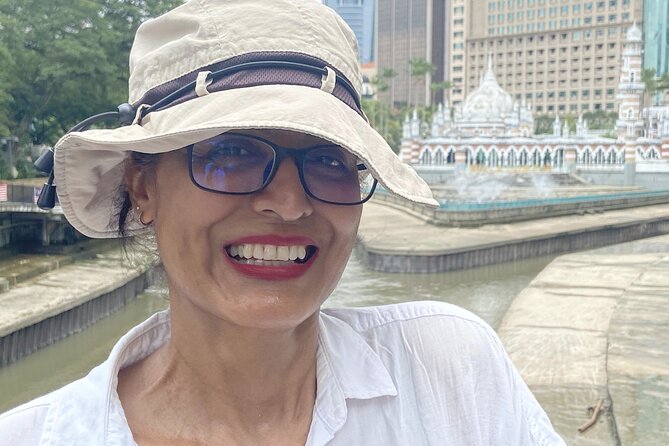
- Colonial power meets local life, with stops like Jamek Mosque and the market core
- Admission fees handled for the tour stops, so you’re not scrambling for tickets mid-walk
- Small-group feel for up to 4 guests, ideal if you want questions without a crowd
A colonial timeline you can actually walk
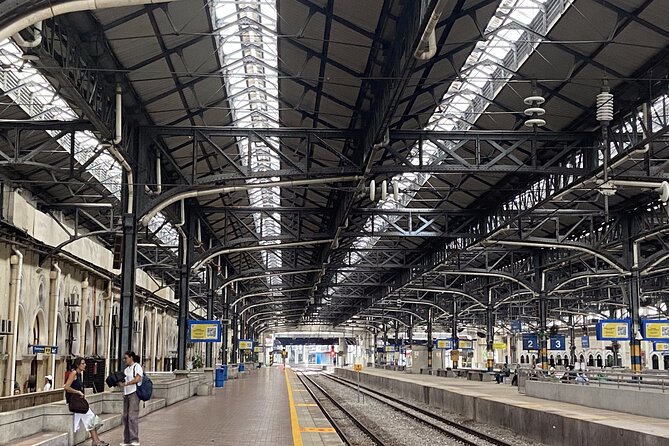
Kuala Lumpur’s colonial story isn’t only in museums. It’s in the street grid, the institutions, and the buildings that still run the city’s daily rhythm. This is a private walking tour built for that idea: you move on foot from one landmark to the next, and your guide frames each stop as part of a bigger system.
That matters, because colonial architecture can otherwise feel like random pretty facades. Here, you’re guided through how the British administration and commercial interests shaped major civic sites—rail, government offices, banking, churches, and markets—while local communities and places of worship continued to anchor the city around its rivers and trade routes.
You’re also getting a “you’re here, now” format. The tour lasts about 3 to 4 hours, and it’s designed as a walkable loop through the colonial core. When it finishes at Central Market, you’re near public transport again, so you can keep exploring without the stress of getting back from far out neighborhoods.
You can also read our reviews of more walking tours in Kuala Lumpur

Kuala Lumpur Railway Station: why it looks like it belongs in a postcard
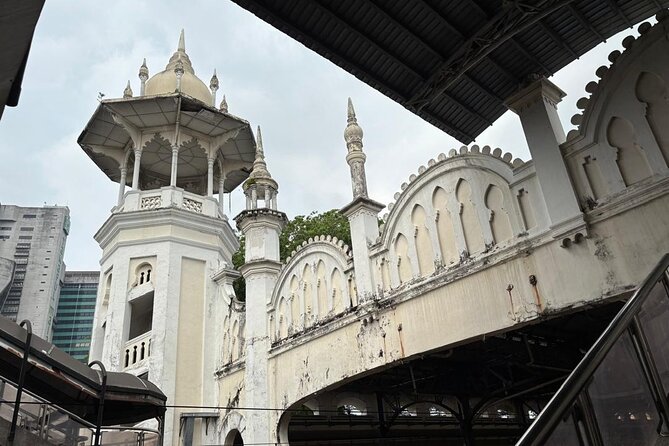
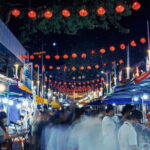
Your first big moment is the Kuala Lumpur Railway Station. The building’s domes and minarets-style silhouette makes it one of those landmarks that pulls your eyes before the facts even catch up. Your guide sets the scene by pointing out how this station became a symbol of movement and control—who could travel, who could ship goods, and how quickly the region could connect.
The station is also a great “orientation stop.” From here, you start to notice how the colonial city was organized around transportation and administration. That’s not just a historical note. It helps you understand why later stops—rail offices, government complexes, and commerce hubs—sit where they do.
Practical note: this opening stop is short, around 15 minutes, so don’t expect long photo sessions. If you want the best shots, bring your camera strap ready and aim for steady, quick angles rather than wandering off.
Malayan Railway Administration Building: design that signals authority
Across the road, you move to the Malayan Railway Administration Building, known as the FMS Railway Administration Office. This is where you learn that rail wasn’t only about tracks. It was administration made visible—offices, planning, and the machinery of a unified railway system.
Your guide credits architect Arthur Benison Hubback and notes construction beginning in 1914. Even if you’re not an architecture person, it’s useful context: you start seeing how colonial design often worked like signage for power. The building isn’t trying to be subtle. It’s meant to look official.
This stop also helps you connect the dots between the station’s dramatic exterior and the behind-the-scenes world that kept trains running. If you care about how empires build paperwork as well as monuments, this part hits.
The Klang River stop: the city’s geography still calls the shots
A key turning point in the walk is the Klang River. The river is described as about 120 km long, the longest river in Selangor and Malaysia’s 8th longest. You also learn it rises near the Klang Gates Quartz Ridge in the Titiwangsa range, flows through Kuala Lumpur, and continues toward the Straits.
Why does your guide spend time on the river when the tour is about buildings? Because Kuala Lumpur’s core identity is tied to water routes and settlement logic. It’s not just romantic geography. It explains why the early city center formed where it did and why colonial-era planning followed existing movement patterns rather than ignoring them.
Even a short geography stop like this can make later landmarks click. When you’re headed toward Jamek Mosque and the river confluence area, you’ll understand it’s not a random scenic corner—it’s a foundational feature of the city.
Old Market Square Clock Tower: coronations and colonial calendar time
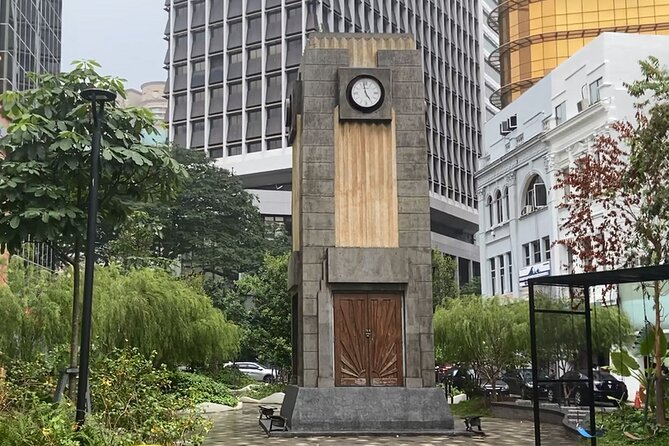
Next up is the Old Market Square Clock Tower, built in 1937 to mark the coronation of King George VI. Your guide explains that the tower was conceived by Arthur Oakley Coltman, and that date alone gives you a clue: the colonial city didn’t just manage trade; it also imported imperial rituals into everyday space.
This stop also works well for photos, but keep expectations realistic. It’s about 10 minutes, so you’ll get a guided explanation and a quick chance to look around the square itself.
What I found useful here is the idea of timekeeping as authority. A clock tower in the market zone isn’t only for travelers. It’s for workers, merchants, and anyone keeping schedules for deliveries and departures. You start seeing colonial influence as something that shaped habits, not just architecture.
You can also read our reviews of more guided tours in Kuala Lumpur

Jamek Mosque: city origins at a confluence
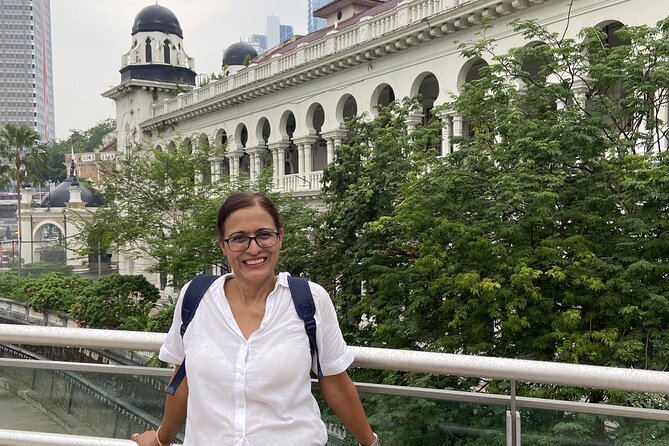
The walk then shifts from clock-tower time to river confluence reality at Jamek Mosque. Your guide points out that the mosque sits at the birthplace of the vibrant city—the meeting point of the Klang and Gombak rivers—and that the city’s name ties back to this geographical feature.
That connection is the whole point. This stop keeps the tour balanced. You get the colonial storyline, but it’s not presented as if colonial history erased earlier layers. Jamek Mosque anchors the city through geography and community, and it helps you feel that Kuala Lumpur grew from where water and movement naturally met.
Again, the time here is about 15 minutes, so treat it as a stop for context and respectful observation rather than a long sit-down visit.
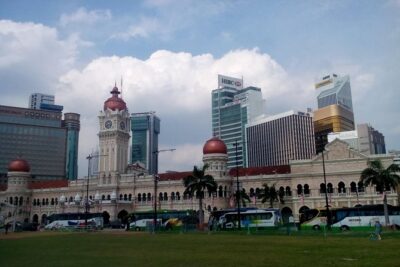
Sultan Abdul Samad Building and the government complex aura
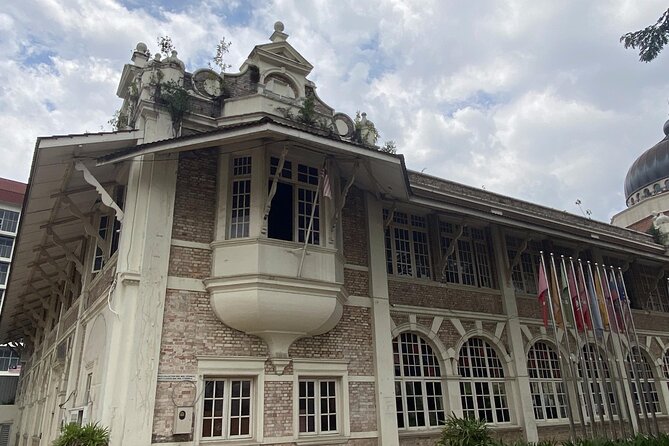
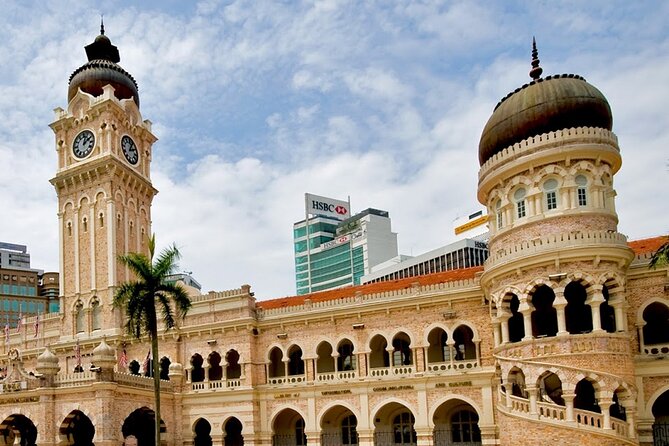
One of the most visually imposing stops is the Sultan Abdul Samad Building. Your guide situates it in a larger government cluster, flanked by the former General Post Office, Magistrate Courts, and Kuala Lumpur Council Building. You learn it was constructed in 1894 for the British colonial administration.
Even without memorizing architectural terms, this is one of those buildings that teaches you something quickly: colonial administration wanted legitimacy that looked permanent. The complex feel matters. You can sense how decisions, documents, and legal processes were centralized.
If you’re the kind of traveler who likes to connect buildings to how power operated, this stop is satisfying. You’ll probably look at it twice—once for the facade, then again through the lens your guide gives you about why colonial governments placed their institutions here.
St. Mary’s Cathedral: from timber beginnings to brick permanence
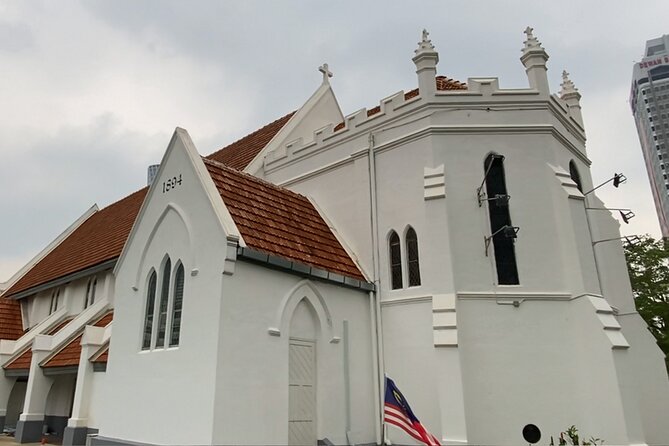
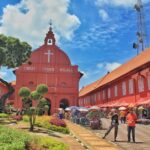
Next is St. Mary’s Cathedral (Anglican, dedicated to St Mary the Virgin). Your guide shares its story: it began as a timber edifice in 1887 on or near Bukit Aman hill, then the present brick structure came in 1895.
This church stop gives you another angle on colonial life—religion and community-building alongside administration and commerce. It also adds a practical visual contrast: the wooden-to-brick transition shows how colonial institutions matured and invested in permanence as the settlement stabilized.
The stop is around 15 minutes, and you’ll likely appreciate it more if you look at both the setting and the building materials with care. Don’t rush the details your guide points out, because that’s where the story lives.
The Selangor Club and the idea of social gates
A short walk brings you to the Selangor Club, founded in 1884. Your guide frames it as a meeting place for educated and high-ranking members of British colonial society. Admission was tied more to education and standing than simple nationality, based on the information provided.
That may sound like a social detail, but it’s actually useful. Colonial Kuala Lumpur wasn’t run only by officials walking in corridors. It was shaped through networks—who had access to conversations, who could influence decisions, and how social power reinforced administrative power.
This stop is brief (about 10 minutes), so treat it as a perspective pause: you’re learning how colonial power moved through society, not just government offices.
Kuala Lumpur Library (former Government Printing Office): where official words were made
The walk continues at the Kuala Lumpur Library grounds, specifically the former Government Printing Office, completed in 1899. Your guide explains that this building produced official government reports and books and other formal printed material.
This is a great stop for travelers who like the behind-the-scenes side of history. Empires don’t only build railways and buildings. They build systems of record. Printing offices turn decisions into paperwork—and paperwork into authority.
You’ll probably notice how this kind of site is less flashy than a mosque or cathedral. That’s exactly why it’s valuable. It adds balance, so the tour doesn’t feel like only monuments and photos.
Chartered Bank building on Jln Ampang: finance made architectural
At 2 Jln Ampang, your guide points out a bank building completed in 1909. It housed the main branch of the Chartered Bank of India, Australia and China, later known as Standard Chartered. Your guide also notes the bank was founded in London in 1853.
This stop helps you understand the colonial city as a trading and finance machine. British administration ran the rules. Banks and commercial institutions helped money move, loans happen, and trade scale.
The connection to the railway theme is strong. Railways move goods; banks make the transactions possible. Put those together and the city’s colonial logic becomes easier to picture.
Queen Victoria Fountain: a shipped symbol that still has a twist
Then you reach the Queen Victoria Fountain, located at the corner of the Selangor Club Padang. Your guide explains the fountain was shipped from Britain to Malaya to commemorate Queen Victoria’s diamond jubilee in 1897. A fun note here: it wasn’t assembled on site right away, which adds a realistic touch to the imperial symbolism.
You may think of colonial monuments as instant, fixed expressions. This stop gently reminds you that these projects took time, logistics, and luck—things that went wrong and delayed timelines just like anything else.
It’s a 10-minute stop, but it’s a good one to tie up emotional impressions with practical facts. It’s also a helpful pause if you’ve been walking hard since the earlier rail and government stops.
Old FMS Railway Office: from scattered lines to a unified system
The tour closes the railway thread at the Old FMS Railway Office—the first headquarters of the Federated Malay States Railways (FMSR). Your guide emphasizes the shift from fragmented state railways to a unified system.
You also learn about the region’s early rail momentum, including that Malaya’s first line opened in 1885 from Taiping to Port (the tour information cuts off there, but the key point stays). The message is clear: rail consolidation didn’t happen slowly over centuries. Colonial-era planning compressed development and centralized control quickly.
This stop helps you look back at the earlier railway administration building and the main station. Now you’re seeing the system, not just the buildings.
Central Market finish: Kapitan Yap Ah Loy and the commerce engine
The walk ends at Central Market Kuala Lumpur, a perfect landing spot because it’s active and easy to keep exploring. Your guide traces it back to Kapitan Yap Ah Loy, who conceived the area as a humble wet market in 1888, later transformed into a grand hall of commerce. The current structure replaced the earlier one with a more substantial version.
This last stop turns history into something practical. You can grab snacks if you want, browse, and spend time without feeling like you missed your chance. Just note meals aren’t included on the tour, and bottled water isn’t included either, so Central Market is a natural place to sort that out on your way onward.
From a traveler value standpoint, I like ending here because you’re not stuck at a dead-end heritage spot. You’re in the center of the city’s present-day energy.
Timing, walking comfort, and what to bring
This is a private walking tour with a moderate physical fitness level recommended. Plan for real walking time across central KL.
Since bottled water and meals aren’t included, I’d treat this like a half-day outing with a simple kit:
- a water bottle (or plan to buy once you start or near Central Market)
- sun protection (KL heat can be a factor)
- comfortable shoes for mixed pavement
The tour also includes printed material and a mobile ticket, so it’s designed to be easy to follow. If you like taking notes, the guide’s structure and the short stop times help you keep your pace without getting lost.
Price and value: $45 per person makes sense if you want a guide
At $45 per person, this tour isn’t a bargain bus ride. It’s built for a private experience with guide-led storytelling and included admission fees for the stops.
Here’s how the value plays out:
- You’re paying for a guide who connects buildings to the city’s system (rail, government, commerce, and worship).
- Admission fees for the tour stops are included, which reduces the hassle of figuring out what you need to pay on your own.
- The small group format (up to 4 guests) can make a big difference if you want questions or want the tour to move at a comfortable speed.
If you’re traveling solo and you mainly want to see a few photos, you could do it on your own. But if you want the city center to feel like an understandable story instead of a list of landmarks, $45 is a fair price for that kind of local interpretation.
Who this colonial walk is best for
This tour fits best if you:
- like architecture with context, not just dates
- enjoy walking routes that keep you seeing a lot without changing neighborhoods
- want a guide who can explain the why behind each building
- prefer private time over crowd-level sightseeing
It’s also a good match for couples or small groups who want something calmer and more guided. If you’re short on time in Kuala Lumpur but still want the big colonial-era institutions and how they relate, this route is a strong use of half a day.
Should you book this Kuala Lumpur Colonial History Walk?
Book it if you want a compact, private way to understand colonial Kuala Lumpur through the places that still shape the city today. The best reason to choose it is simple: walking this route with a story-driven guide turns the center into a timeline you can follow, from railways to government buildings to the market that keeps moving.
Skip it only if you hate walking, want long time at each site, or prefer to wander without guidance. In that case, you might find an independent map more your style.
FAQ
How long is the Kuala Lumpur Colonial History Walk?
The tour runs about 3 to 4 hours.
Is this tour private?
Yes. It’s a private tour/activity, and only your group participates, with personalized experience for up to 4 guests.
Where does the tour start and end?
It starts at Kuala Lumpur Railway Station (110, Jalan Sultan Hishamuddin, Kampung Attap, 50000 Kuala Lumpur) and ends at Central Market Kuala Lumpur.
Is admission included for the stops?
Yes. The tour includes the admission fee, and each listed stop notes free admission.
What should I plan to pay for during the walk?
Bottled water and meals aren’t included, so you may want to bring a bottle or plan to purchase drinks and snacks as you go.
What’s the cancellation window for a full refund?
You can cancel for a full refund if you cancel up to 24 hours in advance of the experience start time.