REVIEW · KUALA LUMPUR
Full-Day Malacca City Tour from Kuala Lumpur
Book on Viator →Operated by MALAYSIAN TOURS RIYAS · Bookable on Viator
One long day, and Malacca’s many rulers show up fast. I like how the tour uses hotel pickup plus an English-speaking driver to keep things easy, and I love the mix of Dutch, Portuguese, and British-era sites without feeling rushed from stop to stop. The main drawback to plan around is that this is not wheelchair accessible, and you’ll be moving on uneven ground and stairs at several heritage spots.
You also get a lot of “read the city” time. You’re guided through landmarks tied to the Portuguese, Dutch, and British, plus key religious sites and the Malacca River corridor that explains why this place mattered for centuries. If you’re hoping to linger late for Jonker Walk nightlife, this day-trip format may leave you wanting more—so build in your own time later if you can.
In This Review
- Key Things That Make This Malacca Day Tour Work
- Why Malacca Feels Different Than Most Day Trips
- Price and What You’re Actually Paying For
- Getting From Kuala Lumpur to Malacca With Less Headache
- Stadthuys and the Red Square: Where Colonial Power Looked Official
- A Famosa: The Portuguese Fortress, Reduced to One Key Gate
- St. Paul’s Hill Church and the Malacca Museum Complex Area
- Mini Malaysia & ASEAN Cultural Park: A Quick Detour Worth Planning For
- Cheng Hoon Teng Temple: Three Doctrines in One Working Place
- Kampung Kling Mosque: A Cross-Cultural Architecture Story
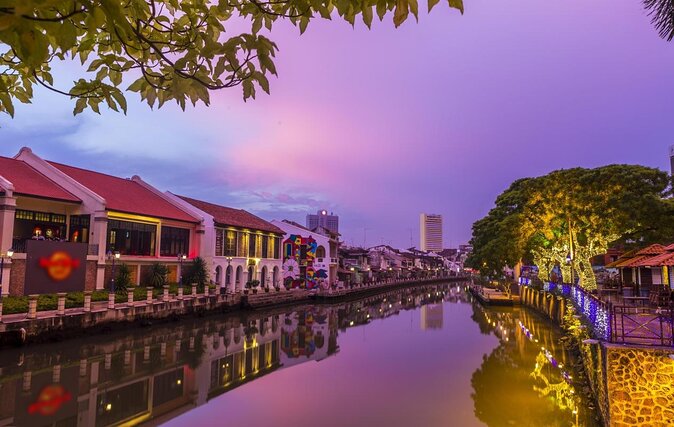
- Malacca River: Trade Route Logic Meets Modern Revitalization
- Melaka Warrior Monument and WWII Memory in a Compact Stop
- Hang Tuah’s Well: A Legend With a Physical Place
- Middleburg Bastion: City Defense at the Mouth of the River
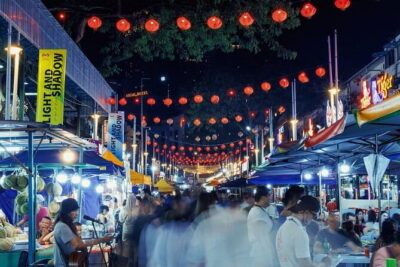
- Jonker Street: The City’s Main Social Lane for Shopping and Snacks
- Christ Church: Protestant History After Portuguese Rule
- Lunch and Meal Expectations: What to Confirm Before You Go
- Who This Tour Suits Best (And Who Might Want Another Option)
- Should You Book This Full-Day Malacca Tour?
- FAQ
- How long is the Full-Day Malacca City Tour from Kuala Lumpur?
- What’s included with the pickup and transport?
- Is the tour wheelchair accessible?
- Is lunch included?
- Are the attractions free to enter?
- Is this tour private?
- How much does the tour cost?
Key Things That Make This Malacca Day Tour Work
- Door-to-door hotel pickup and drop-off in Kuala Lumpur keeps the long transfer from being a chore
- English-speaking driver handles logistics, so you’re not constantly figuring out where to go next
- Many sights are listed as free entry, which helps this tour feel like strong value
- You get both big monuments and smaller details, from A Famosa’s surviving gate to Hang Tuah’s Well
- Jonker Street gives you shopping and snacks time along a historically layered Chinatown street
- Mini Malaysia and ASEAN Cultural Park adds variety, but you should expect extra ticket cost
Why Malacca Feels Different Than Most Day Trips
Malacca is one of those places where you can’t just look at buildings—you have to notice the layers. On this tour, you’ll see Dutch-era civic power, Portuguese military leftovers, and British Protestant architecture all within a single day.
I also like that the day is built to help you connect the dots. The stops aren’t just random photo points; they’re placed so the city’s trading role and cultural mix make sense as you walk.
You can also read our reviews of more city tours in Kuala Lumpur
Price and What You’re Actually Paying For
At $55 per person for a 7 to 8 hour outing, this is priced like a straightforward, transport-and-guidance day trip. You’re not paying extra for constant paid attractions either—several of the key historic stops are listed as free admission.
What makes the price feel fair is the “done-for-you” structure. You get air-conditioned vehicle transport, an English-speaking driver, and hotels/ apartments pickup and drop-off, plus a mobile ticket. If you value planning simplicity, that alone can be worth more than the transfer cost.
Getting From Kuala Lumpur to Malacca With Less Headache
The whole experience starts with pickup from your hotel in Kuala Lumpur. That matters because Malacca is far enough that a self-planned trip can turn into too much waiting and too much backtracking.
With this setup, you can focus on the fun part: arriving with your first sights already queued up. You also get an English-speaking driver who handles the logistics, which is great if you don’t want to manage schedules, routes, or timing on your own.
One practical note: this is described as a private tour, so only your group participates. That usually means the pace can feel more comfortable than crowded group tours.
Stadthuys and the Red Square: Where Colonial Power Looked Official
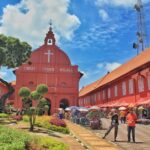
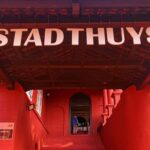
Your first major stop is Stadthuys in Malacca City, located around the Red Square area. It’s known for its red exterior and the nearby red clocktower, and it was built by the Dutch in 1650 as an office for the Dutch governor and deputy governor.
What I like about starting here is the way it sets the tone. You’re immediately looking at the kind of building officials would use to run a colony, not just a random ruin.
You’ll also get the sense of how control shifted. Stadthuys is closely tied to the Dutch presence, and the name itself comes from old Dutch spelling of city hall.
A Famosa: The Portuguese Fortress, Reduced to One Key Gate
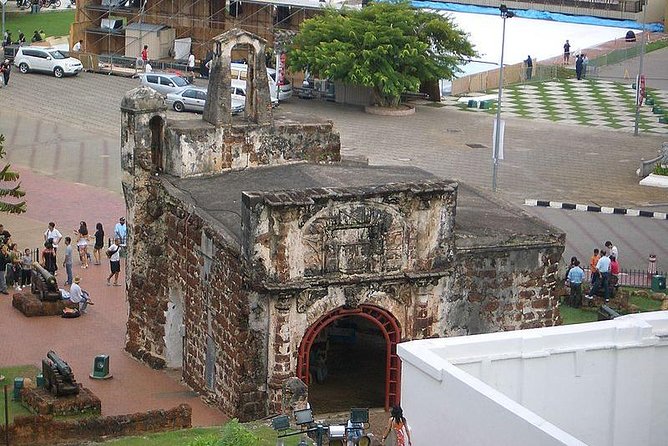
Next up is A Famosa, specifically the remaining Porta de Santiago gate house. This is one of the oldest surviving European architectural remains in Southeast Asia and the Far East, and it’s Portuguese by origin.
If you care about how places got their names, pay attention to the pronunciation notes. The name is commonly mispronounced in a way that treats the Portuguese definite article like the English letter A, while a more authentic pronunciation is different.
Even with only a gate left, the stop still works because it tells you what survived after the fortress didn’t. It’s a reminder that empires rarely leave perfect leftovers—often they leave fragments that become major landmarks.
You can also read our reviews of more tours and experiences in Kuala Lumpur


St. Paul’s Hill Church and the Malacca Museum Complex Area
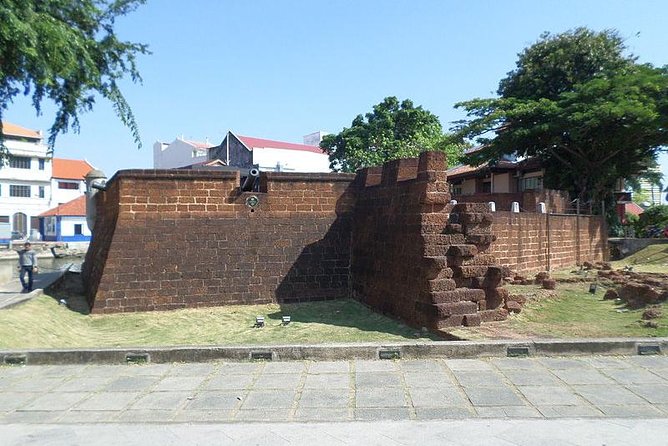
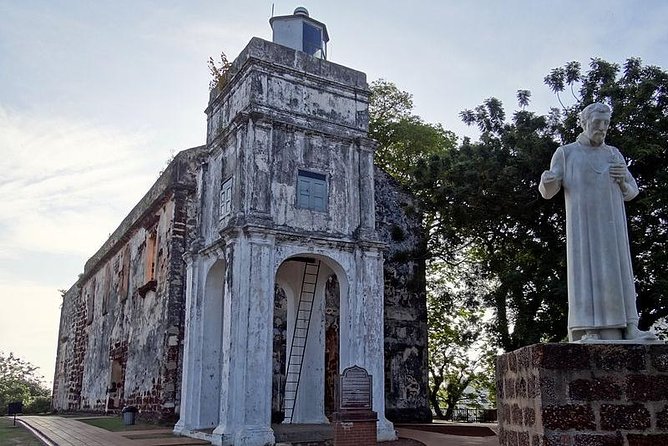
At St. Paul’s Hill, you’ll find St. Paul’s Church, described as the oldest church building in Malaysia and Southeast Asia. It sits at the summit and is connected to the Malacca Museum Complex, along with A Famosa ruins and the Stadthuys area.
This stop is especially interesting because the story spans Portuguese roots and later use. The original chapel dates to 1521 and was dedicated to the Virgin Mary, linked to Nossa Senhora da Annunciada. It was built by Portuguese nobleman Duarte Coelho, tied to an account of surviving a storm.
I like this part of the tour because it shows how religion, politics, and survival stories were tangled. You’re not just looking at a structure; you’re looking at what people built and rebuilt depending on who was in power.
Mini Malaysia & ASEAN Cultural Park: A Quick Detour Worth Planning For
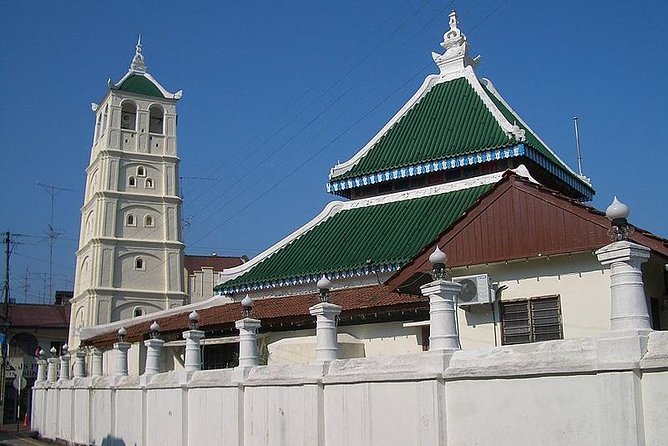
Then the tour heads to Mini Malaysia and ASEAN Cultural Park in Ayer Keroh. This is a theme park setting that showcases traditional houses from Malaysian states and ASEAN countries.
Here’s the value angle: it gives you a fast comparison of architectural styles and cultural homes that you might otherwise take days to see across multiple museums or regions. If you like visuals, it’s a nice break from purely colonial forts and churches.
The main drawback is cost awareness. Admission ticket for this stop is listed as not included, so you may want to budget extra if you plan to go inside areas you’re interested in.
Cheng Hoon Teng Temple: Three Doctrines in One Working Place
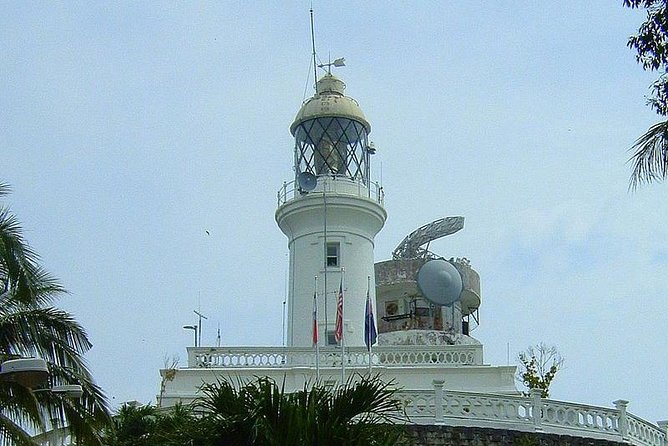
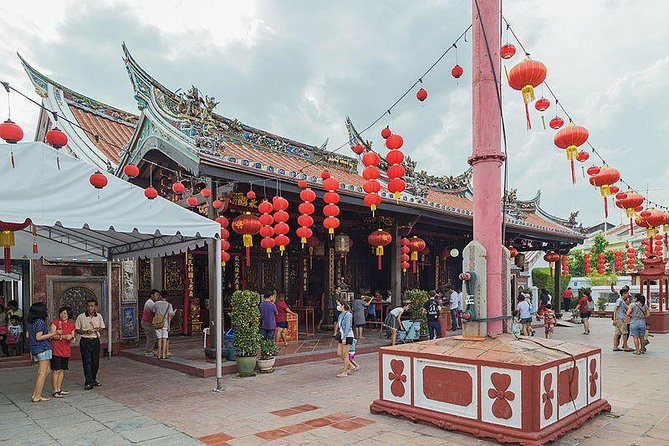
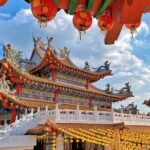
Cheng Hoon Teng Temple, also called the Temple of Green Cloud, is one of the standout stops for atmosphere and meaning. It practices the Three Doctrinal Systems of Buddhism, Confucianism, and Taoism, and it’s listed as the oldest functioning temple in Malaysia.
The founding story ties it to Dutch-era Malacca. The temple site was established since Dutch Malacca by Chinese Kapitan Tay Kie Ki (also listed as Tay Hong Yong) in 1645, with additional structures built later in 1673 led by Kapitan Li Wei King (also listed as Koon Chang), using materials imported from China.
I like that this stop helps you understand the real social mix behind the Dutch-Portuguese-British headlines. You’re seeing how local communities built religious continuity and identity through major regime changes.
Kampung Kling Mosque: A Cross-Cultural Architecture Story
Right around Harmony Street, you’ll visit Kampung Kling Mosque, an old mosque in Malacca City. It’s situated near Sri Poyatha Moorthi Temple and Cheng Hoon Teng Temple, which is why the area is often called Harmony Street.
The mosque’s background is also layered. It began as a wooden building built by Indian Muslim traders in 1748, then rebuilt in brick in 1872. Architecturally, it’s described as a cross between Sumatran, Chinese, Hindu, and Malacca Malay influences.
This is one of those stops that’s short on paper but satisfying in person. Even if you spend only a few minutes, you’ll start seeing Malacca’s cultural overlap as a built reality, not just a concept.
Malacca River: Trade Route Logic Meets Modern Revitalization
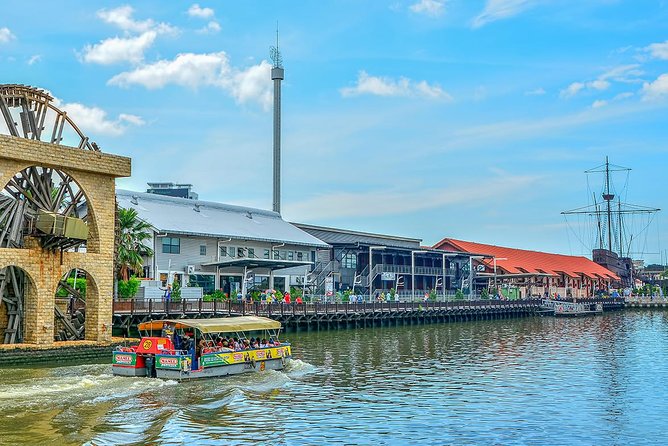
The Malacca River stop is where the city’s “why” comes through. The river flows through Malacca City and was a vital trade route during the heyday of the Malacca Sultanate in the 15th century. It connects to the Strait of Malacca and begins from foothills in Negeri Sembilan.
What I find useful is the bridge between past and present. The tour info mentions a USD $100 million infrastructure project to revive the river corridor, including a tidal barrage, building and bridge restoration, dredging, and concrete riverbanks with walkways, plus land reclamation that extends the river mouth.
If you want a mental model for Malacca, this is the stop. You get the historic trading purpose, and you see how the modern city is trying to reconnect with that waterfront identity.
Melaka Warrior Monument and WWII Memory in a Compact Stop
Next is the Melaka Warrior Monument, built to commemorate Chinese victims of the Empire of Japan occupation of Malacca during World War II. It was constructed in 1948 and renovated in 1972.
This is a quieter moment in a day that starts with big colonial visuals. I appreciate having it here because it prevents the tour from becoming only about Europeans and architecture. It brings in 20th-century history tied to real loss.
Hang Tuah’s Well: A Legend With a Physical Place
You’ll also stop at Hang Tuah’s Well (Perigi Hang Tuah). It’s located in Kampung Duyong, and the well is described as being dug by Hang Tuah for his own use. It was declared a historical monument under the Antiquities Act on 29 September 1977.
This kind of stop is useful if you like grounding stories. Instead of hearing about a figure and moving on, you get a specific physical landmark linked to the legend.
Middleburg Bastion: City Defense at the Mouth of the River
Then comes the Middleburg Bastion, located at the mouth of the Malacca River. After the fall of Portuguese Malacca to the Dutch in 1641, the Dutch fortified the city for defense, including building bastions and strengthening walls.
Middleburg Bastion was constructed in 1660, and that date gives you context for how quickly defensive thinking followed political takeover. This stop works well for people who like to imagine how cities protected themselves, not only what they looked like.
Jonker Street: The City’s Main Social Lane for Shopping and Snacks
Jonker Street (Jonker Walk) is the Chinatown street area of Melaka along Jalan Hang Jebat. The street is lined with historical houses dating back to the 17th century and is known for antiques, textiles, foods, handicrafts, and souvenirs.
I like this part for two reasons. First, it lets you switch modes from architecture to everyday life. Second, it gives you flexibility: you can browse slowly or just grab a quick bite and keep your energy for later.
Also note the time feel: this day tour may not line up with the best late-night vibe people love about Jonker Walk. If you can, consider returning on your own after the tour ends for nighttime atmosphere.
Christ Church: Protestant History After Portuguese Rule
Finally, you’ll visit Christ Church, an 18th-century Anglican church and described as the oldest functioning Protestant church in Malaysia. It ties back to the Dutch conquest in 1641, which saw Roman Catholicism proscribed and existing churches converted to Dutch Reformed use.
Christ Church is connected to the earlier St. Paul’s Church, renamed Bovenkerk (Upper Church) under the Dutch community. The architecture and church story together make a neat arc to your earlier St. Paul’s Hill stop.
Even if you’re not a church-history person, this ending helps you see how Malacca’s rulers changed not just borders, but also religious institutions.
Lunch and Meal Expectations: What to Confirm Before You Go
The tour summary mentions an included set lunch to keep you energized. At the same time, the tour highlights also note that meals are not included, which suggests coverage may be specific to that set lunch.
Before you book, check what meals are actually included for your departure. The safe move is to treat lunch as possibly included, but not assume drinks or additional meals are covered.
Who This Tour Suits Best (And Who Might Want Another Option)
This tour is a strong fit for first-time visitors who want a single-day introduction to Malacca’s main sights with an easy transfer from Kuala Lumpur.
You’ll also enjoy it if you like variety. The day mixes forts and church architecture with temples, mosque architecture, memorials, and a trade-route river stop, plus shopping time on Jonker Street.
If you need full wheelchair access, you’ll need a different plan. The tour is listed as not wheelchair accessible, and several heritage sites involve steps or uneven paths.
Also, if your top priority is spending a long time at Jonker Street at night, you might find the schedule tight for that. This is more of a daytime overview than an evening-focused wandering tour.
Should You Book This Full-Day Malacca Tour?
Book this tour if you want easy logistics, a private group feel, and a clear route through Malacca’s key colonial and cultural landmarks. At $55, the value looks best when you appreciate transportation comfort plus an English-speaking driver doing the heavy lifting.
Skip or modify your expectations if you’re chasing late-night Jonker Street energy or if mobility access is a must. In those cases, you can still love Malacca—but you’ll probably want either a more flexible schedule or a different tour style.
If you do book, I suggest pairing the day tour with a self-planned revisit to Jonker Walk after it finishes. That way you get both daytime context and nighttime atmosphere, without squeezing everything into one long run.
FAQ
How long is the Full-Day Malacca City Tour from Kuala Lumpur?
It runs about 7 to 8 hours.
What’s included with the pickup and transport?
Hotel pick-up and drop-off are included, and you travel by air-conditioned vehicle. You also get an English-speaking driver and a mobile ticket.
Is the tour wheelchair accessible?
No. The tour is not wheelchair accessible.
Is lunch included?
The tour description mentions an included set lunch, but the tour notes also say meals are not included. Check what’s included for your booking so you know what to expect.
Are the attractions free to enter?
Many stops are listed as free admission in the tour details. One stop, Mini Malaysia & ASEAN Cultural Park, lists admission ticket as not included.
Is this tour private?
Yes. It’s described as a private tour/activity with only your group participating.
How much does the tour cost?
The price is $55.00 per person.