REVIEW · KUALA LUMPUR
Kuala Lumpur Country and Batu Caves Tour
Book on GetYourGuide →Operated by Asni Tours · Bookable on GetYourGuide
Batu Caves in one easy half-day. I like how this tour mixes city craft stops with a dramatic limestone climb, all in about 210 minutes. Two highlights for me are the Royal Selangor pewter stop (you get a real look at how the pieces are made) and the Hindu temple at Batu Caves with the famous Murugan statue at the entrance. One thing to consider: it’s a short schedule with a lot of standing and stairs, so if you’re sensitive to heat or you hate step count math, plan carefully.
I also like that the tour is designed for convenience: hotel pickup and drop-off in the KLCC area, an English-speaking driver, and air-conditioned transport between stops. You’ll get a clear flow—factory and craft viewing first, then Batu Caves last—so you aren’t scrambling. The only drawback I’d flag is that the tour doesn’t include meals, and food/drinks aren’t allowed in the vehicle, so you’ll want to handle snacks outside the van.
In This Review
- Key takeaways: what you’ll really get out of this tour
- A short half-day plan that keeps Kuala Lumpur from feeling scattered
- Pickup around KLCC and the “easy logistics” advantage
- Royal Selangor pewter: where souvenirs meet real manufacturing
- Jadi Batek Gallery: batik printing that’s more than a photo op
- Batu Caves: climbing to Murugan’s temple inside limestone caverns
- The temple cave: the reason you’re here
- The museum cave: murals and deity images
- Dress code and step-smart planning (so the cave doesn’t steamroll your day)
- How the value adds up for a $27 half-day (and when it might not)
- Timing: morning vs afternoon and how to handle the heat
- Who this tour fits best
- Should you book the Kuala Lumpur Country and Batu Caves tour?
- FAQ
- What is the duration of the Kuala Lumpur Country and Batu Caves tour?
- What time does the tour start?
- Where is pickup included?
- Is there a meeting point if my hotel isn’t within the pickup area?
- What’s included in the tour price?
- Are meals included?
- What should I wear for Batu Caves?
- Can I get a refund if I cancel?
Key takeaways: what you’ll really get out of this tour

- Royal Selangor Visitor Centre + pewter factory: watch pewter craftsmanship at a large, modern facility known for quality.
- Jadi Batek Gallery since 1976: see batik design and printing, plus a craft center feel with gifts and clothing on hand.
- Batu Caves is the main event: limestone caverns, murals, and a temple shrine connected to Lord Murugan.
- 272 steps to the temple cave: the climb is part of the experience, and your shoes matter.
- Murugan statue at the entrance: it’s described as the tallest Lord Murugan statue in the world, so the first impression is big.
A short half-day plan that keeps Kuala Lumpur from feeling scattered
This is the kind of tour that makes sense when you have limited time in Kuala Lumpur and want something more than a quick bus-and-photo stop. You start with pickup from the KLCC area, then go out to craft-focused stops before heading to Batu Caves. That order matters: you get the indoor/outdoor craft viewing first, and you save the big uphill walk for the end.
The total time—3 hours 30 minutes—also explains the vibe. This isn’t a slow museum-style afternoon. It’s more like: see it, understand the basics, ask questions, then move on. If you like structured, efficient sightseeing, you’ll probably enjoy it.
Because it’s a private group, you’re not tied to a crowd pace. That means you can ask the driver or guide questions while staying on schedule.
You can also read our reviews of more tours and experiences in Kuala Lumpur.



Pickup around KLCC and the “easy logistics” advantage
Pickup is included if your hotel is within 5 km of KLCC. If you’re outside that area, there’s an additional surcharge to pay on the day of the activity. If you’d rather meet somewhere central, you can join at MaTIC (Malaysia Tourism Centre), 109 Jalan Ampang, Kuala Lumpur.
Here’s the practical part: KL traffic can mess with timing, so being picked up near KLCC is a real benefit. You spend less time trying to get to a meeting point you might not know well, and you can start the day focused on the sights.
The driver is listed as English-speaking (also Malay), and the vehicle is air-conditioned. For a tour that includes outdoor walking at Batu Caves, that comfort between stops is not a small thing—it keeps the experience from turning into a heat slog.
Royal Selangor pewter: where souvenirs meet real manufacturing

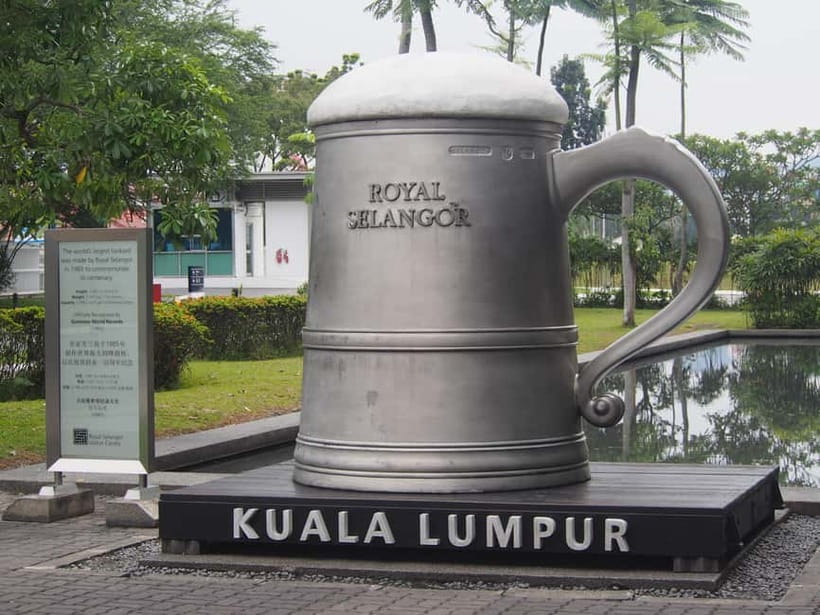
Your first major stop is the Royal Selangor Visitor Centre and its pewter factory. The tour highlights the largest and most modern pewter factory in the world, with an international reputation for craftsmanship and quality. Even if you’re not a “pewter collector,” this stop can be a useful way to understand how Malaysians think about handmade goods: design, repeated processes, and finishing details.
What I like about a stop like this is the mental shift it creates. Instead of seeing pewter items as random shop trinkets, you see how the craft is produced. That makes it easier to shop with your eyes open. You’ll also have a better chance of spotting what’s actually well-made versus what’s mostly decorative.
What to watch for:
- Look for how the designs are formed and finished. The tour’s wording emphasizes craftsmanship, so pay attention to details.
- Don’t feel pressured to buy at the first moment. Pewter shops can tempt you, but if you want value, compare at least once.
The only caution: this is still a relatively short stop, so go in with a simple goal—either watch and learn, or be ready to choose a few specific items you truly want.
Jadi Batek Gallery: batik printing that’s more than a photo op
Next up is Jadi Batek Gallery, described as a batik factory and craft center since 1976. You’ll see batik design and printing, plus demonstrations and classes. There’s also Malaysian-made gifts and clothing available.
Batik is one of those crafts where seeing the process helps you understand what you’re looking at. Patterns aren’t just random. They’re created through techniques that affect how designs take shape on fabric. Even if you don’t take a class, watching demonstrations can make the difference between buying something that looks nice and buying something you understand.
How to get more out of this stop:
- If there’s a demonstration running when you arrive, lean in. The design process is the point here.
- If you’re thinking about clothing, use the time to ask what’s available. The tour notes Malaysian-made gifts and clothing are on hand.
One more practical note: batik galleries can have indoor areas and display floors. Wear comfortable shoes even here—you’ll likely be on your feet.
Batu Caves: climbing to Murugan’s temple inside limestone caverns
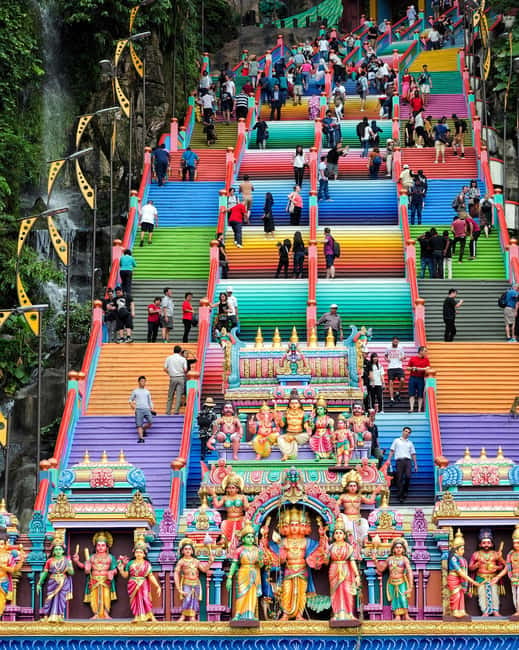
Then comes the main event: Batu Caves, located in limestone hills and made up of three caverns and several smaller caves. It’s the shrine of Lord Murugan, a Hindu deity, and the big headline is the climb: a flight of 272 steps leads up to the temple cave.
Arriving at the base gives you an instant “wow” moment. The tour description includes the tallest statue of Lord Murugan in the world, standing guard at the cave entrance. Even if you’ve seen photos before, seeing it in person changes the scale. It’s one of those landmarks that anchors the visit.
- Private Tour Kuala Lumpur with Petronas Twin Towers Observation Deck & Batu Cave
★ 5.0 · 1,029 reviews





The temple cave: the reason you’re here
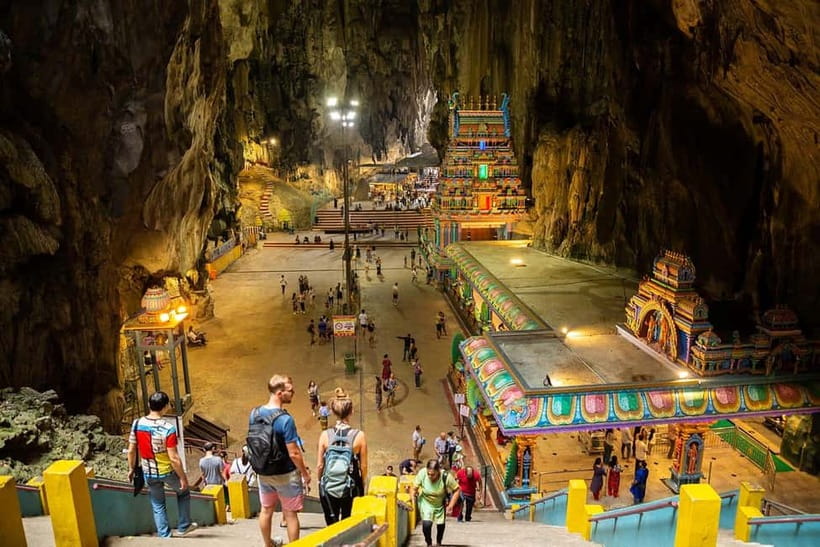
The temple cave is where the focus lands. You’re not just walking through a cave for sightseeing—you’re reaching a shrine. The stairs are part of the journey, and you’ll likely feel the shift when you near the top: less street-level noise, more sacred atmosphere.
Because the climb is 272 steps, pace matters. If you go slowly at first, you’ll arrive feeling steadier instead of breathless on the steep middle stretch.
The museum cave: murals and deity images
Another cave on the visit route is the museum cave, filled with images of deities and murals that depict scenes from Hindu scriptures. This is the side of Batu Caves that rewards people who like context. You’re not only seeing a location—it’s also offering imagery that explains stories connected to the shrine.
If you’re trying to decide how much time to spend up there, prioritize this: look at the temple area first, then take time with the murals rather than rushing through only one cavern.
Dress code and step-smart planning (so the cave doesn’t steamroll your day)
Batu Caves has a clear rule set for what you can wear. Shorts, sleeveless shirts, and open-toed shoes are not allowed. That’s not a minor detail. If you show up dressed for a casual beach day, you’ll waste time sorting it out.
So here’s what I recommend you pack your outfit around:
- Comfortable shoes you can walk in for 272 steps.
- Clothing with covered shoulders and covered legs.
- Bring sun protection because you’re also dealing with outdoor sections: sunglasses, a sun hat, and sunscreen are specifically listed.
Also note: the tour says food and drinks are not allowed in the vehicle. That doesn’t mean you can’t eat outside—just plan your breaks around what’s allowed and where. For a half-day plan with no meals included, you’ll want to decide if you’ll snack before you leave or during any gaps on-site.
How the value adds up for a $27 half-day (and when it might not)
At $27 per person, the value comes from what’s bundled into the time: air-conditioned transport, an English-speaking driver, and hotel pickup/drop-off in the KLCC area, plus the time at multiple stops (pewter factory, batik gallery, and Batu Caves).
If you were doing this solo, you’d likely spend time figuring out transport between craft factories and Batu Caves, and you’d have to manage your own route, timing, and basic guidance. Here, the schedule tries to reduce that “logistics stress” so you can focus on seeing things.
But here’s the honest side: if you feel that 3 hours and 30 minutes is too short for your taste—especially for Batu Caves—you might question the price. A short tour means each stop is necessarily limited. The craft places can be enjoyable, but Batu Caves is the heavy hitter, and the visit is built around fitting everything into the clock.
My best advice for judging whether it’s worth it: think about what you want most.
- If you want a tight checklist day and prefer not to plan transport, it can be good value.
- If you want long, slow exploration and lots of time to linger at each cave section, you may feel rushed.
Timing: morning vs afternoon and how to handle the heat
The tour lists departure times as 9:30 AM in the morning and 2 PM in the afternoon. Batu Caves is outdoors for much of the approach, and there’s direct sun risk at the base and along the steps.
If you’re sensitive to heat, the morning start usually feels easier. If you prefer an afternoon start because you want a slower morning in the city, just go prepared: sun hat and sunscreen are on the must-carry list for a reason.
Also remember that your comfort affects your experience. If you begin the climb already overheated, the experience can shift from “I’m seeing a landmark” to “I’m just trying to survive the walk.”
Who this tour fits best

This tour fits people who like structure and variety: craft-making in the city, then a famous sacred site with a clearly defined climb.
I’d especially recommend it if:
- You want a private group with English-speaking help.
- You’re short on time and want to cover Batu Caves without stitching together multiple transport plans.
- You enjoy hands-on craft viewing, like seeing pewter craftsmanship and batik printing.
It may not be ideal if:
- You have mobility limits that make stairs difficult, because the climb to the temple cave is 272 steps.
- You’re looking for a long, slow day where you can spend lots of quiet time in each cave.
Should you book the Kuala Lumpur Country and Batu Caves tour?
If your goal is a straightforward half-day that combines Royal Selangor pewter, Jadi Batek batik printing, and the Batu Caves temple cave experience, this tour is a practical match. The price works best when you value convenience: pickup near KLCC, air-conditioned travel, and a schedule that gets you to the main sight without extra planning.
Before you book, do two quick checks:
1) Can you comfortably handle 272 steps and the Batu Caves dress rules (no shorts, no sleeveless tops, no open-toed shoes)?
2) Does a 3.5-hour total time feel right for you, especially since meals aren’t included and there’s limited time at each stop?
If both answers are yes, you’ll likely enjoy how smoothly the day flows—from craft stops with clear explanations to a temple climb with real visual impact.
FAQ
What is the duration of the Kuala Lumpur Country and Batu Caves tour?
The total duration is listed as 210 minutes, or about 3 hours 30 minutes.
What time does the tour start?
The tour lists departure times of 9:30 AM for the morning tour and 2 PM for the afternoon tour.
Where is pickup included?
Hotel pickup and drop-off are included within 5 km from KLCC. If your hotel is outside that radius, a surcharge applies on the day of the activity.
Is there a meeting point if my hotel isn’t within the pickup area?
Yes. You can meet at MaTIC (Malaysia Tourism Centre), 109 Jalan Ampang, Kuala Lumpur.
What’s included in the tour price?
It includes an air-conditioned vehicle, an English-speaking driver, and hotel pickup and drop-off in the KLCC area.
Are meals included?
No. Meals and beverages are not included.
What should I wear for Batu Caves?
You should bring comfortable shoes and plan to dress for the rules at Batu Caves: no shorts, no sleeveless shirts, and no open-toed shoes.
Can I get a refund if I cancel?
The activity notes free cancellation up to 24 hours in advance for a full refund.