REVIEW · KUALA LUMPUR
Kuala Lumpur: City Tour & Batu Caves Combo
Book on GetYourGuide →Operated by E Asia Holidays · Bookable on GetYourGuide
Four hours in Kuala Lumpur can feel short. This combo tour makes it real by stacking the big sights—Batu Caves plus central KL landmarks—into one smooth route.
I like that you get both religion and city story: the 272-step climb anchors the trip, and then the rest of the day is about how Kuala Lumpur grew into a modern skyline city. You’ll also get a hands-on culture stop at a batik workshop, not just a quick photo stop.
One thing to consider: this is a shared tour with tight time windows at each stop, so you may feel a bit rushed at the busiest photo points like Petronas unless you’re ready to move quickly.
In This Review
- Key highlights to look for
- Four hours, many KL “chapters” in one ride
- Batu Caves: 272 steps, golden Murugan, and the dress-code reality
- Batik CHONG at East Coast Batik Factory: a real craft stop
- Istana Negara: royal grounds without the full-day commitment
- National Mosque photo stop: Islamic design you can spot instantly
- Moorish charm at Kuala Lumpur Railway Station (built 1886)
- Independence Square: colonial buildings, 1957 pride, and quick photo missions
- Merdeka 118 and the skyline view logic: why the photo points matter
- River of Life: a calmer walk after the big sights
- Belice Chocolate: the sweet break that also supports local flavors
- Petronas Twin Towers photo time: iconic, and ticketing is extra
- The Golden Triangle drive: business KL in a quick pass
- Price and value: why $15 can work (and when it might not)
- What to watch for: shared-tour timing, car comfort, and audio
- Getting to Harriston Boutique – MATIC: the simplest path if pickup is not included
- Who this tour fits best (and who may want something else)
- Should you book this Kuala Lumpur City + Batu Caves combo?
- FAQ
- How long is the Kuala Lumpur City Tour & Batu Caves Combo?
- What does the tour cost?
- What’s included in the tour price?
- Are entrance fees included for the KL Tower or the Petronas Twin Towers?
- Where do I meet if my hotel pickup is not available?
- Is hotel pickup offered?
- What should I consider before visiting Batu Caves?
- Do we get to see batik being made?
- Is the tour in English, and is it wheelchair accessible?
Key highlights to look for
- 272 steps at Batu Caves with the golden Lord Murugan statue and cliffside shrines
- Live batik painting at East Coast Batik (Batik CHONG), with hand-drawn design explained
- Royal architecture at Istana Negara with a quick look at the grounds and guards
- Colonial-era atmosphere at Independence Square plus iconic buildings and photo spots
- River of Life waterfront and quick skyline moments around Merdeka 118
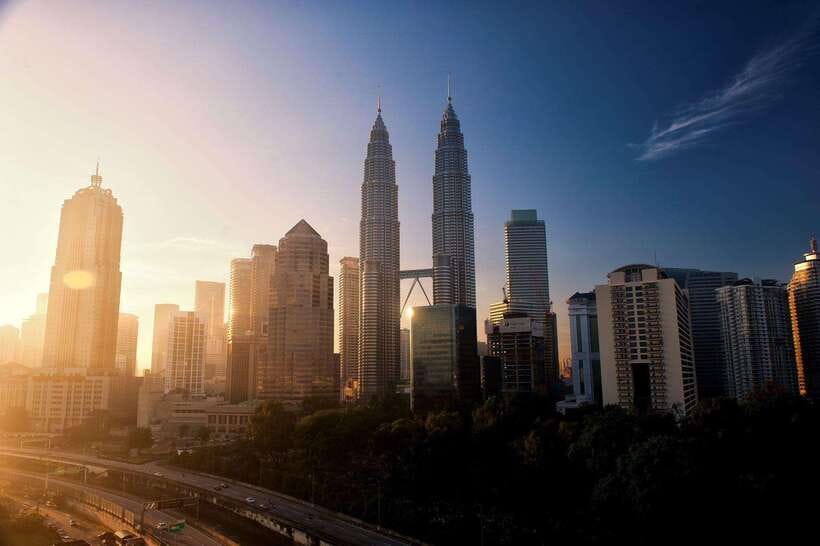
- Petronas Twin Towers photo time with extra ticketing not included
Four hours, many KL “chapters” in one ride
This is one of those tours that works because it doesn’t try to be deep on only one theme. It gives you fast context—how KL looks today, how it used to look under British rule, and how cultural traditions still shape daily life. You’ll start with Batu Caves, then pivot into royal grounds, mosques, colonial buildings, waterfront revitalization, and finally the city’s modern signature: the Petronas area.
The best part is the pacing. You’re not stuck figuring out transport or building a route between scattered neighborhoods. An air-conditioned vehicle and a driver-guide handle the movement, while you spend your time on the “go-see” moments.
You can also read our reviews of more city tours in Kuala Lumpur


Batu Caves: 272 steps, golden Murugan, and the dress-code reality
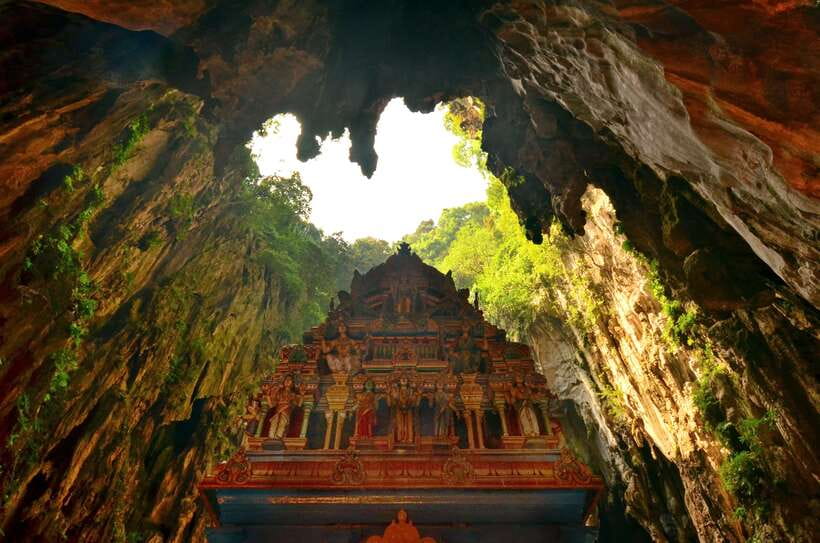
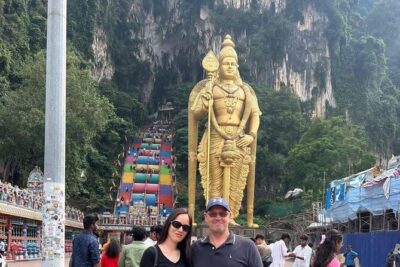
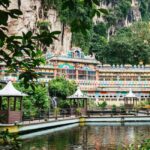
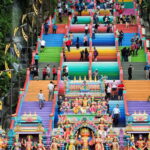
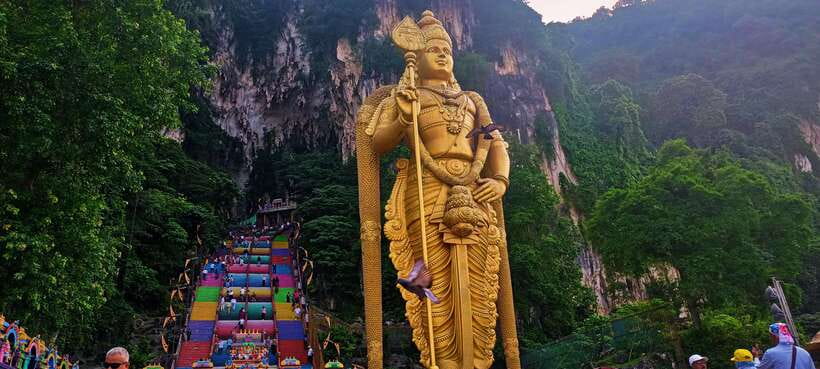
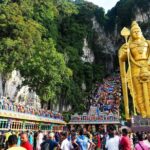
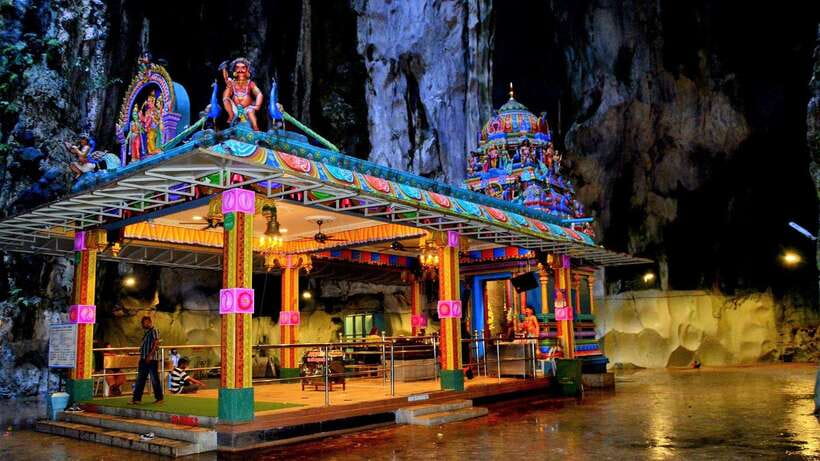
Your first major stop is Batu Caves, one of Malaysia’s most important Hindu sites. Expect the big visual hook immediately: the towering golden statue of Lord Murugan, plus the dramatic limestone cliff and cave temple complex.
Then comes the famous part—272 steps. You’ll climb for the views and to reach the cave areas where shrines sit inside the limestone setting. If you’re comfortable with stairs, it’s worth pushing through because the top views help you understand why Batu Caves is such a magnet for visitors. If you’re not feeling the climb, you can still enjoy the site from the lower areas; there’s plenty to see before you decide how far up to go.
Before you start, take the dress code seriously. This tour includes guidance on what’s appropriate and reminds you to act respectfully. In practical terms, bring clothing that covers shoulders and knees, and treat the site like what it is: an active place of worship, not just a photo set.
Batik CHONG at East Coast Batik Factory: a real craft stop
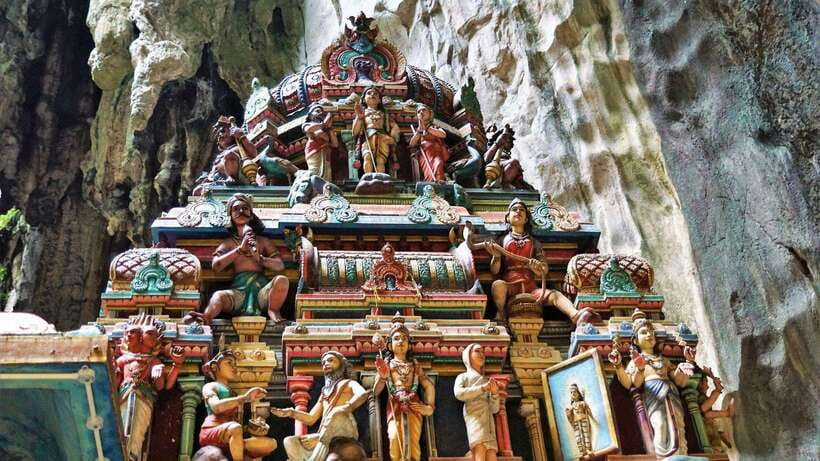
Between temple time and skyline time, you’ll shift into culture through a batik stop at East Coast Batik Sdn Bhd (Batik CHONG). This part is short, but it’s not random. You’ll see a live demonstration of batik painting—how intricate designs get hand-drawn onto fabric.
Why this matters: batik isn’t just a souvenir idea. It’s a way to understand Malaysian craft and pattern thinking, and you’ll walk out with a clearer sense of why the designs look the way they do. It’s also a good pause from KL’s traffic-and-towers rhythm.
Tip: if you plan to buy batik, bring smaller bills and compare patterns. The factory stop is also a chance to ask questions about techniques during the demo window.
Istana Negara: royal grounds without the full-day commitment
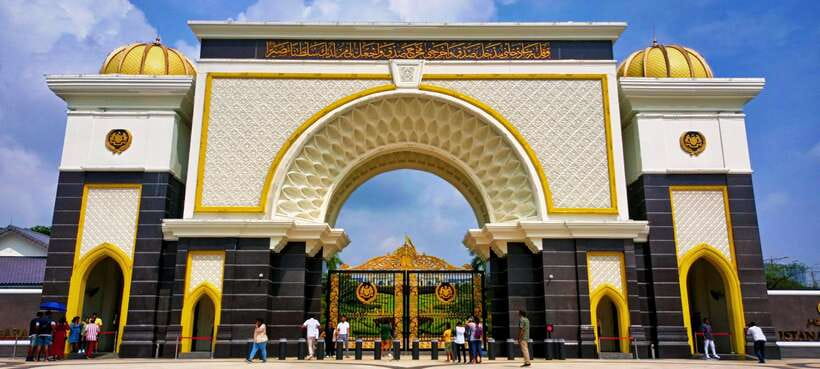
After Batu Caves, you’ll head to Istana Negara (often described as the king’s palace in tours). This is a quick stop—more about seeing the architecture and atmosphere than spending a long time inside anything.
You’ll get time for photos and a brief look at the royal guards at the main gate. Even with limited time, it gives you a different lens on KL: less about commercial bustle, more about the formality of power and the look of official institutions.
If you’re the type who likes architecture, this stop is a nice reset. If you’re after major museum-style content, keep your expectations aligned with the short window.
National Mosque photo stop: Islamic design you can spot instantly
Next up is the National Mosque of Malaysia. Expect a short visit and sightseeing time, with the tour team explaining what makes the mosque’s design recognizable—especially the umbrella-like roof.
The value here is visual. You’re likely to remember this stop because the roof silhouette is distinctive, and it helps connect Malaysia’s modern city identity to its religious roots. It also works well as a reflective break before moving into KL’s colonial and business landmarks.
- Private Tour Kuala Lumpur with Petronas Twin Towers Observation Deck & Batu Cave
★ 5.0 · 1,029 reviews


Moorish charm at Kuala Lumpur Railway Station (built 1886)
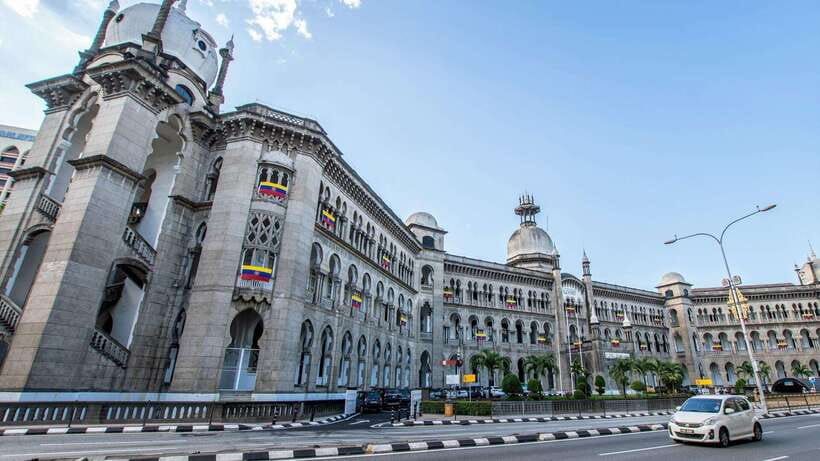
One of KL’s more photogenic surprises is the Kuala Lumpur Railway Station, built in 1886. You’ll stop for a quick look at the façade, which blends Eastern and Western design influences.
Don’t expect a long station tour. This is more like stepping into an architectural snapshot from the colonial era. But those mix-and-match details are exactly why it’s worth the photo stop: KL has many layers, and this is one of the clearer ones you’ll see in a short time.
Independence Square: colonial buildings, 1957 pride, and quick photo missions
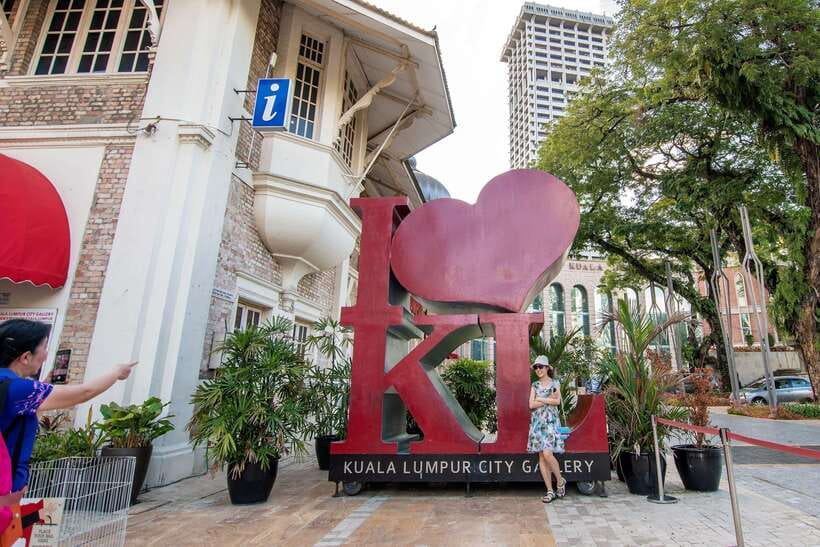
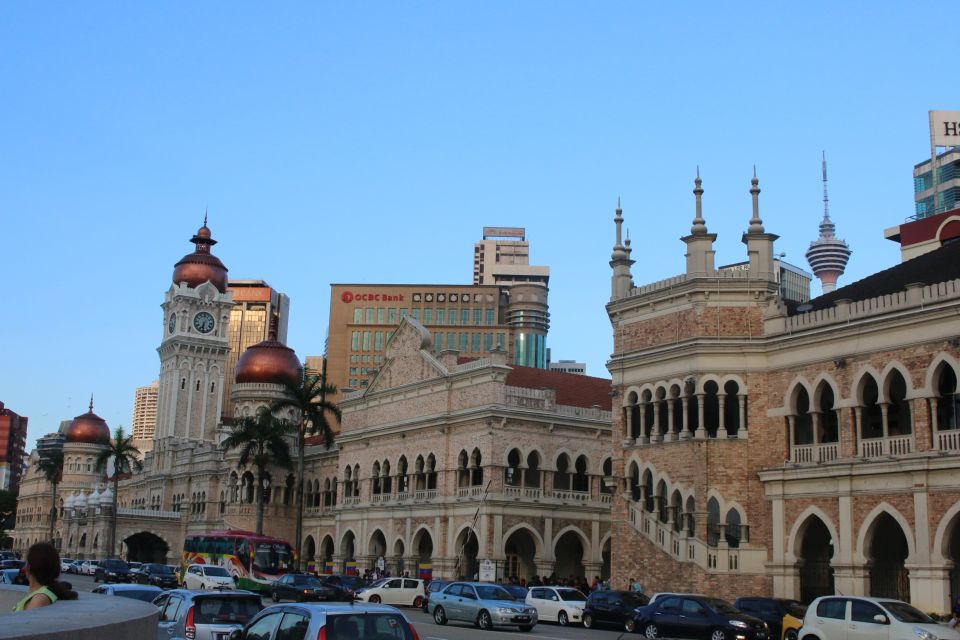
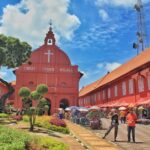
Then you’ll reach Independence Square, the historic area tied to Malaysia declaring independence in 1957. This is where colonial-era architecture becomes the star attraction.
Walk around the area and take in landmark buildings like the Sultan Abdul Samad Building, plus the familiar open field vibe that makes this a “KL postcard” spot. You’ll also want a photo at the popular I ❤️ KL sign nearby—because it’s become part of how the city markets itself, and you’ll recognize it later when you spot it in other media.
This stop can feel best if you like noticing visual details: the older building shapes, the way the open square gives you breathing space, and the contrast with the high-rises you’ll see later.
Merdeka 118 and the skyline view logic: why the photo points matter
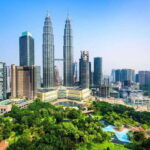
As you move through central KL, you’ll get skyline moments around Merdeka 118, the world’s second-tallest skyscraper. Even if you only see it from a passing viewpoint, it’s helpful context—especially after you’ve walked through older architecture and symbolic sites.
The tour also mentions KL Tower as part of the skyline experience. Just know that entrance/ticketing for major observation areas isn’t included, so your plan should be based on what’s offered as a viewpoint/photo stop rather than assuming you’ll be ticketed for tower access.
Practical mindset: use these skyline stops to connect the dots. When you later see Petronas, you’ll understand how KL’s skyline is arranged—business-forward and designed for dramatic “from a distance” views.
River of Life: a calmer walk after the big sights

You’ll also stop at the River of Life area, a rejuvenated waterfront marking the confluence of the Gombak and Klang Rivers. This is one of the better moments to slow down because the setting feels less rushed than the tower zones.
You’ll get a chance for photos and a short walk. If you’re heat-sensitive, this is also a useful break from standing in direct sun while you wait for your next transport moment.
Belice Chocolate: the sweet break that also supports local flavors
Not every stop is “scenery.” You’ll have a sweet break at Belice Chocolate Kingdom, where you can sample local chocolate flavors and pick up souvenirs.
This is more than a snack stop. It’s a quick taste of what Malaysia does well beyond architecture and landmarks: food culture with its own identity. It’s also a good low-effort break before your final stretch with the Petronas area.
Petronas Twin Towers photo time: iconic, and ticketing is extra
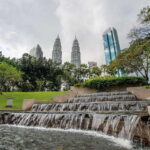
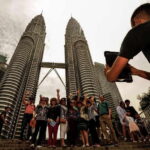
The tour ends with the Petronas Twin Towers, the tall twin towers that helped define KL’s modern image. You’ll have time for sightseeing and photos, and the tour includes the basic context—88 stories and why the towers are such a signature landmark.
Entrance tickets for the Petronas Twin Towers are not included, so treat this as a photo-and-context stop unless you separately purchase access. Even without going inside, the area is still powerful because you’ll see why people plan their days around these views.
If you want the best photos, aim to choose your angles early during your photo window. The time here tends to be competitive because everyone wants the same skyline shots.
The Golden Triangle drive: business KL in a quick pass
Between Independence Square, river time, and Petronas, you’ll pass through Kuala Lumpur’s Golden Triangle—the business-sector heart of the city. This segment is mostly about visibility: you’ll see the density of commercial KL and get a sense of where major offices and key streets cluster.
It’s not meant to replace a full neighborhood walk. But it’s useful because it explains how the city organizes itself. Older government and independence landmarks are one axis; the business center is the other. You leave with a mental map.
Price and value: why $15 can work (and when it might not)
At about $15 per person for a four-hour route, the value is driven by logistics. You’re paying for:
- air-conditioned transport that saves time and hassle
- a driver-guide who shares explanations during the ride
- multiple top KL stops packed into one half-day block
That’s the core math. If you were doing this on your own, the transport planning alone can eat up time—especially when sites are spread across different parts of the city.
Where value can feel lower: if you’re the kind of traveler who wants long, guided time at every site. Some feedback points to guided commentary being heavier during driving segments, with less guidance once you’re at each attraction. Also, if the car fills up in a shared setup, space can feel tight.
Still, for a first-time KL hit list, this kind of combo tour is a smart way to get your bearings fast.
What to watch for: shared-tour timing, car comfort, and audio
This tour is shared, so timing depends on traffic and other pickups. It’s also why your total experience can shift slightly day to day. You’ll want to be punctual and ready at the start.
A few practical caution notes that show up in real-world use:
- When the tour is fully booked, the vehicle can feel cramped for some passengers.
- If you’re sensitive to audio, there may be microphone use in the vehicle; bringing earplugs can make the ride more comfortable.
- Some stops feel like quick photo windows, so you’ll enjoy the tour more if you’re comfortable moving from one place to the next.
Getting to Harriston Boutique – MATIC: the simplest path if pickup is not included
Meet-up is tied to a shared transfer. If you’re not in the hotel pickup range, you’ll be directed to Harriston Boutique – MATIC (Jalan Ampang).
The easiest routing option from the data:
- You can reach it by cab, or
- by monorail: get down at Bukit Nanas Station, then walk about 3 minutes to MATIC
You’ll also get video guidance on how to get there the day before.
If your hotel is within about a 3 km radius of the Twin Towers, pickup and drop-off are complimentary for most hotels. If you’re farther out, you’ll likely need to take a cab to the meeting point or discuss any additional pickup charges directly with the operator.
On the day: be ready about 10 minutes before the scheduled time, since waiting time is short. This is especially important for shared tours.
Who this tour fits best (and who may want something else)
This combo tour works best if you:
- want a high-impact half-day with major sights
- like a tour guide explaining context during the ride
- enjoy mixing temples, colonial architecture, and modern skyline landmarks
- don’t want to plan transport between Batu Caves, central KL, and the Petronas area
You might want a different setup if you:
- want long time inside observation areas or museums at each stop
- hate cramped vehicles or tight schedules
- need very detailed guidance at every attraction, not just while traveling between them
Should you book this Kuala Lumpur City + Batu Caves combo?
Yes, if you want a smart, low-stress way to see KL’s “big story” in 4 hours—Batu Caves first, then royal and religious stops, colonial landmarks, and finally Petronas. The value is strongest for first-timers because transport and routing are already handled.
Book it with one mindset: this is a fast best-of route, not a slow cultural immersion. If you go in ready to move, bring respectful temple attire, and plan your expectations around short photo windows, you’ll likely come away with a clear mental map of KL—and a bunch of images you’ll actually use.
FAQ
How long is the Kuala Lumpur City Tour & Batu Caves Combo?
It runs for about 4 hours.
What does the tour cost?
The price is $15 per person.
What’s included in the tour price?
You get transportation by air-conditioned vehicle and a driver-guided tour.
Are entrance fees included for the KL Tower or the Petronas Twin Towers?
No. Entrance fees to the KL Tower and the Petronas Twin Towers are not included.
Where do I meet if my hotel pickup is not available?
You meet at Harriston Boutique – MATIC Jalan Ampang. It’s reachable by cab or monorail (Bukit Nanas Station is about a 3-minute walk away).
Is hotel pickup offered?
Pickup and drop-off are complimentary from many hotels/residences located within a 3 km radius of the Twin Towers. If you’re staying outside that area, you may need to go to the meeting point, and additional charges could apply for pickup from outskirt hotels.
What should I consider before visiting Batu Caves?
The tour includes a dress-code and respectful behavior briefing for Batu Caves, since it’s a Hindu religious site.
Do we get to see batik being made?
Yes. You’ll visit the East Coast Batik Factory (Batik CHONG) for a batik workshop with a live demonstration.
Is the tour in English, and is it wheelchair accessible?
The tour has an English-speaking host/greeter, and it is listed as wheelchair accessible.