REVIEW · KUALA LUMPUR
Kuala Lumpur Walk, Eat & See Tour
Book on Viator →Operated by Funtastic Asia · Bookable on Viator
Old Kuala Lumpur is best on foot.
This walk, eat & see tour threads together heritage streets and street food in areas you’d otherwise skip, with a guide who can explain what you’re seeing while you snack your way across town. I especially like the mix of ethnic neighborhoods and the way it ends in Central KL sights like Masjid Jamek and Merdeka Square without turning the whole evening into a classroom.
Two things I like a lot: the food sampling is built into the route (snacks are included, and the bites are chosen for variety), and the group size cap of 12 keeps it friendly instead of crowded. A possible drawback is that the experience depends on good weather, and the tour timing can be anywhere from about 1 to 5 hours, so it’s not ideal if you need a perfectly exact schedule.
If you want a safe, practical way to get oriented in Kuala Lumpur while eating along the way, this is a strong pick.
In This Review
- Key things to look forward to
- Walking between worlds in Kuala Lumpur starts at Nu Sentral
- Why Charles-style guiding changes the whole tour
- Little India Brickfields: old brick religious sites and snack stops
- Chow Kit: the early KL development you can still walk through
- Kampung Baru: how locals lived in an older Malay settlement
- Central Market Kuala Lumpur: heritage buildings plus quick city-center orientation
- Petaling Street Market: Chinatown, street art, and a changing nightlife area
- How the food tasting works (and what that adds to the value)
- Pace, weather, and what to wear for 1 to 5 hours
- Price check: is $75 worth it for this KL route?
- Who this tour fits best (and who should think twice)
- Final call: should you book Kuala Lumpur Walk, Eat & See?
- FAQ
- How much does the Kuala Lumpur Walk, Eat & See Tour cost?
- How long is the tour?
- What’s included in the price?
- Is alcohol included?
- Where does the tour start and end?
- How big is the group?
- What kind of weather does the tour require?
- When do I get confirmation after booking?
Key things to look forward to
- Small-group pace (max 12) that’s easier to ask questions and move without rushing
- Snacks included plus train tickets to help you spend your time on food, not logistics
- Old Kuala Lumpur stops across multiple communities: Brickfields, Kampung Baru, and Chinatown
- Central KL landmarks like Masjid Jamek and Merdeka Square along the walking route
- Street art and murals in the Petaling Street area, plus quick looks at changing nightlife areas
Walking between worlds in Kuala Lumpur starts at Nu Sentral
You’ll start near Nu Sentral at Nu Sentral201, Jalan Tun Sambanthan in Kuala Lumpur Sentral. That’s a smart choice because you can get there easily using public transport, and it helps you avoid the messy part of arriving in a city you’re still learning.
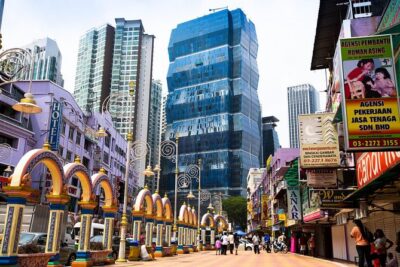
Your tour then ends at Petaling Street Market on Jalan Petaling in the city center. In practice, that’s convenient because once you’re done eating and wandering, you’re close to more food options and nightlife, without needing extra rides across town.
You can also read our reviews of more walking tours in Kuala Lumpur


Why Charles-style guiding changes the whole tour
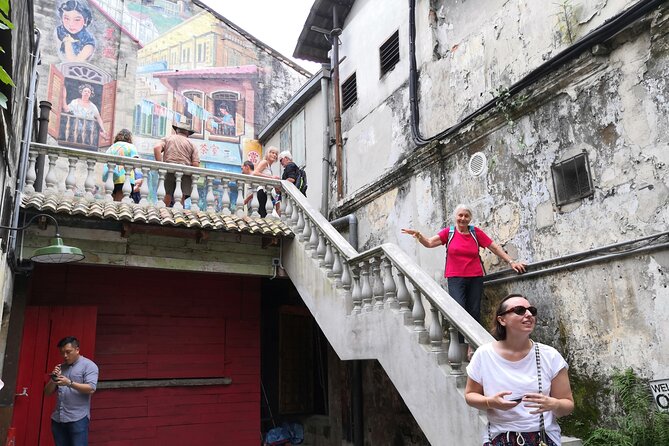
The best part of this experience is the guide. In the reviews, the host named Charles gets called out for being friendly, fluent in English, and generous with time and attention. That matters because good guiding keeps you from just eating random bites; it helps you understand what you’re tasting and why the neighborhood looks the way it does.
Charles also apparently gives options, including the possibility of a longer tour. Even if you keep it to the main plan, that flexibility is a plus when you’re traveling with a group that wants a bit more time for photos or food questions.
Little India Brickfields: old brick religious sites and snack stops
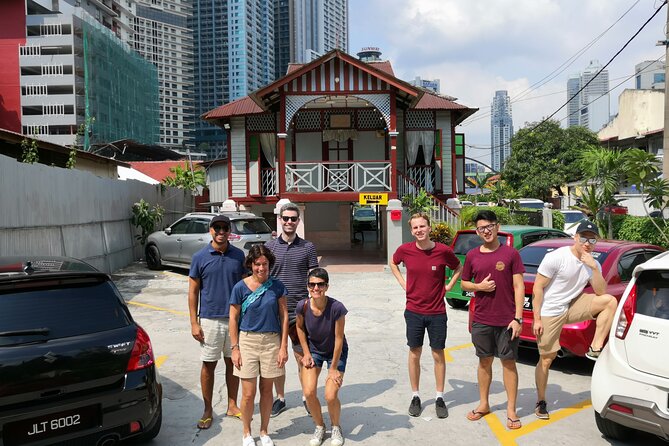
One early stop is Little India in Brickfields, focused on traditional areas and older brickfield religious sites. You also get a short tasting here, and it’s designed as an easy intro to the flavors of Malaysia before you move into bigger-market chaos.
This is the kind of stop that works well if you’re the type of traveler who likes context as much as calories. You can walk in, grab a snack, look around, and leave with a clearer sense of how this part of Kuala Lumpur fits into the city’s multicultural mix.
Timing note: this part is about 20 minutes, so it won’t feel slow or stuck. If you want to linger, you’ll need to do it after the tour or ask your guide how you can extend time.
Chow Kit: the early KL development you can still walk through
Next you head to Chow Kit, known for market energy and the neighborhood’s place in Kuala Lumpur’s early development. The tour keeps it practical: you stroll, you eat, and you see the market lanes up close rather than just peeking from the sidewalk.
This stop is useful because it shows a different texture of the city than the more tourist-heavy sights. Markets here tend to be where people actually shop and pass through, which makes the food experience feel more grounded.
Kampung Baru: how locals lived in an older Malay settlement
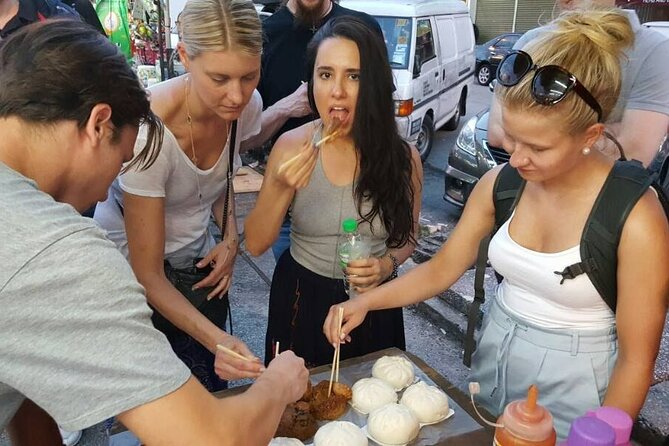
Then the tour moves to Kampung Baru, described as the very first settlement of Malays. You’ll see how locals lived back in time, and you get enough time to take in the feel of the neighborhood without the pressure of rushing to the next photo point.
Timing note: this stop is about 30 minutes. That’s a good length because you can look around, take photos, and still keep the pace of the overall walk.
One consideration: because Kampung Baru is an active neighborhood, your best move is to be respectful with where you stop and how you take pictures. A guided group helps here, because your guide can point out what’s appropriate.
You can also read our reviews of more tours and experiences in Kuala Lumpur




Central Market Kuala Lumpur: heritage buildings plus quick city-center orientation
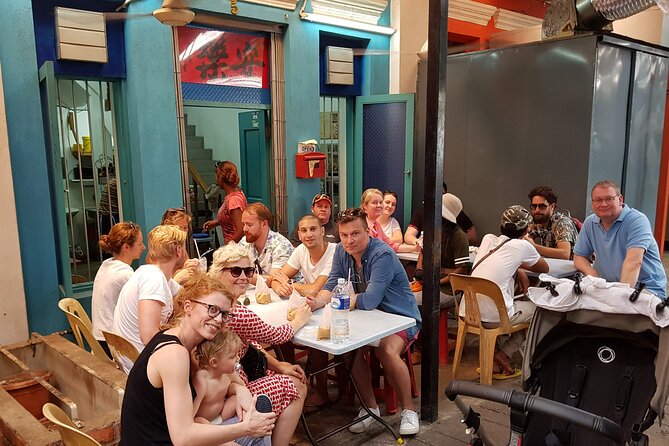
At Central Market, the tour shifts into classic old Kuala Lumpur sightseeing. You get a walk through the market area, but the focus is also on small details like alley spaces where you can notice painters and look for local storytelling in the environment.
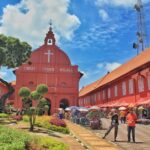
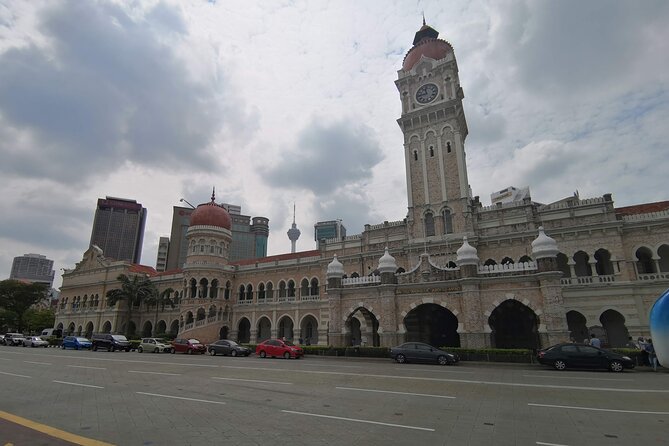
From here, you head into the wider city-center highlights. You’ll cover the heritage area around Masjid Jamek, and you’ll see the River of Life Project features. The route then includes Merdeka Square, which is a big “map anchor” sight—once you’ve seen it on foot, you’ll understand the city better.
Timing note: Central Market is listed at around 5 minutes as a quick stop, but the broader walking through the heritage zone around it takes more time. So don’t expect a long shopping spree here. Think of it as a look-and-learn moment with a natural transition to the next food area.
Petaling Street Market: Chinatown, street art, and a changing nightlife area
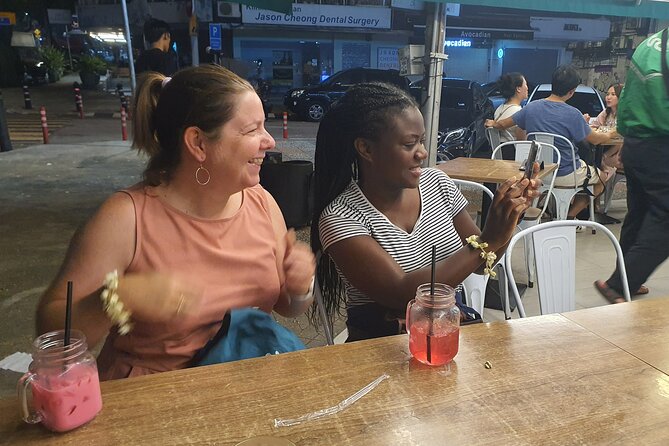
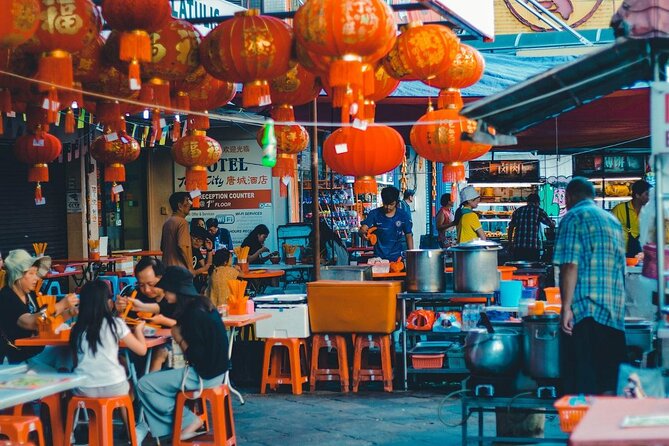
The final food-and-walk zone is Petaling Street Market. You’ll go through the area that’s often called the fake market, but the point of the stop is more interesting than that label suggests.
You also get to see how parts of the area—especially the old red light lanes—have been revived and turned into places with little cafes and bars, plus the back alleys where you’ll find street art murals. That mix is exactly why this tour works: it doesn’t treat Chinatown as one single thing.
Timing note: this stop is about 10 minutes. It’s short enough to keep the tour moving and avoid turning into a shopping test. If you want more time, you can easily continue on your own from the drop-off point, since Petaling Street is right there.
How the food tasting works (and what that adds to the value)
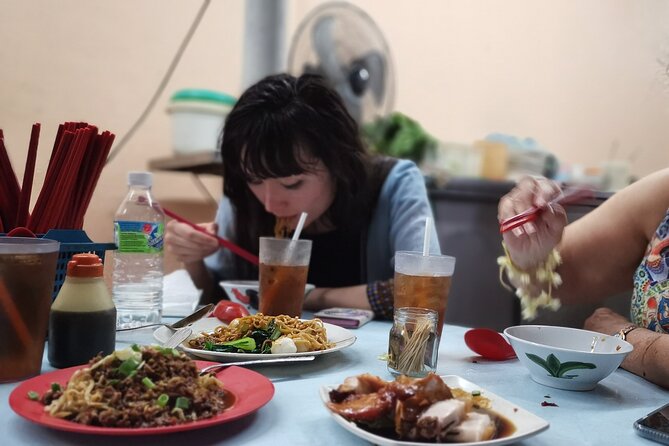
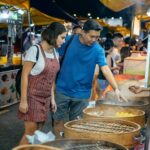
Food tours can be hit-or-miss when they feel random. This one is structured as a sequence of bites that match each neighborhood, and snacks are included. Train tickets are also included, which matters because you’re not just paying for walking and staring—you’re paying for a guided, transport-supported route that connects locations.
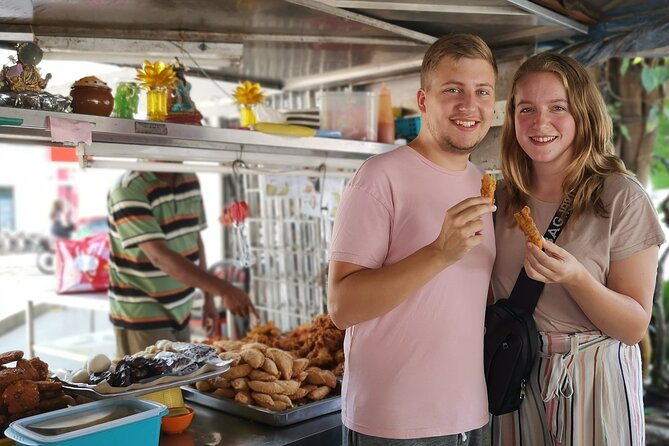
From the reviews, I’d watch for standout items like banana roti, which came up specifically as excellent. That kind of detail is helpful because it gives you a target: you’re not only eating to eat. You’re sampling recognizable local flavors in the places where they make sense.
Also, alcohol isn’t included. That’s normal for most walking food tours, but it’s worth noting because it changes how you should pace your evening. You can still have plenty of fun, just plan on staying focused during the walking parts.
Pace, weather, and what to wear for 1 to 5 hours
The tour runs roughly 1 to 5 hours, so you should plan your day with some buffer. You’ll be walking between several neighborhoods, and a guided group moves at a steady pace.
Because the experience requires good weather, bring rain protection if you’re traveling in a season when Kuala Lumpur showers can pop up quickly. Comfortable shoes are non-negotiable here. If you’ve got blisters, you’ll start skipping the best parts of a food tour.
Since the group size is small (max 12), you generally won’t feel like you’re fighting a crowd. Still, bring basic patience for market areas—people move differently there.
Price check: is $75 worth it for this KL route?
At $75 per person, the key value isn’t just the snacks. It’s what’s bundled with the food: snacks plus train tickets, guided stops across multiple neighborhoods, and a route that ends in a major city-center area.
For comparison, a lot of solo food hopping turns into a pile of separate costs—rides, small snacks, and time lost figuring out where to go next. Here, the ticketing and transport are handled so you can spend your energy on tasting and seeing.
You’ll also see group discounts and mobile tickets mentioned, which usually means less friction and fewer paper hassles. The smart move is to book when you can, since it’s typically booked about 36 days in advance on average, and that can help you lock in a time slot that matches your schedule.
Who this tour fits best (and who should think twice)
This tour is best for you if you want a guided way to see Old Kuala Lumpur across multiple communities: Brickfields/Little India, Chow Kit, Kampung Baru, and Chinatown. It also fits if you want to understand what you’re seeing, not just collect photos and snacks.
It’s also a good choice if you like a safe, structured route in areas that can be busy. The review feedback highlights a feeling of safety during the walk, which is exactly what you want when you’re learning your way around a new city.
You might think twice if you’re trying to fit Kuala Lumpur into a rigid timetable, because the tour length can vary and it runs only when the weather is suitable. You’ll also want to avoid this if you’re hoping for a bar-focused evening, since alcohol isn’t included.
Final call: should you book Kuala Lumpur Walk, Eat & See?
I’d book it if you’re in Kuala Lumpur for a short stay and you want to get your bearings fast through food and neighborhood context. Starting at Nu Sentral and ending at Petaling Street is a practical loop that leaves you in the action without needing extra planning.
I’d skip or wait if you’re not interested in walking between several heritage areas and market streets. This is a moving tour, not a sit-and-watch experience.
If you do book, I’d aim to come hungry, wear comfortable shoes, and use Charles’s explanations to connect the food to the streets. That’s where the tour turns from snacks into a real understanding of Kuala Lumpur’s mix.
FAQ
How much does the Kuala Lumpur Walk, Eat & See Tour cost?
The price is $75.00 per person.
How long is the tour?
It runs from about 1 to 5 hours (approx.).
What’s included in the price?
Snacks and train tickets are included.
Is alcohol included?
No, alcoholic beverages are not included.
Where does the tour start and end?
It starts at Nu Sentral (Nu Sentral201, Jalan Tun Sambanthan) and ends at Petaling Street Market (Jalan Petaling, City Centre).
How big is the group?
The tour has a maximum of 12 travelers.
What kind of weather does the tour require?
It requires good weather. If it’s canceled due to poor weather, you’ll be offered a different date or a full refund.
When do I get confirmation after booking?
You’ll receive confirmation at booking time unless you book within 8 hours of travel, in which case confirmation is received as soon as possible based on availability.