REVIEW · KUALA LUMPUR
Kuala Lumpur City Tour with 21 Attraction (Private)
Book on Viator →Operated by Exotic Asia Holidays Travel & Tours Sdn Bhd · Bookable on Viator
Kuala Lumpur in a single, well-paced day beats guessing. I like the pickup-friendly logistics and air-conditioned ride, and I love how the route stacks major sights like the Petronas Twin Towers, Batu Caves, and KL Tower with lots of smaller cultural stops. The big consideration: many stops are short photo or quick-walk visits, so you’ll want to prioritize what you really want to linger on.
My favorite part is the mix: Buddhist and Hindu temples, Islamic landmarks, colonial-era architecture, and modern skyline giants all in one go. The only potential drawback is that some sites (especially Batu Caves) have dress rules and steep steps, so plan your shoes and clothing before you go.
In This Review
- Key highlights worth planning for
- A fast 8 hours: how the timing really feels
- Morning start: Thean Hou Temple to Brickfields Little India
- Istana Negara’s official grounds and the ride north to Batu Caves
- Jadi Batek Gallery: watching batik get made
- National Monument, ASEAN Sculpture Garden, and Masjid Negara
- Colonial charm in the city core: KL Sentral and Dataran Merdeka
- The River of Life: Klang and Gombak at their meeting point
- From Merdeka 118 area to Chinatown: modern ambition meets street culture
- Guan Di Temple and Jamek Mosque lookout: temples with different energies
- Sweet and scenic: Beryl’s Chocolate Kingdom, Sri Maha Mariamman, KL Tower photos
- Petronas Twin Towers: the headline moment you see without overthinking
- Price and value: is $61 per person a fair deal?
- Who this Kuala Lumpur tour fits best
- Should you book this tour?
- FAQ
- How long is the Kuala Lumpur City Tour with 21 Attractions?
- What time does the tour start?
- Is hotel pickup included?
- Is a mobile ticket provided?
- Are entrance fees included?
- What should I wear for Batu Caves?
- Does the tour include a guide in English?
- Is travel insurance included?
- Can I cancel for a full refund?
Key highlights worth planning for
- 21 attractions in about 8 hours means fast timing and smart use of travel time
- English driver-guided tour keeps the cultural stops understandable and less confusing
- Batu Caves rules: cover up at the right spots and wear solid, grippy shoes
- Icon skyline moments: KL Tower and Petronas Twin Towers are built into the day as photo stops
- Hands-on culture breaks: batik at Jadi Batek Gallery and sweet stops at Beryl’s Chocolate Kingdom
- Central KL core sights: Independence Square, National Mosque, and the River of Life show the city’s layers
A fast 8 hours: how the timing really feels
This is a full morning into afternoon type of tour, starting around 8:30 am and running about 8 hours total. The pacing is meant to cover a lot of ground without turning your day into a marathon of taxis. You also get the practical stuff: an air-conditioned vehicle, pickup offered, and a driver-guided tour in English.
Here’s what you should expect: many stops are around 10–20 minutes. That can feel tight if you’re the slow-and-strolling type, but it works well for seeing a place, getting context, and moving on before the heat and crowds squeeze your day. You can think of it as a guided sampler platter of Kuala Lumpur—great for first-timers, and useful even if you’ve been once.
If you want one or two stops to be your main mission (for example Batu Caves or the towers), you’ll likely do best mentally deciding what you care about most. Then let the rest be about getting your bearings and absorbing the vibe.
You can also read our reviews of more city tours in Kuala Lumpur
Morning start: Thean Hou Temple to Brickfields Little India
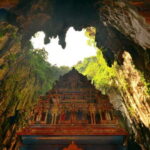
Your day often opens with Thean Hou Temple, perched on Robson Hill. It’s a striking, multi-faith sanctuary, with details drawn from Buddhist, Taoist, and Confucian influences. Even in a short visit, you get the sense that Kuala Lumpur is not one culture—it’s a stack of them in the same city blocks.
A key detail I appreciate here is the design language. The temple’s carved craftsmanship and dragon-adorned elements aren’t just decoration—they make it easier to understand what you’re looking at when you’re not reading a plaque. Because the stop is brief, use that time to look up and soak in the structure, not only the entrance photo.
From there, the tour slides into Brickfields, often called Little India. This part matters because it shifts you from landmark architecture to neighborhood life. You’ll see the kinds of shops and food streets that make this area feel like a living cultural district, not a museum stop. It’s also a good place to reset your expectations: Kuala Lumpur isn’t only towers and monuments. It’s also everyday commerce and community.
Istana Negara’s official grounds and the ride north to Batu Caves
Next up is Istana Negara, the official residence of Malaysia’s king (Yang di-Pertuan Agong). The palace opened in 2011, and it shows a blend of traditional Malay elements with modern touches. Even with limited time, it’s a solid stop if you want to see how national identity shows up in architecture.
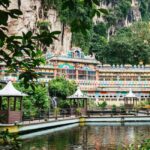
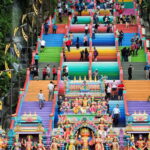
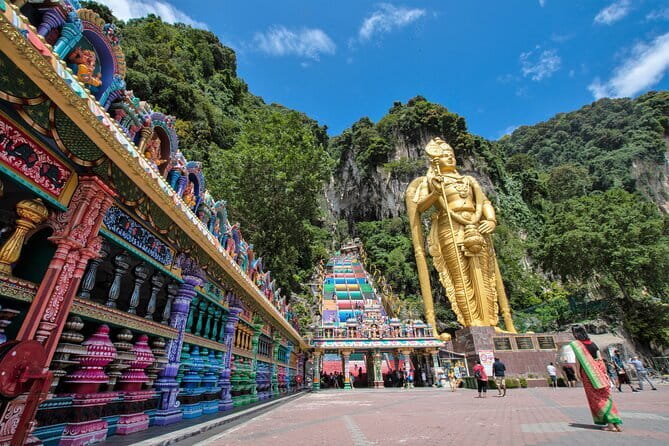
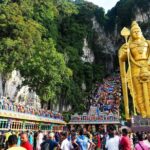
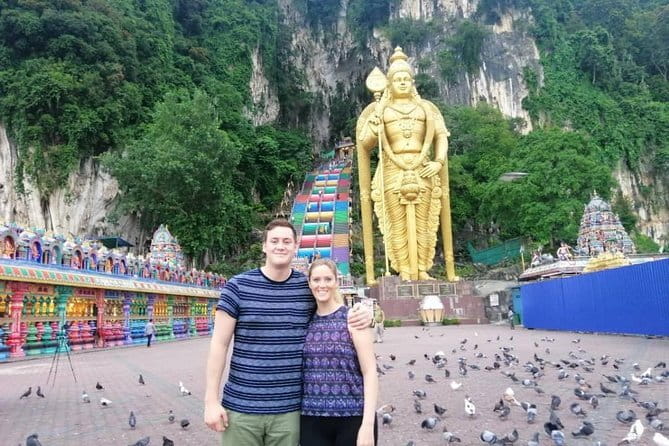
Then the day turns physical with Batu Caves. This is a limestone hill with caves and cave temples, made famous by the huge golden statue of Lord Murugan at the entrance. It’s one of those places where your photos will always be better because the scale is hard to believe until you’re there.
The practical side is the real deal. You’re dealing with steep, slippery terrain, and you must follow the site rules: no sleeveless shirts and no open-toed shoes, and ladies need long dresses or pants with shoulders covered. Bring sensible shoes—something with grip, not flip-flops. If you’ve got knee issues, the climb may be the hardest part of the day, even if the stop time is short.
Jadi Batek Gallery: watching batik get made
Between monuments, the tour takes a breather with Jadi Batek Gallery, known for traditional hand-painted batik. Even if you don’t buy anything, this kind of stop is valuable because it translates culture into process. You see how intricate designs take shape through careful work, and you get a clearer picture of what makes batik more than just a pattern on fabric.
This is also a smart stop-time choice. You’re not just staring at a building; you’re getting a slow activity that contrasts with outdoor sightseeing. In Kuala Lumpur’s heat, that kind of shift can make the rest of the day feel easier.
National Monument, ASEAN Sculpture Garden, and Masjid Negara
After Batu Caves, you head back into the heart of civic Kuala Lumpur with National Monument (Tugu Negara). It’s a bronze sculpture honoring Malaysian soldiers who died fighting for independence. If you’ve ever wondered why places like this matter beyond the postcard, this is a good answer: it grounds the city’s modern bustle in a specific story about sacrifice and nationhood.
Nearby is the ASEAN Sculpture Garden, with six sculptures by artists across ASEAN countries, including Malaysia, Singapore, Indonesia, Thailand, and the Philippines. This stop is quieter than the headline attractions, but that’s the point. You get a pause while still staying close to a meaningful landmark cluster.
Then comes National Mosque (Masjid Negara), completed in 1965. It’s a major icon of Islamic faith and known for its modern design style. Even with a short visit, you’ll likely notice how the architecture tries to look both symbolic and functional. It’s also the kind of place where you’ll feel the difference between a quick photo spot and a moment that deserves a slower glance.
You can also read our reviews of more private tours in Kuala Lumpur
- Private Tour Kuala Lumpur with Petronas Twin Towers Observation Deck & Batu Cave
★ 5.0 · 1,029 reviews


Colonial charm in the city core: KL Sentral and Dataran Merdeka
A big part of this tour’s appeal is that it doesn’t treat Kuala Lumpur like a single theme. You’ll swing through Kuala Lumpur Sentral Railway Station, built in 1910. The design is Moorish-inspired, with arched windows, spires, and minaret-like details. That colonial-era vibe can feel surprising after the modern towers, but it’s exactly why this route works.
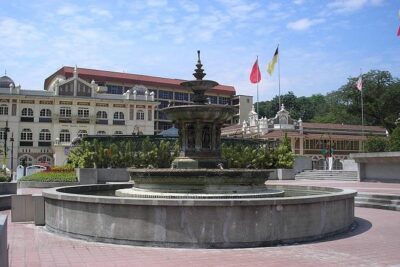
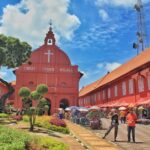
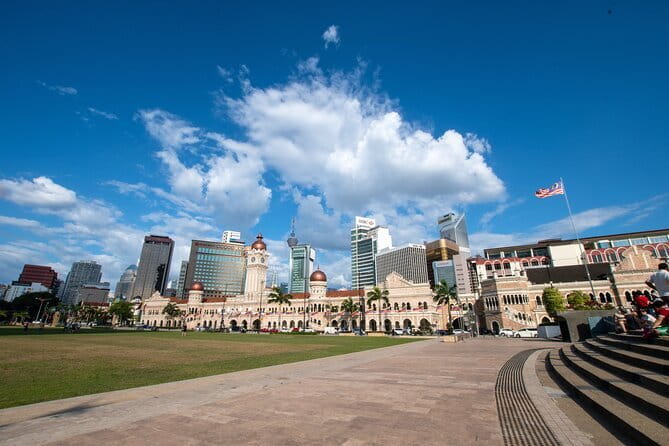
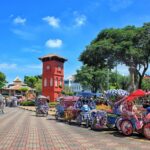
Then you’re at Dataran Merdeka (Independence Square), tied to the declaration of independence on August 31, 1957. The square sits amid colonial-era buildings, so the location itself helps you visualize how power and identity shifted over time. Give yourself those full 20 minutes if you can—this is a place where walking a small loop and looking around helps more than standing in one spot.
The River of Life: Klang and Gombak at their meeting point
Next is The River Confluence, where the Klang and Gombak rivers meet. This is considered the birthplace of Kuala Lumpur, because the early settlement formed around that water junction. It’s a small stop, but it’s one of the most grounding on the entire route.
I like it because it explains why so many key sights cluster near the river system. When you connect the geography to the history, the city starts to make more sense. And since the time is short, you can treat it as a quick orientation checkpoint before the tour shifts into markets and temples.
From Merdeka 118 area to Chinatown: modern ambition meets street culture

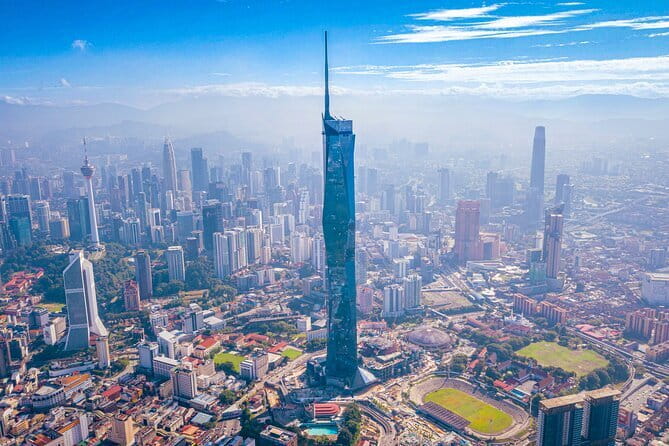
You’ll pass by Warisan Merdeka Tower (Merdeka 118), which is the tallest building in Southeast Asia and the second-tallest in the world at 678.9 meters. The design is inspired by Malaysia’s heritage and independence. The important practical note: the observation deck admission isn’t included, so don’t plan on using this as a viewpoint stop unless you’re willing to pay separately.
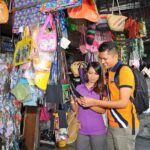
Then it’s down to Chinatown, centered around Petaling Street Market. This is where your camera gets busy. The streets feel like a full-on commercial zone with stalls selling everything from local handicrafts to everyday goods.
After that, you hit Central Market Kuala Lumpur, established in 1888. It started as a wet market and later became an arts and crafts center. If you want souvenirs that feel more rooted than generic mall items, this is one of the better places in the day to browse.
Guan Di Temple and Jamek Mosque lookout: temples with different energies
You get a pair of religious landmarks with different vibes.
Guan Di Temple (also known as the Kwong Siew Association Temple) is dedicated to Guan Di, the Chinese God of War and Literature. Built in the late 19th century by early Chinese settlers, it’s a window into how belief and community history overlap in Kuala Lumpur.
Then there’s a lookout around Masjid Jamek from the Jamek Mosque lookout point area. Masjid Jamek Sultan Abdul Samad is known as the oldest mosque in Kuala Lumpur, and the riverside setting helps it feel calm and grounded. Even if your time here is only a few minutes, the viewpoint is part of the experience.
Sweet and scenic: Beryl’s Chocolate Kingdom, Sri Maha Mariamman, KL Tower photos
The tour includes a playful break at Beryl’s Chocolate Kingdom, where you can watch chocolate-making in the factory setting. This is a good option if you want something indoor and air-conditioned after a morning of sun and steps. It’s also a fun change of pace for families or anyone who wants a small, easy win in a busy day.
Then you’ll visit Sri Maha Mariamman Temple, considered the oldest Hindu temple in Kuala Lumpur, dating to 1873. It’s dedicated to Mariamman and known for vibrant, intricate Dravidian-style details. This stop is another reminder that Kuala Lumpur’s religious architecture isn’t one style—it’s a map of influences.
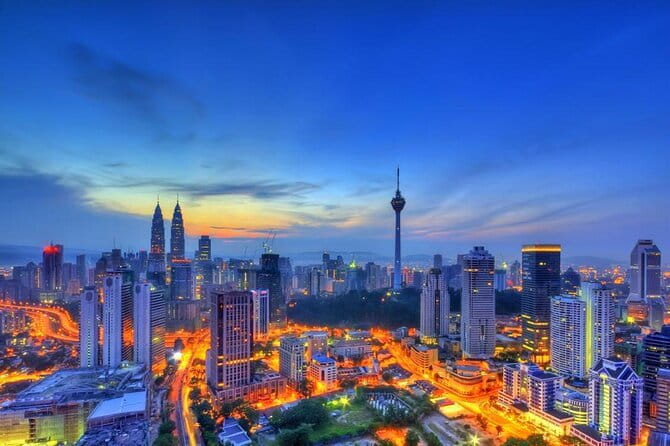
The modern skyline return happens at Menara Kuala Lumpur (KL Tower). It’s a telecommunications and observation tower standing 421 meters tall. The stop here is a photo moment, which is exactly what this tour needs: you get the sight without dragging your day into long entry procedures.
Petronas Twin Towers: the headline moment you see without overthinking
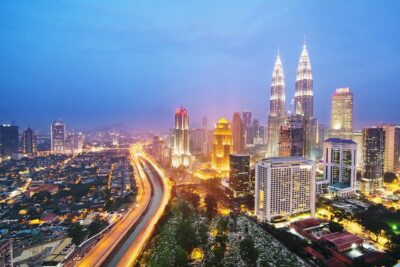
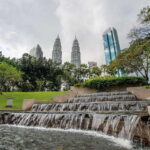
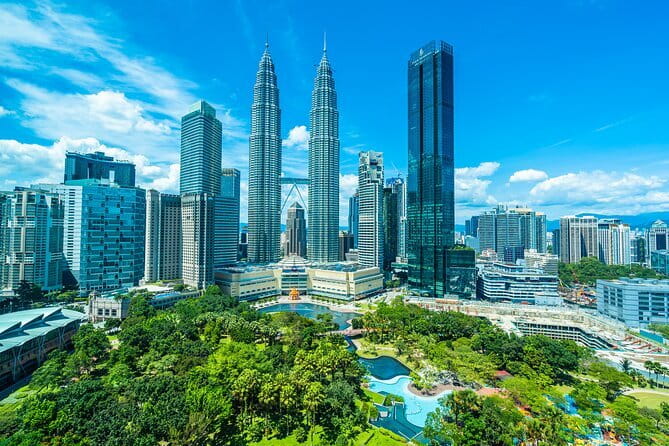
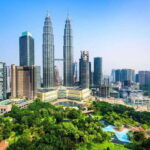
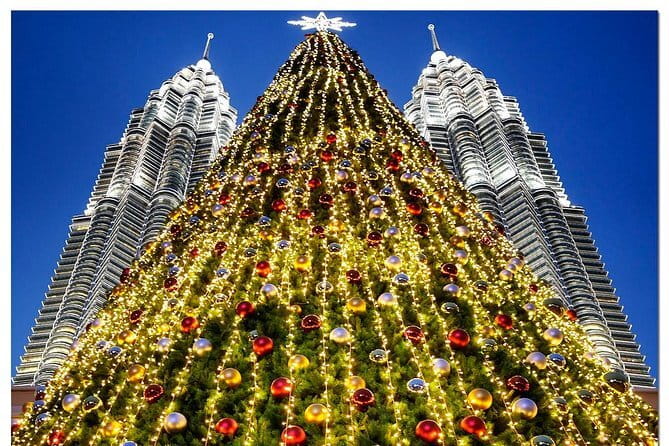
You’ll end on Petronas Twin Towers, a skyline icon with a history that even casual fans know. The towers were the tallest buildings in the world from 1998 to 2004. They stand 451.9 meters tall and connect via a sky bridge.
Because the tour lists this as a stop with free admission ticket, it’s a good final or near-final photo anchor. You don’t need an hour of planning to appreciate them. Just time your photos, enjoy the scale, and take a quick look at how the towers sit within the city’s street-level rhythm.
Price and value: is $61 per person a fair deal?
At $61.00 per person for about 8 hours, this tour can feel like a solid value—mainly because it combines guided context with a lot of key stops that would otherwise take multiple rides and planning. You’re getting pickup offered, an air-conditioned vehicle, and a driver-guide in English, plus mobile ticket convenience.
Where the value gets tricky is the nature of the stops. Short visits are great for coverage, but they mean you won’t get a deep, slow experience at every location. If you want to do one thing very well—like an extended photo session at a viewpoint, a long museum-style read, or a long temple visit—you’ll need to accept that this tour is more about seeing than perfecting.
So the best way to think about it: you’re paying to reduce your planning stress and compress the highlights into one guided day. That’s a fair trade if it matches your travel style.
Who this Kuala Lumpur tour fits best
This tour suits you if:
- You’re visiting Kuala Lumpur for the first time and want a fast orientation across major districts
- You like a guided route where you don’t have to figure out what to see next
- You want cultural variety: temples, mosques, independence landmarks, neighborhoods, markets, and skyline icons
It’s less ideal if:
- You hate short stops and want long stays at fewer places
- You plan to spend lots of time buying items or doing hands-on activities beyond what a quick stop allows
- You’re not comfortable with stairs at places like Batu Caves (dress code and footing matter)
Should you book this tour?
I’d book it if you want a practical, highlights-first day that covers Kuala Lumpur’s big contrasts: old faith sites and modern towers, river history and independence monuments, markets and craft workshops. The biggest reasons to choose it are the amount of ground covered, the English driver-guided context, and the fact that you get both famous icons (Petronas, KL Tower) and more local stops (Brickfields, Central Market, temple clusters).
Book with care if you want long, relaxed time at fewer places. And pack for Batu Caves weather and terrain: proper shoes and the right clothing before you step out of the vehicle.
FAQ
How long is the Kuala Lumpur City Tour with 21 Attractions?
The tour lasts about 8 hours.
What time does the tour start?
The start time is listed as 8:30 am.
Is hotel pickup included?
Yes, pickup is offered.
Is a mobile ticket provided?
Yes, the tour includes a mobile ticket.
Are entrance fees included?
Most stops are marked with free admission ticket information. One exception noted is Warisan Merdeka Tower, where the observation deck admission is not included.
What should I wear for Batu Caves?
You need to avoid sleeveless shirts and open-toed shoes. Also, ladies need long dresses or pants with shoulders covered.
Does the tour include a guide in English?
Yes, there is a driver guided tour in English included.
Is travel insurance included?
No, travel insurance is not included.
Can I cancel for a full refund?
You can cancel for a full refund if you cancel at least 24 hours before the experience start time. The tour also allows free cancellation.