REVIEW · KUALA LUMPUR
Historical Malacca Tour from Kuala Lumpur
Book on Viator →Operated by SK TRAVEL CAR HIRE M SDN BHD · Bookable on Viator
Malacca, minus the transport stress. I love the hotel pickup and drop-off and the included lunch, which keeps the whole day easy. One thing to watch: on Fridays, timing can get a bit tricky because some museum hours and traffic can slow you down.
You’ll start at 8:00 am and spend about 9 hours seeing the core landmarks that explain how Portuguese, Dutch, Chinese, and Indian communities shaped Malacca. The pace is built for a moderate level of walking, with short stops and time to look around.
In This Review
- Key reasons to book this Malacca day trip
- Why this Kuala Lumpur to Malacca day trip is so efficient
- Price and value: what $120 gets you
- The morning run: pickup, ride time, and how the day is paced
- House of Museums Malacca: riverfront antiques and quick context
- St. Peter’s Church: Dutch power after the Portuguese fall
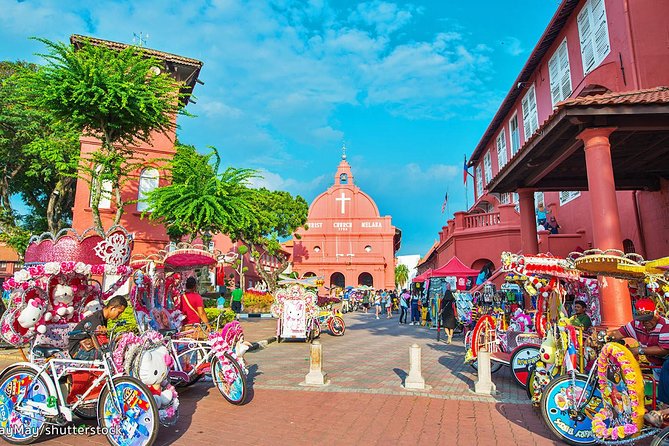
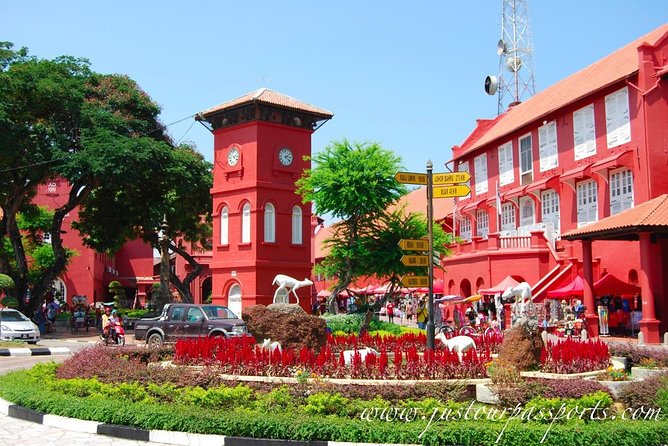
- Red Square (Dutch Square) and the Stadthuys in the city center
- Christ Church: Dutch community memory and a 1741 foundation
- A Famosa Fort: Portuguese military architecture you can still read
- Cheng Hoon Teng Temple: Chinese leadership during Dutch Malacca
- Kampung Kling Mosque and Sri Pogyatha Vinoyagar Moorthi Temple
- Jonker Street (Jonker Walk): bring the story into the present
- Lunch and guide style: when the explanations make the sites click
- Timing tips for Fridays and how to avoid a slow day
- Who this Malacca tour suits best
- Should you book this Historical Malacca Tour from Kuala Lumpur?
- FAQ
- How long is the Historical Malacca Tour from Kuala Lumpur?
- What time does the tour start?
- Is hotel pickup and drop-off included?
- Is lunch included?
- Do I need to buy admission tickets for the stops?
- Is this a private tour?
- Is alcohol included in the price?
- Do I need a mobile ticket?
- What physical level is required?
- What is the cancellation policy?
Key reasons to book this Malacca day trip
- Direct route from Kuala Lumpur: about 1.5 hours each way, no wrestling with buses or trains
- Lunch included: so you’re not hunting for food mid-sightseeing
- Portuguese-to-Dutch storytelling: you’ll see the physical clues, not just photos
- Religions in one walking circuit: church, temple, mosque, and another temple close together
- A guide who can explain it fast: guides like Chandran/Chandra are praised for clear, friendly explanations
- Jonker Street time: you can connect the history to the area’s current character
Why this Kuala Lumpur to Malacca day trip is so efficient
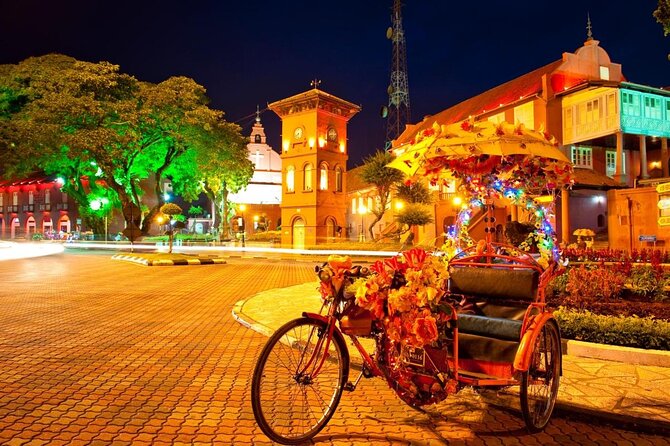
Malacca is one of those places where the layers of power and trade show up in the buildings. The catch is that doing it DIY can eat your day: transit delays, ticket lines, and the “where do we go next?” shuffle.
This tour is designed to remove that stress. You get door-to-door transfers and a fixed route, so you spend more time looking at what matters and less time planning. It’s also a good choice if you want an organized day but still like walking and noticing details.
You can also read our reviews of more historical tours in Kuala Lumpur
Price and value: what $120 gets you
At $120 per person, this isn’t a budget throwaway day trip, but it also doesn’t feel inflated for what’s included. You’re paying for:
- Hotel pickup and drop-off in Kuala Lumpur
- Lunch
- A guided day with multiple major stops
- Admission coverage for at least one key museum stop
Think of it as paying for time savings and direction. If you’ve ever spent a morning figuring out transit and opening hours, you already understand why that value matters.
One more note: the tour uses a mobile ticket and offers group discounts, which can bring the cost down if you’re traveling with friends or family.
The morning run: pickup, ride time, and how the day is paced
The day starts at 8:00 am, and the transfer from Kuala Lumpur to Malacca takes about 1.5 hours. That matters because you reach the historic core early enough to see more before the day gets crowded or slow.
The stop durations are generally short—around 20 to 45 minutes at each site. That format works well for people who want to see a lot without spending the whole day sitting. It also means your guide can connect the dots between stops: Portuguese fort → Dutch rule → Chinese and Indian community landmarks → the present-day atmosphere of Jonker Street.
You’ll want moderate physical fitness for the walking, since a couple of places are reached on foot and the day adds up.
House of Museums Malacca: riverfront antiques and quick context
Your first stop is House of Museums Malacca, located beside the Malacca River, with about 8 minutes walking distance from Jonker Walk. The big purpose here is simple: it gives you a “feel” for everyday life and objects from earlier eras before you jump into the grand religious and fort sites.
This stop includes an admission ticket, so you don’t arrive wondering what’s covered. The museum is described as a house packed with antiques, which is great if you like visual history—things you can actually point at and talk about.
Practical tip: if you’re sensitive to time pressure, this is a good place to slow down for a few extra minutes. The rest of the tour is tightly scheduled, so squeezing in “just one more room” here can be satisfying.
St. Peter’s Church: Dutch power after the Portuguese fall
Next up is St. Petri (St. Peter’s Church). This stop matters because it marks a turning point: the Portuguese occupation of Melaka ended when the Dutch took over in 1641. After that shift, Catholics faced persecution under Dutch rule, and churches were destroyed.
You don’t need a history degree to get it. You just need a guide who can connect the date (1641) to what you’re seeing. A church stop also gives the tour a religious angle, which becomes a theme later when you visit temples and a mosque.
This site has free admission and a short 30-minute time slot, so it works best as a stop for orientation and understanding—not a long, quiet museum session.
- Private Tour Kuala Lumpur with Petronas Twin Towers Observation Deck & Batu Cave
★ 5.0 · 1,029 reviews



Red Square (Dutch Square) and the Stadthuys in the city center
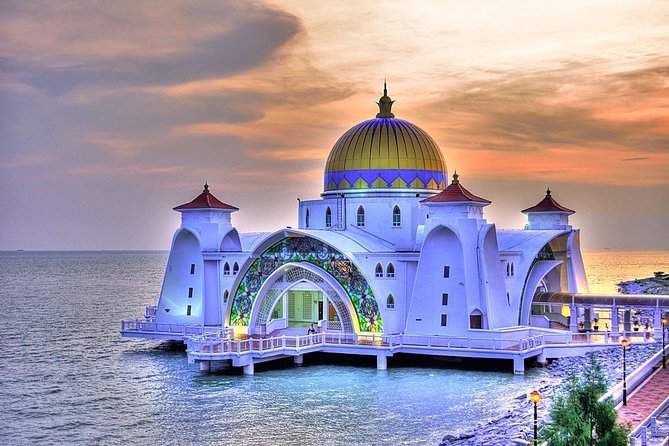
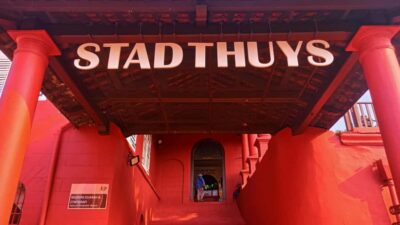
Then you’ll head to Red Square, also known as Dutch Square. The star structure here is the Stadthuys, described as a historical administrative building in the center of Malacca.
This is your “city management” moment. When you’re used to thinking of history as wars and kings, the Stadthuys reminds you that administration is power too. It also sets you up nicely for the later church story, because you’ll start noticing how the Dutch shaped public life through buildings as well as laws.
Admission here is free, and you’ll have about 45 minutes. That’s enough time to look around and reset before the next major stop.
Christ Church: Dutch community memory and a 1741 foundation
At Christ Church, you get a different angle on Dutch rule. In 1741, the Dutch burgher community built a new church to replace an older one (the text points to the Bovenkerk) to mark the centenary of Malacca’s capture from the Portuguese.
So you’re not just seeing a building—you’re seeing how communities used architecture to remember and reinforce identity. It’s a strong example of how history becomes ceremony.
This stop is about 20 minutes with free admission. Keep your eyes open for details you can connect to earlier dates, especially if you’re doing this tour as your first taste of Malacca’s history.
A Famosa Fort: Portuguese military architecture you can still read
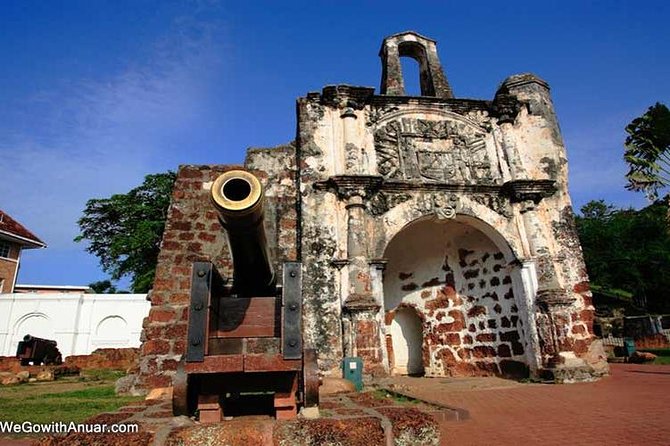
One of the highlights is A Famosa Fort. This was a Portuguese fortress built in 1512, and it’s described as having an oldest section that included a five-storey keep—a detail that helped shape the fortress’s overall name.
If you only have time for a single “big history” stop, this is it. Forts are where you can physically imagine the strategic thinking: visibility, control, and defense. Even if you don’t climb or go deep into structures, the presence of the fort gives your later church and temple stops more meaning. You start to see how different communities lived under shifting authority.
You’ll get about 45 minutes here and free admission. It’s the kind of stop where a guide’s explanations make your photos more than just snapshots.
Cheng Hoon Teng Temple: Chinese leadership during Dutch Malacca
Next comes Cheng Hoon Teng Temple, one of the best stops for understanding Malacca as a trading hub, not just a battlefield.
The temple site is described as founded in 1645 during Dutch Malacca. It credits Chinese Kapitans Tay Kie Ki Tay Hong Yong as the founding figure. Later, additional structures were constructed in 1673 under the leadership of another Kapitan mentioned in the itinerary text.
This stop works because it shows how Chinese community leadership wasn’t an afterthought. It became part of the city’s institutional life. You’re also moving away from only European timelines and bringing trade-linked Southeast Asian history to the front.
Admission is free, with about 30 minutes. Use this time to notice design cues and think about why communities of merchants and leaders would invest in long-term religious buildings.
Kampung Kling Mosque and Sri Pogyatha Vinoyagar Moorthi Temple
The tour then highlights the city’s religious mix by visiting:
- Kampung Kling Mosque, built by Indian Muslim traders in 1748 (the original was wooden), then rebuilt in 1872 with bricks
- Sri Pogyatha Vinoyagar Moorthi Temple, located on Jalan Tukang Emas, also called Harmony Street, because of how close it sits to the mosque and temple area
This pairing is more than a schedule slot. It’s where Malacca’s “togetherness” becomes visible in real space. If you like history that shows daily life rather than only politics, you’ll feel the point here.
Both stops have free admission and short time blocks (about 20 minutes each). That means you’ll want to be ready with questions as you arrive, because you won’t have hours to wander.
Jonker Street (Jonker Walk): bring the story into the present
After the religious and fort stops, you’ll finish with time at Jonker Street, also known as Jonker Walk. This area is described as the Chinatown zone in Malacca City, starting across the Malacca River near the Stadthuys.
Jonker Street is where history stops being only dates and starts being part of daily life: shopfronts, old architecture, and the feeling of a neighborhood that has kept evolving. The tour includes about 20 minutes here, which is enough for a quick browse and a couple of photos, but not enough for a full afternoon wander.
In practice, this is your chance to pick up small craft items or simply walk and notice the old buildings along both sides of the street.
Lunch and guide style: when the explanations make the sites click
Lunch is included, and it’s often described as a Nyonya lunch. That’s a nice detail because it ties food into the same multicultural theme as the architecture. A provided meal also helps you keep momentum; you’re less likely to lose time searching for the “right” restaurant.
The guide is also a major part of the experience. Guides such as Chandran or Chandra are praised for being personable and giving strong explanations in a way that helps you understand why each stop exists. With multiple churches, temples, and a fort, the value is in making the connections without drowning you in dates.
You can expect the day to feel like a guided walk through key eras—Portuguese, Dutch, then the influence of Chinese and Indian communities—until the tour reaches the modern street life of Jonker.
Timing tips for Fridays and how to avoid a slow day
If you’re visiting on a Friday, plan smarter. Some museum hours can change, with a midday closure mentioned around 12:15 to 14:45. That can affect how you experience the riverfront museum stop.
Traffic also matters. A helpful approach is to ask the provider if they can start earlier (one tip is leaving around 7:00 am if possible) so you beat the congestion before it builds.
Also think about pacing inside the scheduled structure. If you have a choice, it’s often better to get a bit of free time earlier rather than later, because you might want to re-check a building once you understand the story.
Who this Malacca tour suits best
This tour is a strong match for you if:
- You want a one-day introduction to Malacca’s major Portuguese, Dutch, Chinese, and Indian landmarks
- You prefer a guide who explains clearly so you can connect the stops
- You’d rather spend time sightseeing than planning transit and ticket timing
- You like the idea of food included, especially Nyonya-style lunch
It may be less ideal if you want long, unstructured time at each site. With short stop durations and a full 9-hour day, you’re moving fast. The tour is about coverage and context, not lingering all afternoon.
Should you book this Historical Malacca Tour from Kuala Lumpur?
Yes, if your goal is a well-structured day trip that gets you into the heart of Malacca without logistical headaches. The included hotel transfers and lunch make it feel complete, and the route is built around landmarks that show the city’s multicultural footprint in a way you can actually see.
Book it if you enjoy guided walking, want a quick grasp of Portuguese versus Dutch influence, and like finishing with Jonker Street time to ground the history in something current.
Skip it if you’re the type who needs hours at one museum, or if you’re aiming to go deep on architecture without a schedule. In that case, you might prefer a more flexible plan where you can linger where your curiosity pulls you.
FAQ
How long is the Historical Malacca Tour from Kuala Lumpur?
The tour runs about 9 hours (approx.).
What time does the tour start?
The meeting start time is 8:00 am.
Is hotel pickup and drop-off included?
Yes. Hotel pickup and drop-off are included.
Is lunch included?
Yes. Lunch is provided.
Do I need to buy admission tickets for the stops?
The tour includes an admission ticket for House of Museums Malacca. The other listed stops show free admission.
Is this a private tour?
Yes. It’s listed as a private tour/activity, meaning only your group participates.
Is alcohol included in the price?
No. Alcoholic drinks are not included, though they are available to purchase.
Do I need a mobile ticket?
Yes. A mobile ticket is part of the features.
What physical level is required?
The tour notes that travelers should have a moderate physical fitness level.
What is the cancellation policy?
You can cancel for a full refund up to 24 hours before the experience’s start time. If you cancel less than 24 hours before, the amount paid is not refunded.