REVIEW · KUALA LUMPUR
Kuala Lumpur Must-See Landmarks with Professional Tour Guide
Book on Viator →Operated by Asni Tours & Travel (M) Sdn Bhd · Bookable on Viator
KL can feel like a lot fast. This tour is built for a private guide and air-conditioned comfort, so you get organized stops without melting in the traffic. You’ll also get a morning start that leaves you free to explore on your own afterward, plus convenient hotel pickup and drop-off in the KLCC area.
The big upside is the mix of places: royal architecture outside Istana Negara, the skyline moment at Petronas, a striking modern National Mosque, then Chinese temple culture and a national memorial in one loop. The main drawback to keep in mind is that this is a short, drive-to-the-next-stop style tour, so your experience will depend a lot on how active your guide is at each stop.
In This Review
- Key points before you go
- Why this 3.5-hour Kuala Lumpur loop makes sense
- Pickup and drop-off in KLCC: convenient, but read the radius
- Stop 1: Dataran Merdeka (Independence Square) fast orientation
- Stop 2: Istana Negara outside views and architectural contrast
- Stop 3: Petronas Twin Towers photo stop and Skybridge reality check
- Stop 4: National Mosque (Masjid Negara) modern design in garden calm
- Stop 5: Thean Hou Temple and the Chinese philosophy mix
- Lake Gardens, the National Museum, and the Railway Station façade
- Stop 6: Tugu Negara (National Monument) independence memorial
- Guide quality is the real variable in a private tour
- Price and value: what $126.73 actually covers
- Who this tour suits best (and who should skip it)
- Should you book this Kuala Lumpur highlights tour?
- FAQ
- How long is the Kuala Lumpur landmarks tour?
- What does the tour cost per person?
- Do I get hotel pickup and drop-off?
- Is there a surcharge if my hotel is farther than 5 km from KLCC?
- Is the Petronas Twin Towers Skybridge admission included?
- Are the landmark admission tickets included?
- Is this a private tour?
- What landmarks are included in the route?
- What’s the cancellation policy?
Key points before you go
- Hotel pickup is limited to within 5 km of KLCC, and you may pay a USD 10 per person surcharge if you’re farther out.
- Petronas Twin Towers are a photo stop only; Skybridge tickets are not included and can sell out.
- National Mosque (Masjid Negara) is a glass-and-steel landmark built in 1965, set in green gardens.
- Thean Hou Temple is your cultural detour, explained through the mix of Buddhism, Taoism, and Confucianism.
- National Monument (Tugu Negara) is the independence memorial, with a bronze design by American architect Felix de Weldon.
Why this 3.5-hour Kuala Lumpur loop makes sense
A half-day in Kuala Lumpur is often a race between landmarks and heat. This itinerary is tightly packed, with short visits planned across key city icons, which is exactly what you want when time is limited.
I like that it’s structured as a morning tour. You’re done early enough to decide what you want to chase next in the afternoon—street food, shopping, or simply taking a slower look at neighborhoods you passed.
It also helps that the transport is climate-controlled. You move between stops in an air-conditioned vehicle, so the day feels efficient instead of exhausting.
You can also read our reviews of more guided tours in Kuala Lumpur

Pickup and drop-off in KLCC: convenient, but read the radius
The tour includes hotel pickup and drop-off only for hotels within 5 km from KLCC. If your hotel sits beyond that zone, there’s a USD 10 per person surcharge payable on the day of your activity.
That detail matters because this is where value can swing. If you’re in the KLCC area, you’re paying less for hassle and more for sightseeing. If you’re farther out, that extra fee can make the price feel steeper—especially if you’re comparing options that start at a central meeting point.
For reference, the meeting point is MATIC109, Jln Ampang, Kuala Lumpur 50450. The tour ends back at the meeting point.
Stop 1: Dataran Merdeka (Independence Square) fast orientation
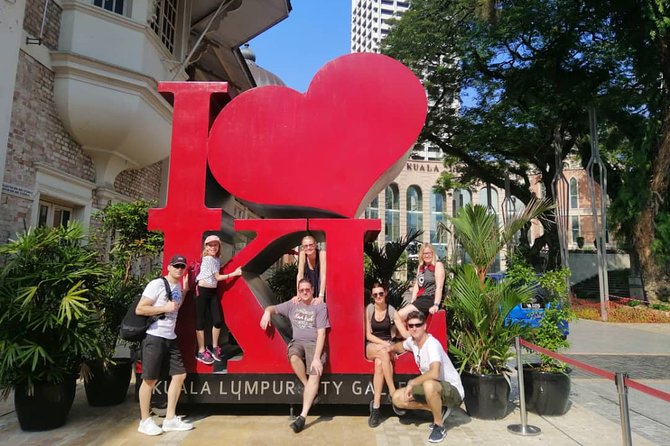
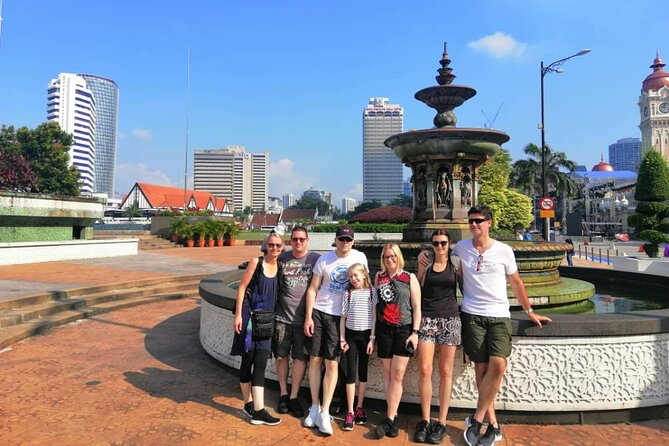
Your first major landmark is Merdeka Square (Dataran Merdeka), the symbol tied to Malaysian independence. Even with a short time window, this stop helps you get your bearings because it frames the city through its national identity.
Plan for a quick walk and photos rather than expecting a deep museum-style visit here. The point is to set context early, so the rest of the day doesn’t feel like random stops on a map.
If you like history that you can see in stone and monuments (not just read on a page), this is a good opener.
Stop 2: Istana Negara outside views and architectural contrast
Next is Istana Negara, the residence of the King of Malaysia. One practical detail: visitors are not allowed inside the building, so you’re focused on what you can see from outside.
I like that the stop is set up to appreciate the contrast between traditional and modern architectural elements before moving on. It’s a useful reminder that KL’s icons aren’t only about skyscrapers—some of the story is in how power and design are expressed.
When you’re short on time, the outside-only rule becomes an advantage. You don’t lose your schedule hunting for access that isn’t available.
Stop 3: Petronas Twin Towers photo stop and Skybridge reality check
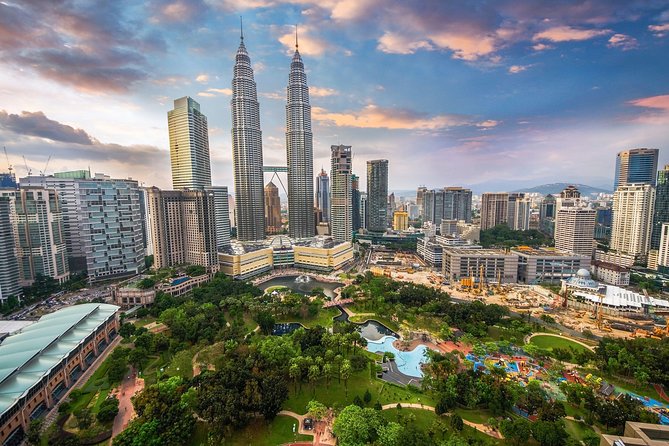
The Petronas Twin Towers stop is built for photos and skyline views. Admission isn’t included, and this is explicitly a photo stop only.
The big decision point here is the Skybridge. If you want to enter the Skybridge, you’ll need to buy tickets yourself, and tickets can be limited and sell fast. That means you should decide early if that’s a priority for you.
If your goal is simply to see the towers and get the classic KL skyline shots, you’ll feel satisfied in this short window. If your goal is to go inside, then this tour needs a bit of planning so you’re not disappointed by the limited ticket situation.
- Private Tour Kuala Lumpur with Petronas Twin Towers Observation Deck & Batu Cave
★ 5.0 · 1,029 reviews


Stop 4: National Mosque (Masjid Negara) modern design in garden calm
Then you shift gears to Masjid Negara, a National Mosque in the middle of the city amid lush green gardens. It’s described as a glass-and-steel marvel built in 1965, which gives you a strong visual contrast after royal and skyline architecture.
This is also one of those stops where the guide can make a real difference. In a short visit, you want someone to point out what to look for so you don’t just snap a few photos and move on.
Practical tip: dress modestly and be mindful around worship spaces. You won’t need to dress like you’re going to a ceremony, but it’s the kind of place where simple respect matters.
Stop 5: Thean Hou Temple and the Chinese philosophy mix
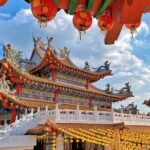
Your next cultural stop is Thean Hou Temple, a Chinese temple. Here’s the useful part of the description: the architecture and experience are explained through how influences like Buddhism, Taoism, and Confucianism come together.
This is a highlight if you want KL to feel lived-in, not only monumental. Towers and palaces are impressive, but temples give you texture—patterns, symbolism, and atmosphere that feel different from the rest of the day.
Because you only have about 20 minutes, keep your expectations realistic. Think of it as a guided orientation to a key cultural site, not a full deep-study visit.
Lake Gardens, the National Museum, and the Railway Station façade
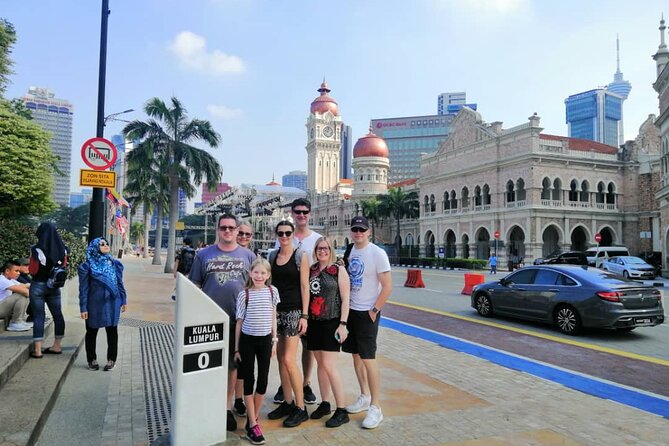
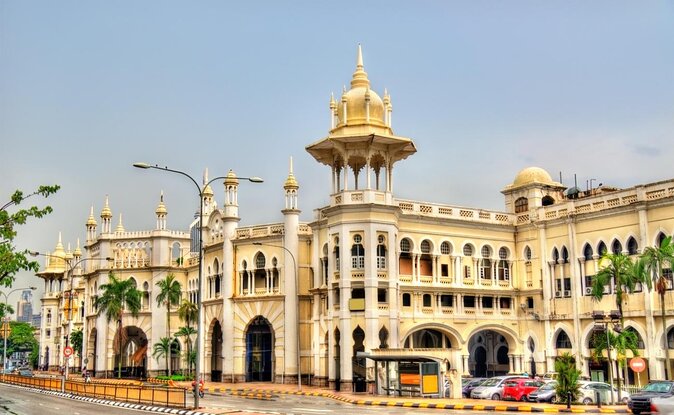
Between the big ticket landmarks, the route includes a calm pause at Lake Gardens and then a stop at the National Museum. You’ll also see the Kuala Lumpur Railway Station façade with fairytale-like towers and a mix of Eastern and Western architectural styles.
Here’s why this combo is smart: it balances KL’s identity in three different ways.
- Lake Gardens gives you a softer break between crowds and concrete.
- The National Museum offers collections spanning ancient and modern art pieces, weapons, and traditional costumes.
- The Railway Station adds that storytelling-through-architecture angle, where the exterior says as much as any brochure.
With short time slots, focus on the parts that match your interests. If you love art and textiles, spend your museum time looking for what you actually want to see. If you’re more into architecture, treat the station façade as your main visual target here.
Stop 6: Tugu Negara (National Monument) independence memorial
Your day ends at National Monument (Tugu Negara), a bronze tribute to the lives lost in Malaysia’s independence fight. The design is by American architect Felix de Weldon, which adds another layer beyond local context.
This final stop is valuable because it ties the morning theme together. Dataran Merdeka sets up independence as a symbol, and Tugu Negara brings it into a more memorial, human scale.
Even if you’re not a “monument person,” this is still a good finish. It gives the tour emotional closure, which helps the whole route feel cohesive instead of like a sightseeing checklist.
Guide quality is the real variable in a private tour
This experience is a private tour with a professional English-speaking tour guide and an air-conditioned private vehicle. But there’s a lesson you should take seriously: the success of a private tour depends on whether the guide is actively engaging, not just transporting.
In the best cases, you’ll get a guide who explains as you go. Names like Shasha and Hary come up with a very specific kind of value: clarity, comfort, and making the stops feel connected instead of rushed.
If your guide is mostly in the car or only offers minimal commentary, the tour can feel less like a guided introduction and more like a taxi with planned stops. If that’s your fear, solve it early: ask at the first stop what you’ll focus on, and request a quick explanation at each major landmark before you move on.
Also note: a driver is listed as English-speaking too. In practice, your guide should be the one doing the interpretation, but either way, you’ll want someone willing to answer questions on the spot.
Price and value: what $126.73 actually covers
At $126.73 per person for about 3 hours 30 minutes, you’re paying for three things:
1) hotel pickup/drop-off within the KLCC zone,
2) a private air-conditioned vehicle, and
3) a professional English-speaking guide.
That can be good value if you’re the type of traveler who benefits from fast orientation and clear explanations. You’re compressing multiple KL icons into one half-day, with minimal effort on your side.
But price sensitivity is fair here. Short stop times mean you’re not buying deep immersion at each location. If you want long museum time, or you want to spend your day wandering freely, you may feel this is pricey.
A simple way to judge value for yourself: decide whether you want guidance and comfort, or whether you’d rather DIY. If you’d rather DIY, consider allocating your money to one or two major sites and doing the rest by local transport. If you want a tidy half-day plan with a guide doing the hard work, this one can land well.
Who this tour suits best (and who should skip it)
This tour fits best if you:
- are short on time and want a structured introduction to KL’s top landmarks,
- like the idea of hopping between religion, architecture, and national monuments,
- prefer a climate-controlled vehicle over negotiating transport in the heat,
- want morning sightseeing so you have the afternoon free.
You might not love it if:
- you’re hoping for long visits and deep museum time at multiple sites,
- you care a lot about going inside Petronas-related areas (because this plan is a photo stop and Skybridge tickets aren’t included),
- you’re price-focused and hate the idea of paying extra when pickup is outside the KLCC 5 km radius.
Should you book this Kuala Lumpur highlights tour?
I’d book it if you want a guided, air-conditioned overview of KL in a single morning and you’re okay with short, efficient stops. The itinerary covers major themes—independence symbolism, royal residence architecture from the outside, a skyline moment at Petronas, modern mosque design, a major Chinese temple, and a national memorial—so the day doesn’t feel random.
Before you press confirm, do two practical checks:
- If Petronas is a must, plan for the Skybridge ticket purchase yourself since admission isn’t included and tickets can be limited.
- If your hotel isn’t within 5 km of KLCC, budget for the USD 10 per person surcharge.
If you want your private tour to feel like a real introduction (not just a series of drop-offs), speak up early and ask for brief explanations at each stop. When the guide is active, this route is exactly the kind of KL “starter kit” that pays off.
FAQ
How long is the Kuala Lumpur landmarks tour?
The tour lasts about 3 hours 30 minutes.
What does the tour cost per person?
The price listed is $126.73 per person.
Do I get hotel pickup and drop-off?
Yes, hotel pickup and drop-off are included for hotels within 5 km from KLCC.
Is there a surcharge if my hotel is farther than 5 km from KLCC?
Yes. If your pickup is outside the 5 km radius from the city center, there is a USD 10 per person surcharge payable on the day of the activity.
Is the Petronas Twin Towers Skybridge admission included?
No. Petronas Twin Towers are a photo stop only, and Skybridge admission is not included. You’d need to buy tickets directly, and tickets are limited.
Are the landmark admission tickets included?
Admission tickets are listed as free for the stops in the itinerary you visit during the tour.
Is this a private tour?
Yes. It’s private, and only your group participates.
What landmarks are included in the route?
The tour includes Dataran Merdeka, Istana Negara, Petronas Twin Towers, National Mosque (Masjid Negara), Thean Hou Temple, Lake Gardens, National Museum, Kuala Lumpur Railway Station façade, and National Monument (Tugu Negara).
What’s the cancellation policy?
You can cancel for a full refund if you do so at least 24 hours in advance of the experience start time. Free cancellation is offered up to 24 hours before.