REVIEW · KUALA LUMPUR
Kuala Lumpur Cultural & Heritage Most Iconic Locations
Book on Viator →Operated by Asni Tours & Travel (M) Sdn Bhd · Bookable on Viator
Half a day, five faiths, one city.
This private KL cultural tour is built for people who want the meaning behind the skyline, not just photos. I especially like the hotel pickup and drop-off that keeps your day stress-free, and the private group format that makes it easier for a guide to pace the route to what you care about. You’ll see clan-house roots in Chinatown, major temples, and famous civic architecture—while an English-speaking licensed guide keeps the story straight and easy to follow.
One consideration: the full schedule is tight, and one key stop changes on certain days. If you’re counting on going inside Jamek Mosque, note it’s listed as closed on Friday, so you may only view it from the outside.
In This Review
- Key points I think you’ll care about
- Why This KL Heritage Loop Works in 3.5 Hours
- Getting Picked Up: Comfort, Timing, and How to Prep
- Chan See Shu Yuen Clan House: Ancestor Roots in Jalan Petaling
- Chinatown Landmarks: Pre-War Streets and Old-Edge Details
- Sri Maha Mariamman Temple: Hindu Worship at KL’s Older Edge
- Sin Sze Si Ya Temple: Another Buddhist Thread, Different Visual Rhythm
- Jamek Mosque: Islamic Architecture and the Friday Outside-Only Note
- Merdeka Square Stops: Sultan Abdul Samad Building and Big-City Identity
- Central Market Kuala Lumpur: Built in 1930, Still Useful
- Price and Value: Is $119.73 a Fair Deal?
- What This Tour Is Best For
- Should You Book This Cultural & Heritage Tour?
- FAQ
- How long is the Kuala Lumpur Cultural & Heritage Most Iconic Locations tour?
- What is the price per person?
- Is hotel pickup and drop-off included?
- Is this a private tour or a group tour?
- Which landmarks and cultures are included?
- Are admission tickets included?
- What happens if I visit on a Friday regarding Jamek Mosque?
- What should I bring or wear?
- What’s included and not included?
- Is free cancellation available?
Key points I think you’ll care about
- Hotel pickup/drop-off from selected hotels saves time in KL traffic
- Private tour format for your group, not a crowded shuffle
- Stops across Hindu, Buddhist, and Islamic sites without needing to plan connections
- Most admissions are free at the listed landmarks, so you’re not stuck paying entry fees all day
- Jamek Mosque timing matters on Friday (outside viewing only)
- A short route (about 3.5 hours) makes it a smart add-on to other KL plans
Why This KL Heritage Loop Works in 3.5 Hours
Kuala Lumpur can feel like two cities at once: glass towers on one side, older neighborhoods with temple bells and community names on the other. This tour’s core strength is that it doesn’t try to cover everything. It focuses instead on the cultural landmarks that explain how KL became what you see today.
The route is also built to be realistic. The day runs about 3 hours 30 minutes, and each stop is around 20 minutes. That means you don’t lose half your morning waiting to park, walking across long distances, or guessing which street to turn onto. You get a guided flow from neighborhood to neighborhood, then back to your hotel.
One more thing I like: the mix of religions is intentional. You’ll pass Hindu landmarks in and around Chinatown, plus a Buddhist temple stop, then move into Islamic and civic architecture with Jamek Mosque and the Sultan Abdul Samad Building by Merdeka Square. That sequence helps you understand the city as a set of communities, not a single museum district.
You can also read our reviews of more historical tours in Kuala Lumpur
Getting Picked Up: Comfort, Timing, and How to Prep
You start with hotel pickup and drop-off (selected hotels only), which is a big deal in KL. Even when distances look short on a map, roads and traffic patterns can turn a “quick” trip into wasted time. This tour uses an air-conditioned vehicle and includes a licensed guide with an English-speaking driver/guide setup.
The tour also uses a mobile ticket. That’s handy because it reduces the need to scramble for paper or do last-minute check-in steps. Confirmation happens at booking time, so you should have your details lined up before you go.
For your side of the deal, wear comfortable walking shoes and bring a hat/cap. You’ll be outside at various points, especially when you move between Chinatown streets, temple exteriors, and the civic center area. Also plan around the fact that food and drinks aren’t included. Since the schedule is half-day, you’ll want to either eat before you go or plan a simple meal right after.
A private format like this is also helpful if you like asking questions. In the reviews tied to this tour, guide Raja is praised for giving clear explanations of Malaysian culture and tailoring the route to what people wanted to focus on. That kind of flexibility is the difference between just seeing places and actually understanding them.
Chan See Shu Yuen Clan House: Ancestor Roots in Jalan Petaling
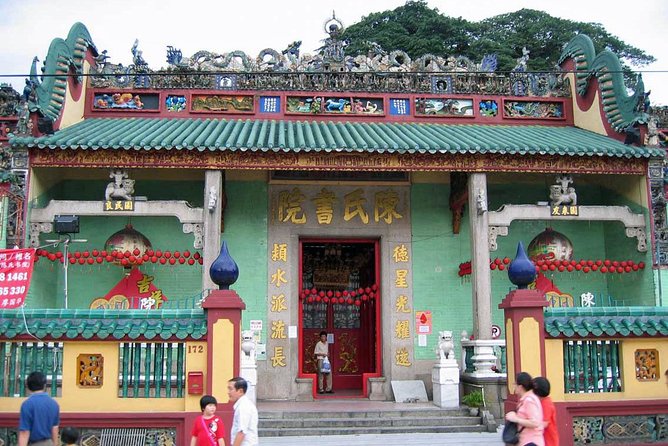
Your first stop is the Chan See Shu Yuen Clan House (often described as a clan-house visit). This is one of the best warm-up stops in KL because it sets the theme: communities formed by family ties, traders, and migration patterns. Chinatown here isn’t just a street for snacks; it’s a living record of how people organized themselves.
In the time you have (about 20 minutes), you should aim to look for symbols and layout cues. Clan houses often reflect who the community served, how they gathered, and how identity stayed intact through generations. If you take a moment to connect what you see with what your guide says, the rest of the tour lands better.
There’s also a simple practical advantage to starting at a clan house: you get oriented before moving deeper into Chinatown’s busier lanes. You’ll be better prepared for the temple entrances and the way streets cluster around key landmarks.
Also, your guide can usually help you with what’s respectful to do and where to stand for photos. Even with free admissions listed for the stop, you’ll want to be mindful that these are still meaningful community spaces.
Chinatown Landmarks: Pre-War Streets and Old-Edge Details
Next up is Chinatown, with the tour highlighting pre-war buildings and key streets. This stop is short, but it’s meant to give you that “oh, KL has older layers” moment—especially if most of your KL exposure so far has been modern malls and towers.
This part of the route is useful because it acts like a bridge. The clan-house visit shows structure within a Chinese community. The Chinatown walk connects you to how the built environment developed—older streets, traditional shopfront scale, and the feeling of a neighborhood designed for daily life.
The best move here is to slow down for a few minutes. Don’t treat it like a quick corridor. Look at signage styles, street geometry, and how temples and clan-related spaces appear within the neighborhood fabric. With the guide’s context, you’ll start to notice patterns you’d otherwise miss.
Admission is listed as free for this stop, so what you’re paying for is guidance—timing, route planning, and knowing what’s worth your eyes’ time.
Sri Maha Mariamman Temple: Hindu Worship at KL’s Older Edge
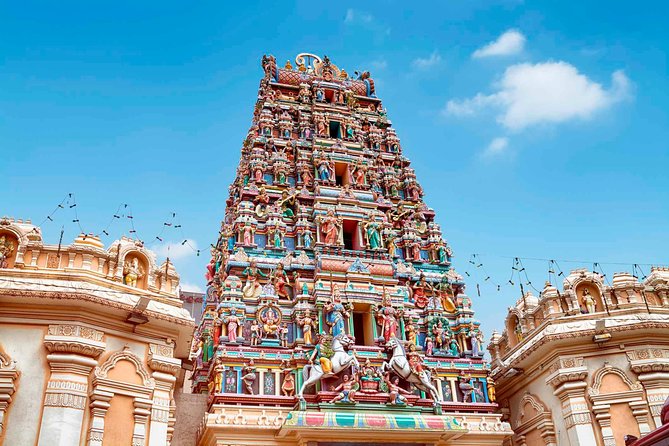
You’ll then visit Sri Maha Mariamman Temple, described as the oldest Hindu temple in Kuala Lumpur, founded in 1873. It’s located near the edge of Chinatown in Jalan Bandar. Even if you only spend about 20 minutes here, this is one of the stops that gives the tour its credibility.
Temples like this matter for more than architecture or photographs. They represent continuity: a long-running place of worship that anchors community identity. That continuity is exactly what helps you make sense of why multicultural KL doesn’t feel like a recent invention.
When you’re inside or near a place like this, focus on basics: where people gather, how the space is used, and what your guide points out about symbolism. The guide can also help you understand the temple’s relationship to the neighborhood around it, which is often the real story behind the building.
Admissions are listed as free, which is nice. But the value isn’t in saving a fee—it’s in having context so you don’t treat the stop as a quick photo op.
- Private Tour Kuala Lumpur with Petronas Twin Towers Observation Deck & Batu Cave
★ 5.0 · 1,029 reviews



Sin Sze Si Ya Temple: Another Buddhist Thread, Different Visual Rhythm
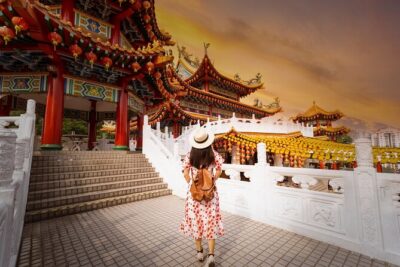
The itinerary includes Sin Sze Si Ya Temple (also referenced as Sze Yeh Temple), listed as built in 1880. This stop complements the Hindu landmark you just visited by showing how different traditions occupy space in KL in ways that can look and feel distinct.
With only about 20 minutes, you won’t become an expert on Buddhist architecture—but you can still learn how to read it. Look for things like the style of the façade, the arrangement of entrances, and how the site is approached by visitors. Your guide’s job here is to translate those visual cues into meaning.
I like that this tour doesn’t just hop between random attractions. It moves you from one faith community to another, then later into civic and Islamic landmarks. That progression helps your brain build connections instead of collecting unrelated stops.
And again, admissions are listed as free. So your time is mainly about guided observation and respectful viewing.
Jamek Mosque: Islamic Architecture and the Friday Outside-Only Note
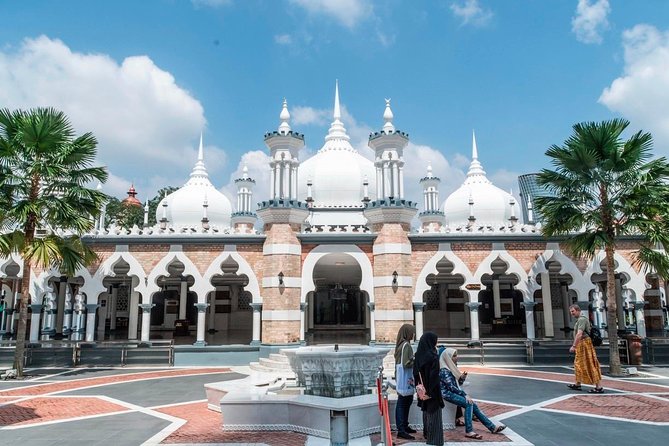
Jamek Mosque is a must-see on this kind of route, and the tour includes it as a stop titled Jamek Mosque. The key detail is right there: it’s closed on Friday, so you’ll look from the outside only.
If your dates might include Friday, plan accordingly. If you’re set on interior viewing, you should adjust your schedule or pick another tour day. If you just want to understand the significance of the mosque’s architecture and location, outside viewing can still work—especially with a guide explaining what you’re looking at.
The tour description notes Islamic architectural influences and frames this stop as an important part of the city’s heritage. In practice, outside viewing means you’ll spend more time on the building’s exterior lines, surrounding streets, and how the site fits into KL’s urban layout.
This is also where an error in logistics would matter most, based on feedback patterns linked to this tour. One account describes a day where the main mosque wasn’t stopped at directly and the group ended up at a different mosque due to prayer-time timing. So if mosque access is a top priority, I’d recommend you ask your guide or confirm the day-of plan before you start, especially if your schedule includes Friday.
Merdeka Square Stops: Sultan Abdul Samad Building and Big-City Identity
After the mosque, the tour moves into the Merdeka Square area with a stop at the Sultan Abdul Samad Building. This is the kind of architecture that makes KL feel like a crossroads of eras—where colonial-era civic buildings sit beside newer development.
The stop is listed as about 20 minutes, which is perfect for this kind of exterior-focused attraction. You’ll likely be spending your time reading the façade, learning the building’s role in KL’s development, and getting the broader story of why Merdeka Square is so connected to national identity.
Even if you’re not an architecture person, you’ll get more out of this stop than a quick look-around. The guide can connect the building’s prominence to how KL’s city center evolved, and that makes the earlier neighborhood stops feel even more meaningful.
Central Market Kuala Lumpur: Built in 1930, Still Useful
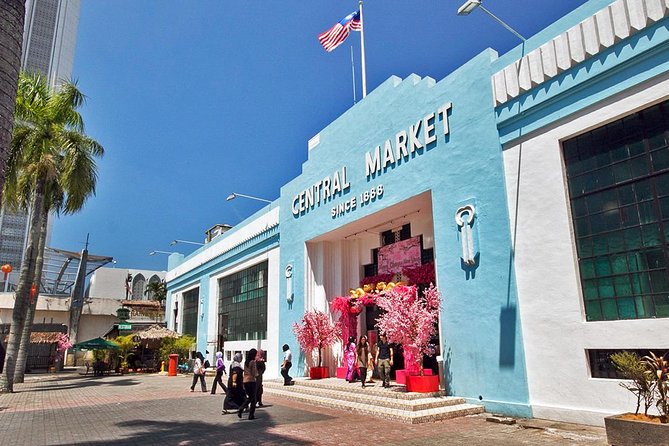
Finally, you’ll visit Central Market Kuala Lumpur, described as built in 1930. This is one of those places where culture and everyday browsing mix. It’s not just a photo stop; it’s a real stop you can use to pick up souvenirs or local crafts if you want something specific.
The tour frames it as part of a varied heritage route. In practical terms, it’s also a smart time to do a final reset: you’ll often find it easier to ask your guide where to go next afterward, since Central Market sits near major transit routes and common sightseeing areas.
Admissions are listed as free here too, so again you’re paying for the route and the guide’s guidance, not an entry fee.
Price and Value: Is $119.73 a Fair Deal?
This tour is listed at $119.73 per person, and it’s typically booked around 11 days in advance. That price might feel steep if you compare it to cheaper group tours or shorter ticket-only options. But you’re not just buying entry into a few sites. You’re buying the structure: pickup/drop-off, an air-conditioned vehicle, and a private tour with a professional licensed guide.
Here’s how I’d think about value for your wallet:
- If you’re traveling with a small group and you’d otherwise need separate taxis and route planning, pickup alone can close part of the gap.
- Since many stops are listed as free admissions, your money mostly supports guide time and transportation.
- The schedule is compact, so you’re paying for efficiency rather than a long day with one or two sites.
Now for the honest drawback: one review described this tour as overpriced compared to another private option with a lower price. So if you’re cost-sensitive, it’s worth comparing the inclusions (especially pickup coverage and guide quality) across similar private heritage routes.
Guide quality looks like a real factor here. In one set of comments, Dhevan is praised for being informative and for helping with planning beyond the tour. That kind of added value can turn a “reasonable” price into a good deal.
What This Tour Is Best For
This is ideal if you want a guided overview of KL’s multicultural heritage without spending your whole day in transit. It’s also a strong fit if you care about more than one faith tradition and you like seeing how communities live side-by-side.
You’ll likely enjoy it most if you:
- want a half-day plan that won’t crush the rest of your itinerary
- prefer having an English-speaking guide keep the story clear
- like neighborhoods and landmarks rather than only indoor museums
- need pickup/drop-off because KL logistics can eat time
Should You Book This Cultural & Heritage Tour?
I’d book it if you want a clean, guided route that connects Chinatown clan-house heritage, Hindu and Buddhist temples, and Islamic + civic architecture in one focused session. The private format, pickup convenience, and the fact that many admissions are listed as free make it practical, not just scenic.
I’d hesitate or at least plan carefully if:
- you’re visiting on Friday and mosque interior access matters to you
- you’re very price-driven and want to maximize cost-per-hour
- you don’t want a tight schedule, since multiple stops happen within 3.5 hours
If you do book, come with good shoes, a hat, and a simple plan for lunch after. Then let the guide do the heavy lifting—this route works best when you use the time to understand the connections, not just collect stops.
FAQ
How long is the Kuala Lumpur Cultural & Heritage Most Iconic Locations tour?
It’s approximately 3 hours 30 minutes.
What is the price per person?
The price is listed as $119.73 per person.
Is hotel pickup and drop-off included?
Yes. Hotel pickup and drop-off are included for selected hotels.
Is this a private tour or a group tour?
This is a private tour/activity, so only your group participates.
Which landmarks and cultures are included?
The route includes Chan See Shu Yuen Clan House, Chinatown pre-war buildings, Sri Maha Mariamman Temple, Central Market Kuala Lumpur, Sin Sze Si Ya Temple, Jamek Mosque, and the Sultan Abdul Samad Building by Merdeka Square.
Are admission tickets included?
Most listed admissions are free at the stops shown in the itinerary.
What happens if I visit on a Friday regarding Jamek Mosque?
Jamek Mosque is listed as closed on Friday, so you’ll have a look from the outside only.
What should I bring or wear?
Wear comfortable walking shoes and bring a hat/cap.
What’s included and not included?
Included: hotel pickup/drop-off (selected hotels), English speaking driver, air-conditioned vehicle, professional licensed tour guide, and private transportation. Not included: food and drinks.
Is free cancellation available?
Yes. You can cancel up to 24 hours in advance for a full refund, and refunds are not provided for cancellations within 24 hours of the start time.