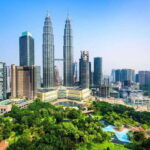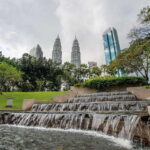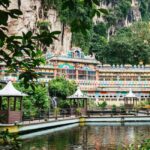
Kuala Lumpur hits fast when you do it by car. This half-day tour strings together landmark KL in one smooth route, with a guide and plenty of chances to stop, look, and take photos at spots like Merdeka Square and the Petronas Twin Towers. I especially liked how it keeps the big-ticket sights realistic in only a few hours, and how the stops are paired with context so each location feels less random. One consideration: it’s light on time at each location (about 10–20 minutes per stop), so you’ll want to be ready to move.
The value is the package deal: air-conditioned transport, an English-speaking driver, and hotel pickup for many central areas. At $28 per person for roughly four hours, you’re mostly paying for convenience and guidance, since several stops are free but some admissions are not included. If you’re hoping for a slow, deep museum day, you might find the pace a little brisk.
Who will like this most? People who want a smart first overview of KL before they branch out on their own, or anyone who’d rather sit in comfort while someone else handles the traffic puzzle. In the best versions of this tour, the guide’s local tone makes the city feel legible fast—drivers like Shah, Raja, and Al were singled out for being patient, organized, and good at shaping the story of what you’re seeing.
In This Review
- Key highlights worth planning around
- Why this KL city tour works for a first visit
- Price and what you’re really paying for
- How pickup and the meeting point affect your morning
- The itinerary: what each stop gives you (and what it doesn’t)
- Stop 1: Dataran Merdeka (Merdeka Square)
- Stop 2: The River of Life
- Stop 3: Istana Negara (King’s Palace)
- Stop 4: Petronas Twin Towers (view stop)
- Stop 5: KLCC Park
- Stop 6: National Mosque (Masjid Negara)
- Stop 7: Thean Hou Temple
- Stop 8: Muzium Negara (National Museum)
- Stop 9: Tugu Negara (National Monument)
- Stop 10: Malayan Railway Administration Building (near the old station vibe)
- Guides make the difference: Shah, Raja, Al, and the “patient-driver” advantage
- Best ways to get value out of only 4 hours
- Who should book this tour, and who should skip it
- Should you book Kuala Lumpur City Tour?
- FAQ
- What’s the duration of the Kuala Lumpur City Tour?
- Is hotel pickup included?
- Where does the tour start and end?
- What’s included in the price?
- Are admissions included for all stops?
- Does the tour include food or drinks?
- What time should I be at the meeting point?
Key highlights worth planning around
- A compact 4-hour loop that covers major landmarks without wasting the morning on transit
- Easy photo stops at Merdeka Square, the National Mosque, and KL’s skyline icons
- Central hotel pickup options (free only within a 5 km radius of KL city center)
- Free entry at many stops, which helps your budget stay under control
- Local guidance that feels personal, especially when you’re with drivers like Shah, Raja, or Al
- A mix of modern and heritage sites, from the Petronas area to monuments and temples
Why this KL city tour works for a first visit
Kuala Lumpur is one of those cities where the “best parts” can be spread out. This is why I like doing a landmark-heavy circuit early. You get a practical mental map—where the grand colonial-era contrast shows up, where skyline views matter, and which neighborhoods feel like “city center” versus “religious and civic core.”
The other strength is that you’re not left to figure things out alone. You travel by air-conditioned vehicle, you get an English-speaking guide/driver, and you don’t have to time your own hopping between stops. For $28 per person, that’s the main bargain: convenience plus interpretation.
Just keep your expectations straight. This isn’t a ticket-by-ticket museum crawl. It’s a “see it, understand it, move on” half-day. If you need long browsing time, you’ll likely want to follow up later on your own.
You can also read our reviews of more city tours in Kuala Lumpur

Price and what you’re really paying for
At $28 per person for about 4 hours, you’re paying for a guided transport circuit, hotel pickup where available, and a tight sequence of highlights. Several of the featured stops list free admission, which helps keep the overall spend reasonable.
That said, not everything is free. The Petronas Twin Towers stop lists admission as not included, so you should budget for that if you want to go inside (the stop is there for viewing, but entry isn’t included). Also, food and beverages are not included—so you’ll either eat before you go, bring snacks, or plan a meal right after.
If your goal is a quick orientation with minimal stress, this price makes sense. If your goal is “spend most of the time at one major site,” the structure may feel like you’re paying for transit more than time on-site.
How pickup and the meeting point affect your morning
The tour starts and ends back at the starting area, near MaTiC (Malaysia Tourism Centre), address listed as MATIC109, Jln Ampang. If you’re not in the free pickup zone, you’ll need to get yourself there.
The free hotel pickup is limited to a 5 km radius from Kuala Lumpur city center, and the free pickup area is listed as:
- KLCC Area
- Bukit Bintang
- China Town
- Jalan Pudu
- Masjid India Area
- Chow Kit
If your hotel sits outside that zone, you’ll want to plan on arriving at the meeting point by yourself and being there early. The instructions are pretty clear: be at the meeting point sharply 9:00 AM for morning pick-up and 2:00 PM for afternoon pick-up, and wait in the lobby about 15 minutes before the stated time on your voucher.
One small practical note: the driver can be late up to 10–15 minutes, depending on traffic and other factors. That’s normal in KL, but build a little buffer into your day.
The itinerary: what each stop gives you (and what it doesn’t)
This tour is built around short, purposeful stops. Many are timed around 20 minutes; a few are about 10 minutes. That’s enough for photos, orientation, and a quick look, but not enough for long “wander and absorb” time.
Stop 1: Dataran Merdeka (Merdeka Square)
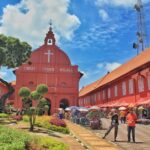
This is KL at the civic scale. Merdeka Square is the kind of place that makes the city’s political and historical identity feel visible, even if you don’t go into any building. It’s also a great starting point because it sets the tone: Malaysia’s big themes show up here in architecture and public space.
The upside: you get an immediate sense of KL’s center and history before you go modern.
The possible drawback: it’s an early stop with limited time, so if you want to read every plaque or linger for a long look, you may feel rushed.
- Private Tour Kuala Lumpur with Petronas Twin Towers Observation Deck & Batu Cave
★ 5.0 · 1,029 reviews



Stop 2: The River of Life
Next up is a more modern urban waterfront idea, described as being recognized among the world’s top waterfront districts by The Independent (UK). Whether you love riverside promenades or not, this stop helps you understand how KL shapes space beyond towers and malls.
The upside: it breaks the pattern—after the civic square, you get a different type of landmark.
The possible drawback: you’re there briefly, so you’ll want to use the time for a good walk-through vantage point and photos.
Stop 3: Istana Negara (King’s Palace)
Istana Negara is all about royal presence and intricate detail. You may not get the kind of access you’d get at smaller palaces elsewhere, but you can still get a clear view and take pictures of the residence’s exterior features.
The upside: it adds a cultural layer that’s not just about buildings—it’s about how power and identity show up in architecture.
The possible drawback: the stop is short, so treat it as a “see and orient” moment, not a deep exploration.
Stop 4: Petronas Twin Towers (view stop)
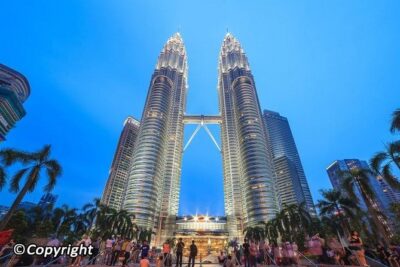
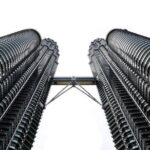
This is the headline for most people. Even if you’ve seen it in photos, standing near the Petronas Twin Towers changes the scale. The listing points out the towers’ earlier “world’s tallest” reputation, and you’ll likely spend your time craning your neck and lining up photos.
The upside: one of the most recognizable skyline moments in Southeast Asia, in a timeframe that actually works.
The possible drawback: entry isn’t included. If climbing or indoor viewing matters to you, you’ll need to plan that separately.
Stop 5: KLCC Park
Right next to the shopping area and the tower zone, KLCC Park is a long breath of green in a very built-up area. It’s designed by Roberto Burle Marx, and the park is meant to bring greenery into the Petronas surroundings.
The upside: it’s a breather stop after the towers—good for cooling down and resetting your attention.
The possible drawback: it’s still brief, so don’t expect a full park stroll.
Stop 6: National Mosque (Masjid Negara)
Masjid Negara is one of KL’s most significant religious landmarks. This stop adds cultural and architectural weight, and it’s a good moment to slow down for respectful observation and photos from the allowed areas.
The upside: you see a key part of Malaysia’s religious landscape in a very central setting.
The possible drawback: time is limited, so if you want deeper understanding, you’ll likely want to return later.
Stop 7: Thean Hou Temple
This is where the tour turns to Chinese religious influence, including Buddhism, Taoism, and Confucianism on Malaysian culture. Thean Hou Temple provides a strong contrast with the mosque stop—different faith, different aesthetics, different atmosphere.
The upside: cultural contrast is the whole point here, and this temple stop makes it real.
The possible drawback: again, it’s short—so focus on the main views and exterior details unless your guide suggests something specific worth seeing quickly.
Stop 8: Muzium Negara (National Museum)
The National Museum is described as giving an overview of Malaysian history and development, and it’s placed near Perdana Lake Gardens. On this tour, it’s a quick stop, not a full museum visit.
The upside: it helps you connect the city you’re seeing to the country’s larger story.
The possible drawback: with only about 10 minutes, this is more of a location highlight. If you want real museum time, plan it as a separate outing.
Stop 9: Tugu Negara (National Monument)
This one is for remembrance. Tugu Negara honors those who lost their lives during Malaysia’s independence struggle. Even in a brief stop, it’s a meaningful pause that shifts the mood from “photos” to “reflection.”
The upside: it adds depth to the overview—KL isn’t only modern skyline.
The possible drawback: with limited time, you may not get to fully absorb the details.
Stop 10: Malayan Railway Administration Building (near the old station vibe)
This final stop wraps in a different kind of architecture: an exquisite façade described as featuring fairytale-like towers and a mix of Eastern and Western styles. It’s a strong “last look” because it feels like KL’s past is still visible in the city’s bones.
The upside: a satisfying close—architecture lovers will like the style contrast.
The possible drawback: it’s brief, so don’t expect a long photo session from every angle.
Guides make the difference: Shah, Raja, Al, and the “patient-driver” advantage
The tour format could be just a checklist. The strongest versions come from the guide’s style: patient pacing, clear language, and smart local pointers.
In the feedback I saw, drivers like Shah were praised for making the experience personal and for pointing out local eats you might want to try. Raja was highlighted as born-and-bred local, with the kind of familiarity that helps you understand traffic patterns and city quirks fast. Al stood out for tailoring the tour pace and being very knowledgeable about KL and Malaysian history.
Even if your driver isn’t one of these names, the pattern is consistent: when the guide is organized and responsive, your short stop times feel useful instead of rushed. So when you book, it’s worth setting your preference in your mind: do you want more history talk, or more practical city guidance?
Best ways to get value out of only 4 hours
If you use the time well, this tour can become your “first draft” of KL.
- Come with photo priorities. If Petronas access matters to you, know that admission isn’t included and plan accordingly.
- Ask for quick street-level tips. Things like what area is best for a first meal or where to wander next can make the rest of your trip smoother.
- Wear walking-friendly shoes anyway. Even with car transport, temples and waterfront areas tend to involve short walks and uneven spots.
- Don’t overload your schedule the same day. The driver can arrive 10–15 minutes later due to traffic, and weather can affect timing.
Also, since food and drinks aren’t included, I recommend treating this as a morning or early afternoon plan and then eating immediately after. That keeps you from losing valuable energy during the tour.
Who should book this tour, and who should skip it
This tour is a strong match if:
- you want an intro to KL without figuring out logistics
- you like seeing a blend of civic sites, religious landmarks, and skyline icons
- you prefer air-conditioned transport and an English-speaking guide
You might skip or adjust your expectations if:
- you want long museum time or deep entry experiences at any one site
- you’re traveling strictly for interior attractions and ticketed viewpoints
- you dislike tours where the story is more history-forward than modern-city-forward
That one balance point matters. The “car tour” format tends to focus on what you can see quickly and how it connects to the country’s identity.
Should you book Kuala Lumpur City Tour?
If you want a no-fuss way to cover major landmarks in about four hours, I think this is a smart buy. The price-to-convenience ratio is good, and the route covers the kinds of places that help you navigate Kuala Lumpur later—especially if it’s your first visit.
I’d book it if you also like the idea of learning as you go, not spending hours in one place. I’d hesitate if you’re mainly chasing paid experiences like Petronas indoor entry, because that’s not included and the stop itself is time-limited.
If you do book, pick a driver style you’ll enjoy. If you get someone like Shah, Raja, or Al, you’re likely to get that extra layer of patience and local recommendations that turns a quick circuit into a useful KL orientation.
FAQ
What’s the duration of the Kuala Lumpur City Tour?
The tour runs for approximately 4 hours.
Is hotel pickup included?
Yes—hotel pickup and drop-off are included, but free pickup is only available within 5 km of Kuala Lumpur city centre. The free pickup zone includes KLCC Area, Bukit Bintang, China Town, Jalan Pudu, Masjid India Area, and Chow Kit.
Where does the tour start and end?
The tour starts at MATIC109, Jln Ampang, Kuala Lumpur 50450, and it ends back at the same meeting point.
What’s included in the price?
Included are an English speaking driver, hotel pickup and drop-off, and transport by air-conditioned car, van, or bus.
Are admissions included for all stops?
Not all admissions are included. The Petronas Twin Towers stop lists admission as not included, and the tour does not include admission tickets in general.
Does the tour include food or drinks?
No. Food and beverages are not included.
What time should I be at the meeting point?
If you’re using the meeting point instead of pickup, you should arrive sharply 9:00 AM for morning pickup or 2:00 PM for afternoon pickup, and wait in the lobby about 15 minutes before the time shown on your voucher.