REVIEW · KUALA LUMPUR
Historical Malacca Day Trip from Kuala Lumpur
Book on Viator →Operated by Magunatip Holidays Sdn Bhd · Bookable on Viator
This full-day trip turns Kuala Lumpur into a gateway for Malacca’s old-port story, with Portuguese, Dutch, British, and Chinese fingerprints you can actually see. I especially like the mix of religious landmarks—ruins of St Paul’s, Christ Church, St Peter’s, and Cheng Hoon Teng temple—stacked into one efficient day. I also like the human-scale pacing: you get time blocks at major stops instead of a nonstop blur. One thing to watch: it’s a long day by coach, and weather (yes, rain can be relentless) can shrink how much you feel like exploring.
The route is built for first-timers who want the highlights without the hassle of planning. You’ll start early (8:30am) and come back early evening, and you’ll end with a walk along Jonker Street and toward the Malacca River. A possible downside is that timing can feel tight at certain stops—if a guide moves briskly, your chances to linger drop fast.
In This Review
- Key things I’d tell a friend before you go
- Why Malacca from Kuala Lumpur feels like a history shortcut
- Price and what you actually get for the $85
- The real rhythm: 8:30am start, coach time, and how to keep control
- Bukit China: Ming Bride roots and a 17th-century Chinese cemetery
- Red Square and Stadthuys: Dutch municipal power in red brick
- St Paul’s ruins, Christ Church, and St Peter’s: three faiths in one day
- St Paul’s Hill & Church (Bukit St. Paul)
- Christ Church
- St Peter’s Church
- Cheng Hoon Teng temple: 1646 and the Merciful Cloud vibe
- A’Famosa Porta de Santiago and Portuguese Mini Lisbon
- A’Famosa (Porta De Santiago)
- Portuguese Settlement, also called Mini Lisbon
- Jonker Street and the Malacca River walk: ending with real street energy
- What can go wrong (and how you can protect your day)
- Who this Malacca day trip is best for
- Should you book this Malacca day trip?
- FAQ
- How long is the Malacca day trip from Kuala Lumpur?
- What’s included in the $85 per person price?
- Is there a mobile ticket and is pickup offered?
- Where does the tour start and what time does it depart?
- How many people are on the tour?
- Can I cancel for a full refund if my plans change?
Key things I’d tell a friend before you go
- Chinese Hill (Bukit China) + the Ming Bride story: A 1-hour stop where you’ll connect Chinese settlement to local history, plus you’ll see the 17th-century Chinese cemetery outside China.
- Stadthuys and Dutch Red Square: Look for the terracotta-red colonial look, and don’t skip the interior staircases if your group has time.
- Three churches in one arc of time: Ruins of St Paul’s, Christ Church (1753), and St Peter’s (1710) make the colonial timeline easy to grasp.
- Cheng Hoon Teng Temple (1646) and Kuan Yin: This is the oldest Buddhist place of worship in Malaysia, and the central prayer hall statue is a strong visual focus.
- A’Famosa (Porta De Santiago) + Portuguese Mini Lisbon: Fortress history paired with street names tied to Portuguese heritage—great contrast in one day.
- Walks at the end: Jonker Street and the Malacca River help the trip feel more like travel and less like checkpoint tourism.
Why Malacca from Kuala Lumpur feels like a history shortcut
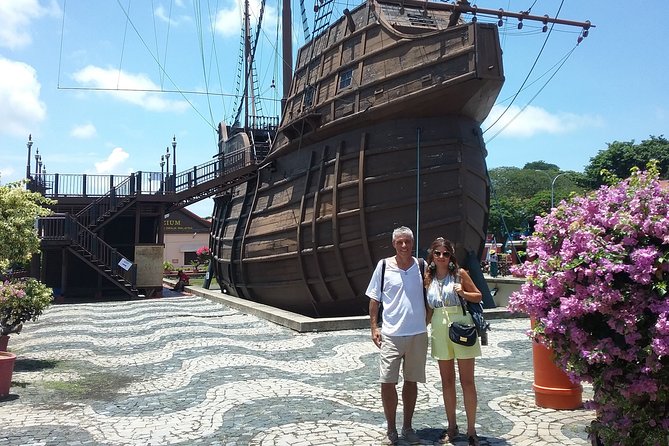
Malacca is one of those places where history isn’t in a museum box. It’s in building shapes, church styles, temple details, and the way neighborhoods connect. This tour is a practical way to experience that UNESCO World Heritage city without doing the logistics yourself from KL.
What makes it work is the variety. You’re not just seeing one culture’s imprint—you’re hopping through eras: Portuguese and Dutch rule show up in architecture and fortifications, British influence nudges religious sites later on, and Chinese heritage is visible in Bukit China and Cheng Hoon Teng temple. Even if you’re not a big “timeline” person, the day builds a story you can feel in your feet.
Also, the group size cap—up to 15 travelers—matters. Big coach tours often mean you rush. Smaller groups can mean quicker help, more attention from the driver/guide, and more chance to manage your own pace in the time you’re given.
You can also read our reviews of more historical tours in Kuala Lumpur
Price and what you actually get for the $85
At $85 per person for about 8 hours, this is priced for convenience, not for free time. You’re paying for transportation, a driver/guide, and hotel pickup and drop-off, plus lunch. That’s a big deal in KL, where “getting out of town” can eat half your day even before you start seeing anything.
Here’s the practical value check:
- Included lunch means you’re less likely to spend the middle of your day hunting food.
- Hotel pickup/drop-off reduces the most annoying part of day trips—finding the right meeting point and fighting traffic on your own.
- The tour uses a coach and includes a mobile ticket, so there’s less friction on the day.
What isn’t included? Souvenir photos you might choose to buy. And like many day tours, the biggest hidden cost is mental energy: with a full schedule, you’ll want to move efficiently through each stop rather than wandering.
If you’re trying to maximize sightseeing per hour while keeping your planning effort close to zero, this price can make sense.
The real rhythm: 8:30am start, coach time, and how to keep control
This tour starts at 8:30am and runs roughly 8 hours. Expect a good chunk of that to be on the road from Kuala Lumpur to Malacca, since it’s a day trip. The coach format means you’ll be comfortable enough, but you’ll also be stuck with the group’s timing.
So how do you make it feel less like a schedule and more like a trip?
- Pack for weather. Bring a compact umbrella or light rain gear. Non-stop rain can turn a sightseeing day into wet-shirt survival.
- Wear shoes you can walk in even if paths get slippery.
- At each stop, decide fast what you want: photos, a quick read, or just letting your eyes soak it in.
- If you care about walking time on Jonker Street, mentally treat it as a bonus at the end, not something you’ll definitely have forever.
One more practical note: this tour includes pickup, but pick-up timing can vary by hotel traffic and route. If you’re the kind of person who needs certainty, plan to be ready a little earlier than the listed time.
Bukit China: Ming Bride roots and a 17th-century Chinese cemetery
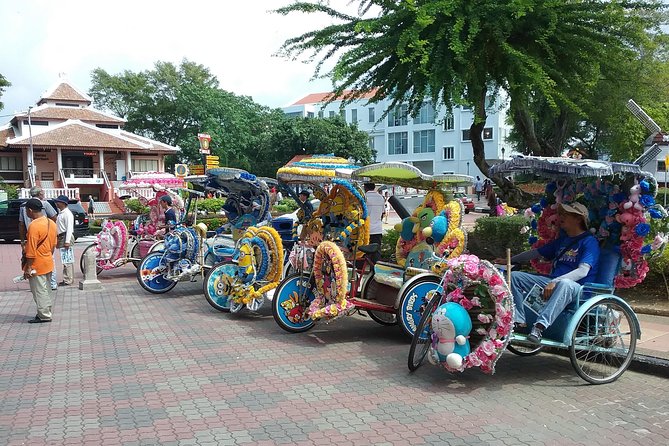
Your day opens at Bukit China (Chinese Hill). The story goes like this: Malay history links the arrival of Chinese settlers to a dramatic royal marriage, when the sultan married the Emperor’s daughter. When the princess arrived, her retinue—500 handmaidens are part of the legend—brought a large community into the area. That’s why this hill became a Chinese-dominated zone.
This stop is also where the tour connects you to something specific and unusual: the biggest Chinese cemetery from the 17th century located outside of China. That alone makes Bukit China a meaningful early stop. It turns what could be just a scenic hill into a place where you understand how migration and family roots shaped a city.
You’ll have around 1 hour here, and admission is listed as free for this stop. In that time, don’t try to do everything. Look for the overall layout, take in the story, and get a few photos from angles that show the hill’s role in the settlement.
Red Square and Stadthuys: Dutch municipal power in red brick
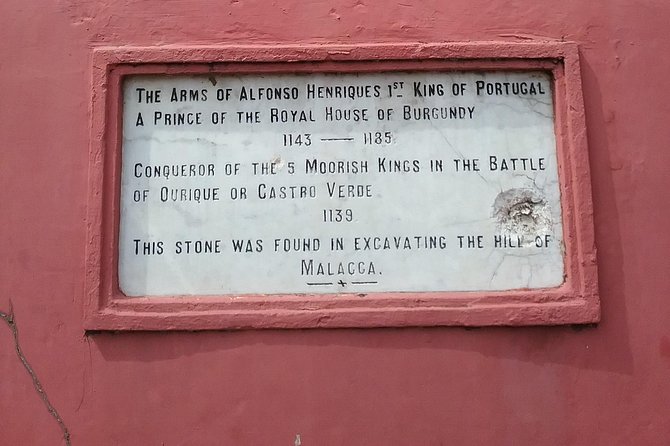
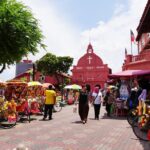
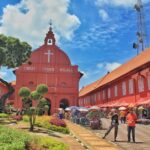
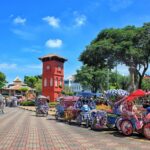
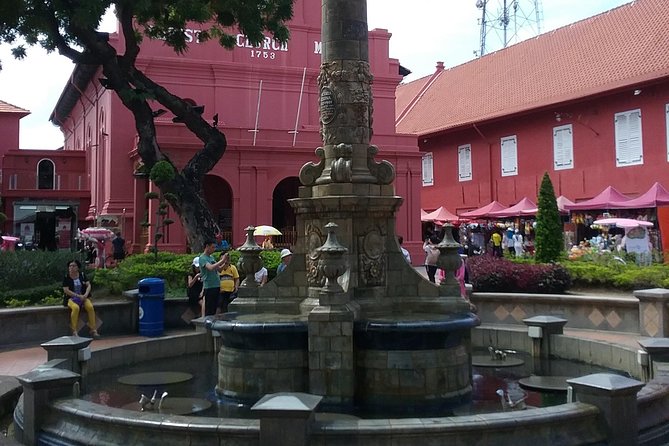
Next up is Red Square (Dutch Square) and the Stadthuys area. This is the part of Malacca that shows Dutch influence without needing a guide to point it out. Buildings here are described as bright terracotta-red with louvered windows and chunky doors with wrought iron hinges—very “administration district,” not “romantic postcard.”
You’ll also hear about Stadthuys as a 17th-century municipal building built between 1660 and 1700. The inside is where this stop can surprise you: the tour notes highlight white monumental staircases and high windows. If your group moves quickly, prioritize getting inside for that interior feel, because it’s the kind of space that makes you understand why Europeans built their authority in stone and design.
Plan on about 1 hour and free admission here too. Use the time to notice small details: ironwork hinges, window grilles, and how the building’s symmetry supports the whole Dutch “order” vibe.
You can also read our reviews of more tours and experiences in Kuala Lumpur


St Paul’s ruins, Christ Church, and St Peter’s: three faiths in one day
Malacca’s religious sites are a fast way to understand colonial layers. This portion of the day packs multiple landmarks, and each one signals a different wave of European presence.
St Paul’s Hill & Church (Bukit St. Paul)
Here, the highlight is the ruins—the exterior is mostly Portuguese architecture in style. There’s a small paved path on the hilltop that leads into the ruins, so it’s not just a view from outside. You’ll also see a statue dedicated to Saint Paul the Apostle, with the statue painted in white.
It’s listed as a 1-hour stop with free admission. Even if you’re not into church ruins, this is worth it because the setting makes the Portuguese story feel physical.
Christ Church
Christ Church is a clean visual marker: a brick-red building with a huge white cross on top. It was built in 1753 to celebrate a century of Dutch occupation. Inside, the tour mentions 200-year-old handmade pews, decorative fanlights, and plaques honoring Dutch soldiers and locals.
Then comes the British layer: when the British took over Malacca, they added a weathercock and bell to Christ Church and transformed it from Protestant to Anglican. That kind of detail matters because it shows how religions and rulers traded places over time, often using the same building.
Again, plan on 1 hour and free admission.
St Peter’s Church
St Peter’s Church is the oldest operational Catholic Church in Malaysia, built in 1710 on land donated by a Dutchman named Maryber Franz Amboer. The oldest item noted is the bell, manufactured in Goa in 1908.
This is a 1-hour stop with free admission. Even if you don’t go deep into church architecture, the “operational” part changes the feel. It’s living heritage, not only historical scenery.
Cheng Hoon Teng temple: 1646 and the Merciful Cloud vibe
Cheng Hoon Teng Temple is the kind of stop that slows your pace in the best way. It’s described as the oldest Buddhist place of worship in Malaysia, built in 1646 and known as the Merciful Cloud Temple.
The temple is dedicated to Kuan Yin, the Goddess of Mercy. The central prayer hall has a statue of Kuan Yin with strong color details—black, gold, and red-robed. Those colors are the sort of thing you’ll notice even from a step back.
You’ll have around 1 hour and free admission. If you want to get the best experience, keep your phone camera ready but don’t rush your eyes. Temples reward slower looking, even when a tour day pushes you to move.
A’Famosa Porta de Santiago and Portuguese Mini Lisbon
This is where Malacca’s “military + Portuguese life” side shows up.
A’Famosa (Porta De Santiago)
The tour includes A’Famosa (Porta De Santiago) and the story behind the fortress. Even without a long lecture, a fortress stop helps you understand why this trading port mattered. Fortifications are what rulers build when money and shipping routes are on the line.
If your guide moves fast here, it’s still worth your attention. Fort gates are like city punctuation marks: they tell you where power sat.
Portuguese Settlement, also called Mini Lisbon
Then you jump from fortress seriousness to everyday cultural survival. The Portuguese Settlement—sometimes called Mini Lisbon—has a history tied to community identity. In the early 1930s, a British Resident allowed the establishment of a fishing village of wooden huts on swampy land next to the sea, at the request of a French missionary. It was originally called St. John’s Village.
This settlement became a bastion for those with Portuguese ancestry to preserve religion, language, and traditions. Today, the area is known for streets with Portuguese-flavored names like D’Alberquerque, Sequera Eredia, D’Aranjo, and Texeira.
The time noted is very short—about 1 minute—so treat it like a quick arrival moment rather than a deep exploration. If you care about this part, you’ll want to be mentally ready when you arrive: take a few photos, read street signs if you can, and then enjoy the contrast as you move back toward Malacca’s riverfront vibe.
Jonker Street and the Malacca River walk: ending with real street energy
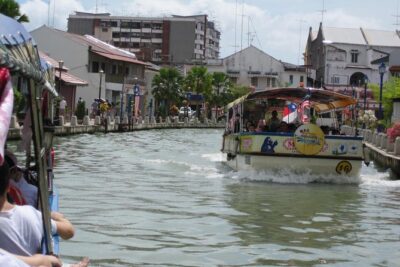
After the main heritage stops, you’ll walk along Jonker Street and then toward the Malacca River before heading back to Kuala Lumpur in the early evening. This final stretch is important because it changes the feeling from “history sightseeing” to “life in the city.”
Jonker Street is a name people associate with shopping and street atmosphere, and even if you only have limited time, it’s a good place to reset your brain. Think of it like a palate cleanser: you’ve seen forts, churches, and temples; now you’re back on human ground.
Practical move: keep your loose time at the end flexible. If it’s raining, you may want to prioritize covered spots and quick photo stops. If it’s dry, use the walk to stretch and do a casual browse.
What can go wrong (and how you can protect your day)
This tour’s strengths are clear, but the mixed experiences point to the same risk: time pressure.
Here are the most common friction points you should plan for:
- Non-stop rain can ruin the mood fast. Even if every stop is worth it, wet weather can make walking feel harder and photos less enjoyable.
- Some groups can feel like they’re on a strict schedule, with little chance to linger at each site.
- Bus time can feel long compared with time on the ground, especially if there are traffic delays.
- There can be trade-offs in what the guide prioritizes at the end of the day.
One detail I’ll keep in your head: a good guide can make history feel like a story instead of a checklist. A guide named Stephen has been praised for being articulate and supportive without being intrusive, which is exactly what you want on a packed day.
If you’re hoping to spend extra time shopping on Jonker Street or you want a slow photo walk, this is where you’ll need to manage expectations. Your best defense is simple: ask politely at the start if there’s flexibility, and don’t wait until you’re already at the last stop.
Who this Malacca day trip is best for
This tour fits best if you:
- Want major Malacca highlights in one day from Kuala Lumpur.
- Like seeing multiple faith and colonial layers without planning transport, entry tickets, and timing.
- Appreciate a group with a capped size and hotel pickup.
It’s also a good match for first-timers who want the big names: Bukit China, Dutch Red Square/Stadthuys, St Paul’s ruins, Christ Church, St Peter’s, Cheng Hoon Teng, A’Famosa, and Portuguese Mini Lisbon, followed by Jonker Street and the Malacca River.
If you’re the kind of traveler who hates rushing and needs lots of free time, you might find this day too tight. In that case, you’d likely enjoy an overnight or a slower self-guided pace more.
Should you book this Malacca day trip?
If your goal is to get a strong Malacca foundation fast—fortress, Dutch civic architecture, Portuguese church ruins, and Chinese Buddhist heritage—this tour is a solid value at $85 because transport + hotel pickup/drop-off + lunch are included. You’ll also walk away with a clear sense of why Malacca became such a mixing bowl for traders and rulers.
Book it if you’re okay with a structured day and you’ll come prepared for rain and limited lingering time. Don’t book it if your dream day is long, slow wandering with zero schedule pressure.
If you do book, I’d treat the first half as “set your history base,” and keep your energy for the last stretch on Jonker Street and the Malacca River—that’s where the day tends to feel most like travel, not transportation.
FAQ
How long is the Malacca day trip from Kuala Lumpur?
It’s listed as about 8 hours.
What’s included in the $85 per person price?
The tour includes lunch, a driver/guide, and hotel pickup and drop-off.
Is there a mobile ticket and is pickup offered?
Yes. The tour includes a mobile ticket, and pickup is offered.
Where does the tour start and what time does it depart?
The start time is 8:30am.
How many people are on the tour?
The tour is a coach tour with a maximum of 15 travelers.
Can I cancel for a full refund if my plans change?
You can cancel for a full refund if you cancel at least 24 hours before the experience’s start time.