REVIEW · KUALA LUMPUR
Full-Day Kuala Lumpur Sightseeing Tour
Book on Viator →Operated by RIYAS ADVENTURE TIME · Bookable on Viator
First, Kuala Lumpur in one long day works. This tour is a smart way to see the big-ticket sights plus a few cultural stops, with an air-conditioned vehicle and an English-speaking driver handling the driving and logistics. I especially like the mix of iconic KL sights with places you might not pick on your own, like the Royal Selangor pewter visit and batik at East Coast Batik (Batik CHONG). The only real drawback to plan for is comfort and timing: some pickups can mean a long road ride from the port area, and the vehicle size may not feel ideal if you have four adults.
You’ll cover a lot across modern KL, temples, and heritage streets in about 7–8 hours, with many stops that are free to enter. Still, two skyline stops (Petronas and KL Tower) cost extra, so you’ll want to confirm what tickets you’re buying before the day starts.
In This Review
- Key things to know before you go
- How this Kuala Lumpur full-day tour really runs
- Petronas Twin Towers and KLCC Park: skyline time that sets the tone
- KL Tower atop Bukit Nanas: a second skyline option (with a cost)
- Batu Caves: 272 steps, big temple energy, and smart timing
- Royal Selangor pewter and Batik CHONG: craft that adds meaning
- Istana Negara and National Monument: outside views and strong symbolism
- National Mosque (Masjid Negara) and River of Life: respect and wayfinding
- Moorish architecture, Merdeka Square, and Sultan Abdul Samad’s clock tower
- KL City Gallery and Thean Hou Temple: a calmer pace with big visual payoff
- Chinatown, Brickfields (Little India), and Sri Maha Mariamman: one religion-rich city arc
- Price and logistics: what $44.88 buys, and where you may spend extra
- Who this Kuala Lumpur tour is best for
- Should you book this full-day Kuala Lumpur tour?
- FAQ
- FAQ
- What is the duration of the Kuala Lumpur full-day sightseeing tour?
- Does the tour include pickup and drop-off?
- Are tickets for Petronas Twin Towers included?
- Is KL Tower admission included?
- Are Batu Caves and other temple or landmark entrances included?
- Is a tour guide included?
- Can food be added to the tour?
- What group size is this tour limited to?
- Can I get a full refund if I cancel?
Key things to know before you go
- Pickup + driver logistics: You start with Port Klang meeting and/or hotel pickup/drop-off, and the drive is handled for you.
- Lots of free admission stops: Most cultural and landmark stops are free, which keeps the total day cost under control.
- Petronas + KL Tower cost extra: Plan on paying for the skyline experiences at Petronas Twin Towers and KL Tower.
- Batu Caves includes a big climb: Expect 272 steps and plan for heat and shoes.
- Craft stops break up the day: Royal Selangor pewter and Batik CHONG add texture beyond photo stops.
- Small max group size: The tour caps at 15 travelers, so you’re not stuck in a huge herd.
How this Kuala Lumpur full-day tour really runs
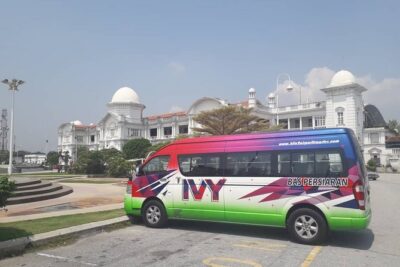
This is built as a smooth, one-day city loop. You’re met at the Port Klang area, then you’re driven into Kuala Lumpur and out again, with a focus on seeing the main sights without having to figure out transport, parking, or routing.
The upside is simple: you get a lot of ground covered in a day that usually only works if you’re efficient. The car and driver take care of the “between places” time, so you can spend your energy on the places themselves. With a maximum of 15 people, it’s also easier to stay organized than on big group tours.
The key thing to watch is road time and vehicle comfort. If you’re starting from a cruise ship, you may face a longer drive into the city and back. And if your party is larger (the same vehicle has to fit everyone), you might want to think about posture, heat, and whether you’ll be okay in a tighter seating setup for hours.
You can also read our reviews of more tours and experiences in Kuala Lumpur



Petronas Twin Towers and KLCC Park: skyline time that sets the tone
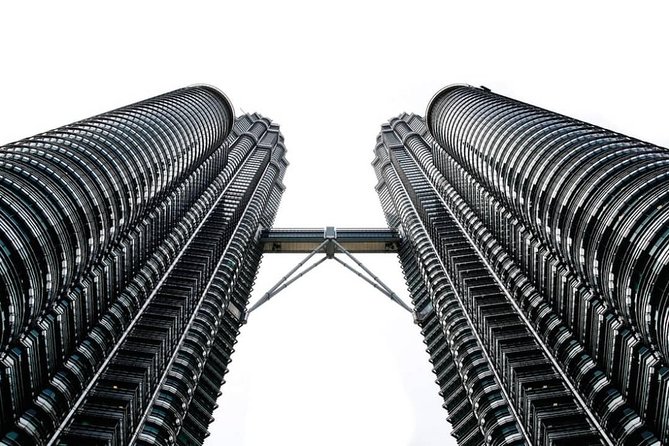
Petronas Twin Towers is the obvious first-class stop. The towers reach 451.9 meters, and this whole KLCC area is the modern showpiece of central Kuala Lumpur. You get scheduled time to go up to the Skybridge on the 41st floor and the Viewing Deck on the 86th floor.
Two practical points. First, the skyline entry is not included, so budget for tickets and double-check what you’re selecting. Second, this is often the moment when photos turn from “nice” into “proof you were there.” If you care about pictures, treat your time here as a mini mission: arrive ready to move quickly from security to viewpoints, and don’t wait until the last minute to use the toilets or grab water.
Right next door, KLCC Park is your decompression break. It’s free, and it gives you greenery right at the base of the towers. Even if you only take a short stroll, it helps reset your eyes after the heights.
KL Tower atop Bukit Nanas: a second skyline option (with a cost)
KL Tower sits at 421 meters on Bukit Nanas, with its own skyline character. The architecture is designed around Islamic heritage motifs, including Arabic-script detailing and Islamic geometric tile patterns.
Like Petronas, KL Tower admission isn’t included, so you’re making a real choice here: do you want to pay for a second “view from above” moment, or would you rather spend that money and time on more street-level sights?
If you do go up, plan for the weather. Kuala Lumpur can feel hot quickly, and time spent waiting indoors or in lines can eat into what you want from the top. If you’re already hitting Petronas and only want one paid skyline, it’s okay to treat KL Tower as optional.
Batu Caves: 272 steps, big temple energy, and smart timing
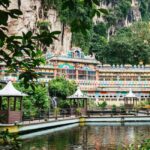
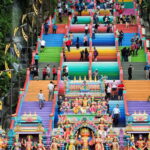
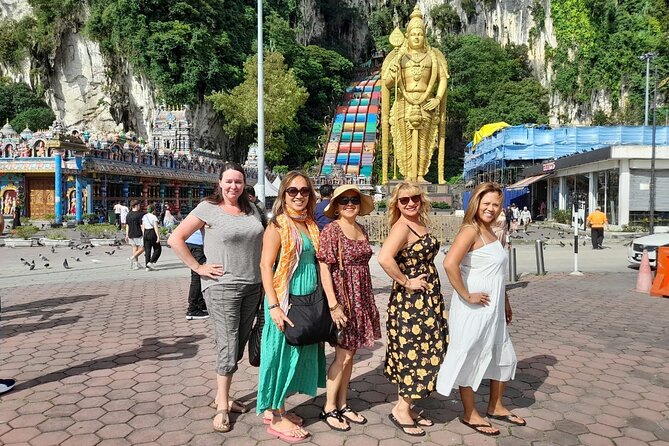
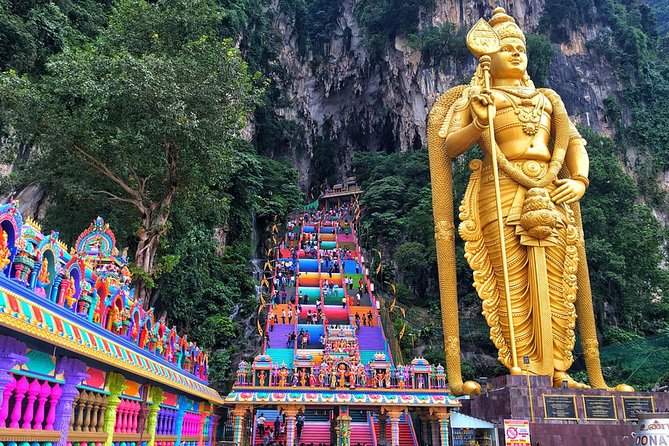
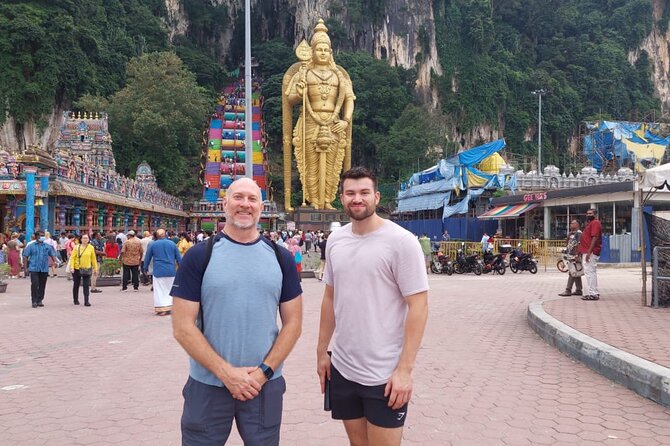
Batu Caves is the stop that tends to feel like a real change of world. It’s built into a limestone outcrop and functions as a cave temple complex. The main cave has ornate Hindu shrines, and the headline experience is the climb: 272 steps up to the temples.
You should approach this with respect and common sense. Wear shoes you can walk in comfortably on stone steps. If you’re going midday, heat can be a factor, so bring a bottle of water if it’s allowed and plan a slow climb. Also, remember that this is an active religious site, not just a viewpoint.
The big plus: even if you only spend your scheduled time, Batu Caves has enough visual variety—caves, shrines, and the climb itself—that it doesn’t feel like a quick photo stop.
Royal Selangor pewter and Batik CHONG: craft that adds meaning
This is where the tour gets more interesting than just landmarks. At Royal Selangor Visitor Centre, you’re stepping into the world of Malaysian pewter craft. Royal Selangor traces back to 1885, and the brand is known for quality pewter and design. The visit is free and focuses on how pewter becomes functional objects and gifts.
It’s a nice break from driving and walking outdoors. Even for people who don’t buy souvenirs, seeing how materials and craftsmanship work can make the day feel more grounded.
Then there’s East Coast Batik (Batik CHONG), established in 1974. This is free and focused on batik as more than a cloth pattern. You’ll have gallery time and a chance to connect the craft to the design process.
If you like cultural texture in your travel, these two stops are worth the time. They also help keep the day from feeling like a checklist.
- Private Tour Kuala Lumpur with Petronas Twin Towers Observation Deck & Batu Cave
★ 5.0 · 1,029 reviews



Istana Negara and National Monument: outside views and strong symbolism
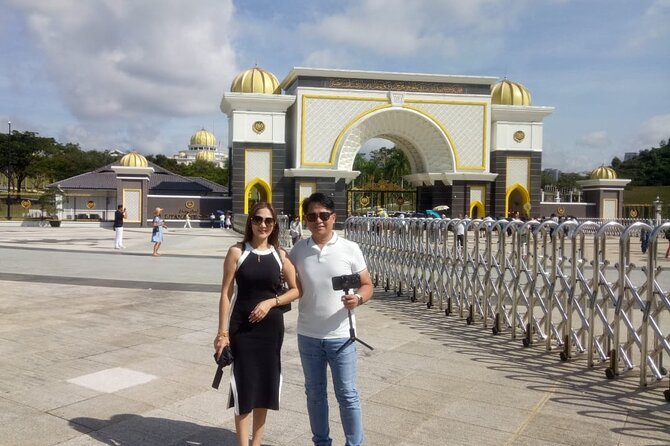
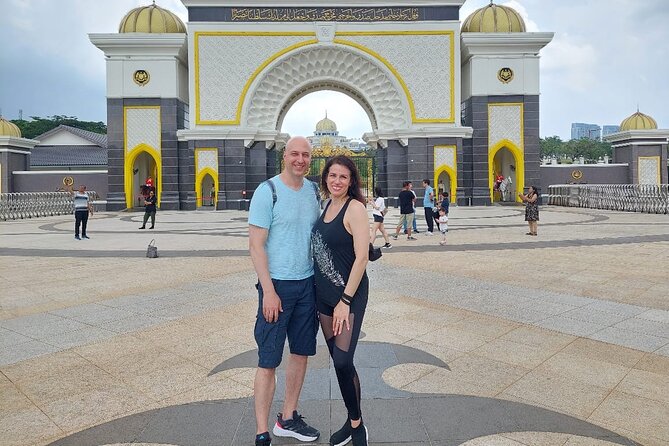
Istana Negara (National Palace) is the official residence of the King of Malaysia. Your access here is outside only, and visits are limited to what you can see from ground level. The palace has 22 domes, and the largest reaches about 40 meters.
Why it matters: even as an exterior stop, it’s a quick lesson in Malaysian royal architecture and scale. If you want an interior tour, this won’t provide that—but for a day like this, seeing it from outside still works.
Right after that, National Monument honors those who gave their lives for peace and freedom during the nation’s struggle against communist threats. There’s also a massive bronze sculpture in the grounds—one of the world’s largest free-standing bronze sculptures—created in 1966 by Felix de Weldon, who also sculpted the Iwo Jima monument in Washington, DC.
This is the kind of stop that rewards calm attention, not rushing. It’s free and it gives the day a serious note after the more playful skyline and temple sights.
National Mosque (Masjid Negara) and River of Life: respect and wayfinding
Masjid Negara is a standout for its design: a star-shaped dome and a 73-meter minaret. The look blends modern architecture with traditional Islamic art, including calligraphy and ornamentation.
Your practical needs here are straightforward: dress appropriately. Women are required to wear headscarves. Since the tour notes a dress code, don’t show up in shorts or anything too bare if you can avoid it.
Then there’s River of Life, described as a convergence point of two rivers: the Klang River and the Gombak River. It’s located near Masjid Jamek Sultan Abdul Samad. Even with limited time, it helps you understand how water and geography shaped the city’s growth.
Moorish architecture, Merdeka Square, and Sultan Abdul Samad’s clock tower
This part of the day is built for people who like architecture and street-level history. You’ll pass or stop at several landmarks tied to Kuala Lumpur’s identity.
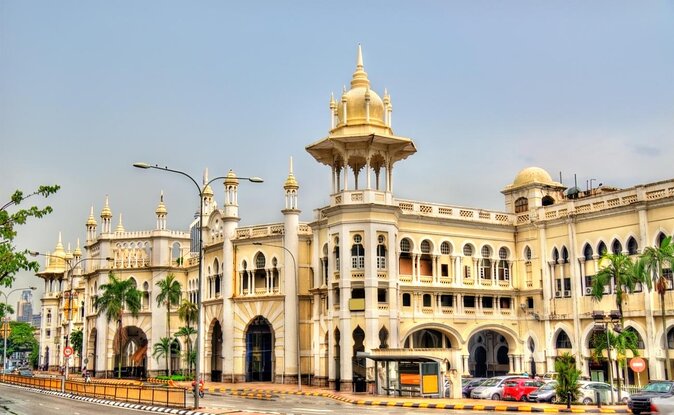
The Malayan Railway Administration Building is known for its beautiful Moorish architecture. It’s free and short, but it’s the kind of building you notice even when you’re trying to keep moving.
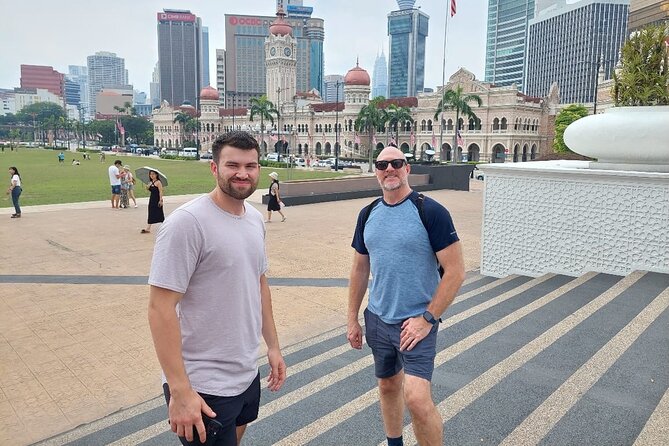
Next, Dataran Merdeka (Merdeka Square/Independence Square) is the historical stage for Malaysia’s independence celebrations—specifically when the union flag was lowered and the Malayan flag was raised at midnight on 31 August 1957. The square is free, and it’s paired with the next stop:
Sultan Abdul Samad Building, dating to 1890, with a distinctive Moorish design. The clock tower is often compared to K.L.’s Big Ben, and the vibe here is classic: lots of open space, good photos, and an easy place to pause.
If you’re short on time in Kuala Lumpur, these stops are efficient. You get meaning without needing a full museum day.
KL City Gallery and Thean Hou Temple: a calmer pace with big visual payoff
A nice feature of this tour is the inclusion of a small cultural stop: Kuala Lumpur City Gallery. It’s free and includes two floors of exhibition space, a cafe, a museum shop, and also acts as a tourist information center. It was founded in 1989 after the building changed roles over time.
Even if you only skim what’s on display, it helps you translate what you’ve seen into a clearer story about the city.
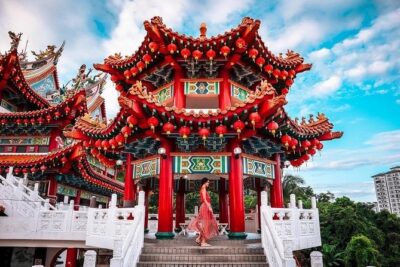
Then you head to Thean Hou Temple, one of Southeast Asia’s largest temples. It’s a six-tier temple dedicated to the Chinese sea goddess Mazu. It was completed in 1987 and officially opened in 1989, built by Hainanese communities in Malaysia.
With the temple overlooking Jalan Syed Putra, it’s also one of those places where you’ll want to pause for photos and just look around. The free entry makes it easy to spend a little extra time.
Chinatown, Brickfields (Little India), and Sri Maha Mariamman: one religion-rich city arc
The tour’s late-day segment moves into areas where Kuala Lumpur’s Hindu and Chinese communities show up clearly in streets and temples.
Little India / Brickfields is tied to the city’s brick-making roots. After a huge fire and flood in 1881, wooden and thatched structures were destroyed. Sir Frank Swettenham (the British Resident at the time) ordered brick and tile construction, shaping what Brickfields became. This stop is free and gives you a narrative connection to why the neighborhood looks the way it does.
Right by Chinatown, you’ll also visit Sri Maha Mariamman Temple, described as the oldest Hindu temple in Kuala Lumpur, founded in 1873. A new structure was built in 1968, featuring the ornate Raja Gopuram tower in the style of South Indian temples. Entry is free, and the temple’s age and design details make it feel like a living place of worship, not just a tourist object.
If you want a day that shows how Kuala Lumpur layers faith communities side by side, this arc is a good way to see it without moving hotels or planning separate trips.
Price and logistics: what $44.88 buys, and where you may spend extra
At $44.88 per person, this is priced like a full-day sightseeing package that leans on value by mixing free attractions with a couple paid highlights. You get air-conditioned vehicle, English-speaking driver, and hotel pickup & drop-off (and the port meeting is part of how the day starts). The group cap is 15, which is another value driver: smaller groups typically feel easier to manage during moves between sights.
Here’s where your money likely goes extra:
- Petronas Twin Towers: admission is not included
- KL Tower: admission is not included
- Tour guide: listed as not included (you’ll still have an English-speaking driver, but don’t expect a separate formal guide unless that’s arranged)
Food is also not included unless specified. The tour notes that food can be arranged for an additional cost, so if you want a predictable meal stop instead of hunting for one in traffic, you’ll want to ask ahead.
Value math is simple: because many stops are free, your total day cost can stay close to the booking price if you treat Petronas and KL Tower as optional buys based on your interests.
Who this Kuala Lumpur tour is best for
This works best if you want a high-coverage day without planning. If your time in Kuala Lumpur is limited—one day, a cruise day, or a stopover—you’ll appreciate the built-in routing.
It’s also a fit for people who like religious architecture, city icons, and a few cultural craft stops. If you’re the type who likes taking photos but also wants something real to look at (pewter making, batik design, temple detail), this tour delivers.
If you’re picky about comfort in cars or you hate big stair climbs, plan carefully. Batu Caves has 272 steps, and some riders may find the road ride long depending on pickup location.
Should you book this full-day Kuala Lumpur tour?
I’d book it if you want a guided city loop that covers the essentials and keeps most admissions free. The best reason is efficiency: you get a lot of major sights plus craft and temple stops, with logistics handled by the vehicle and driver.
I’d hesitate only if skyline views are your top priority and you’re hoping everything is included. Since Petronas and KL Tower are not included, you’ll want to budget for tickets and confirm what you plan to enter. And if you’re sensitive to car comfort on longer drives, think about how you’ll handle heat and tight seating.
FAQ
FAQ
What is the duration of the Kuala Lumpur full-day sightseeing tour?
The tour runs for about 7 hours, with a note that you should plan on 7–8 hours.
Does the tour include pickup and drop-off?
Yes. The tour includes hotel pickup & drop-off, and it’s also described as meeting you at Port Klang when you arrive.
Are tickets for Petronas Twin Towers included?
No. Entrance to Petronas Twin Towers is not included.
Is KL Tower admission included?
No. Entrance to KL Tower is not included.
Are Batu Caves and other temple or landmark entrances included?
Batu Caves is listed as free to enter. Many other stops are also listed as free, including KLCC Park, Royal Selangor Visitor Centre, National Monument, and National Mosque.
Is a tour guide included?
An English-speaking driver is included, but a separate tour guide is listed as not included.
Can food be added to the tour?
Food and drinks are not included unless specified, but food can be arranged for an additional cost.
What group size is this tour limited to?
The tour has a maximum of 15 travelers.
Can I get a full refund if I cancel?
Yes. Free cancellation is available, and you can cancel up to 24 hours in advance for a full refund.