REVIEW · KUALA LUMPUR
Private Half-Day Kuala Lumpur Culture And Communities Exploration Tour
Book on Viator →Operated by Travelvago · Bookable on Viator
Four hours can teach you a lot. This private Kuala Lumpur route connects religion, ethnicity, and everyday city life in a way that’s easy to follow, even if it’s your first day. You’ll get door-to-door hotel transfers in an air-conditioned vehicle, then hit Batu Caves, Thean Hou Temple, and Masjid Negara, with quick stops through Chinatown and Little India.
I especially like how the tour is private with an English-speaking driver/guide, so you can ask questions and adjust your pace. I also love the tight timing: short, focused visits rather than half-day “maybe we’ll see things” plans. The main drawback to watch for is the Friday rule at Masjid Negara—if your day falls on Friday, the mosque stop won’t happen.
In This Review
- Key highlights to know before you go
- A smart way to connect KL’s religions to real streets
- Getting to Batu Caves without the whole-day commitment
- Thean Hou Temple: where Chinese faith shows up as architecture
- Masjid Negara and the garden setting that slows you down
- The Friday catch
- Jalan Masjid India: street life around a mosque
- Chinatown: quick hits of food culture and street scenes
- Little India (Brickfields): color, shops, and the pass-by effect
- Price and what $30 really buys you
- How private guiding changes the experience (and what to ask)
- Morning vs afternoon, and how the schedule affects your comfort
- Who this tour is perfect for
- Who might want a different plan
- Should you book this Private Half-Day Kuala Lumpur Culture And Communities Exploration Tour?
Key highlights to know before you go
- Private, door-to-door pickup so you lose less time finding meeting points
- Three main faiths in one loop: Hindu (Batu Caves), Chinese temple (Thean Hou), and Muslim (Masjid Negara)
- Neighborhood context built in with Chinatown and Jalan Masjid India market time
- Clean, comfortable transport is repeatedly mentioned, with guides who communicate clearly
- Admission is free at every stop listed, but food isn’t included
A smart way to connect KL’s religions to real streets
Kuala Lumpur is one of those cities where big cultural ideas show up in daily life—on temple steps, inside mosque gardens, and behind the counter at a street snack stall. This half-day private tour is built for that. In about four hours, you’ll move through places that belong to the city’s three main ethnic communities, then you’ll pass by and briefly step into the commercial neighborhoods where people actually shop, eat, and chat.
What makes this route work is the rhythm. It’s not just “see a building.” It’s “see the building, then see the surrounding neighborhood energy.” The drive time matters too, because the guide can point out what you’re passing and tie it back to the stops. Guides named in recent feedback—like Kesh, Kumaran, Jay, Raj, Ram, and Kalai—are praised for staying on time, communicating well, and making the story feel human, not like a lecture.
One more practical point: this is a private activity, meaning it’s just your group. That usually makes short visits feel less rushed, because you’re not getting yanked along with a crowd. If you want photo stops, quick questions, or a slower walk at a temple site, you have more control.
You can also read our reviews of more private tours in Kuala Lumpur
- Private Tour Kuala Lumpur with Petronas Twin Towers Observation Deck & Batu Cave
★ 5.0 · 1,029 reviews


Getting to Batu Caves without the whole-day commitment
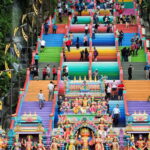
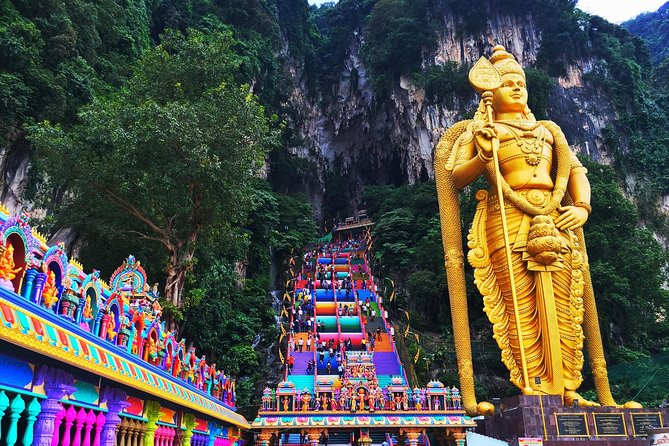
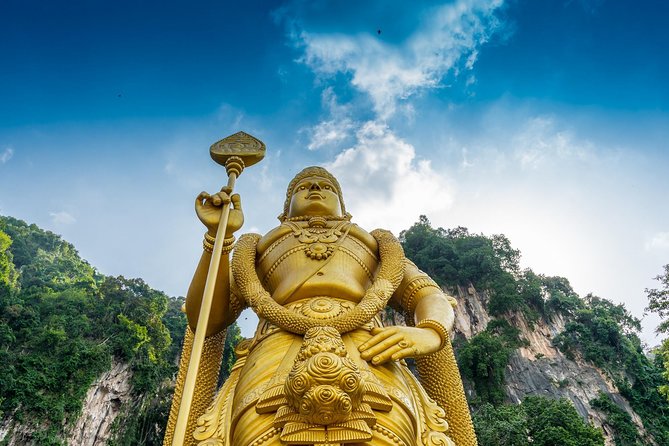
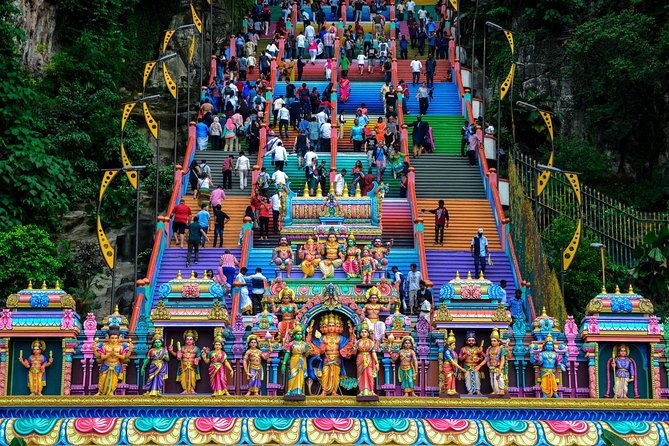
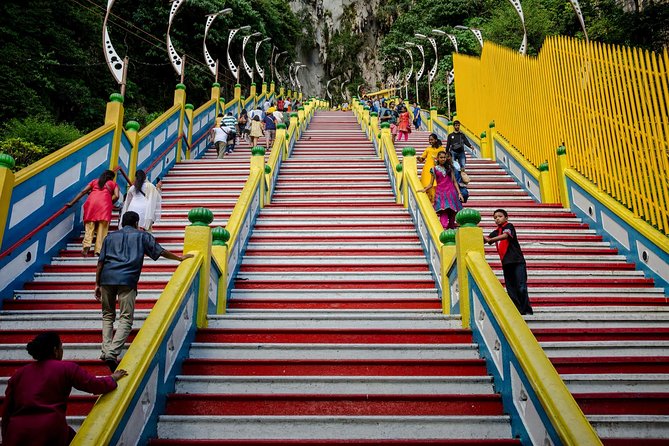
Batu Caves is the big opener. You’ll start with a scenic drive—about 30 minutes—then you’ll have roughly an hour at the site. The setting is limestone rock formations, and the caves host Hindu shrines with religious deities. The guide’s job here is to help you understand what you’re looking at, so the place doesn’t feel like just a tourist photo spot.
This stop is the one that often sets the tone for the entire tour. When you see the scale of the cave complex and the attention people give to their worship, you immediately get why Batu Caves is such a strong cultural landmark for Kuala Lumpur. It also tends to be photogenic in a practical way: you can get wide shots of the rock face and then tighter shots around shrine details.
A good consideration: religious festival crowds can change the experience. Recent feedback includes cases where the route was adjusted when Batu Caves was too crowded due to a public holiday or Thaipusam-related timing. In your plan, that means you should expect the guide might revise order or timing if conditions are rough. If you care most about specific locations, tell your guide what matters most at the start—then they can protect that priority.
Timing tip: Use your hour at Batu Caves strategically. Walk enough to see the key areas, then keep time for photos and a calm moment before moving on. With only half a day, trying to do everything at the first stop can squeeze the rest.
Thean Hou Temple: where Chinese faith shows up as architecture
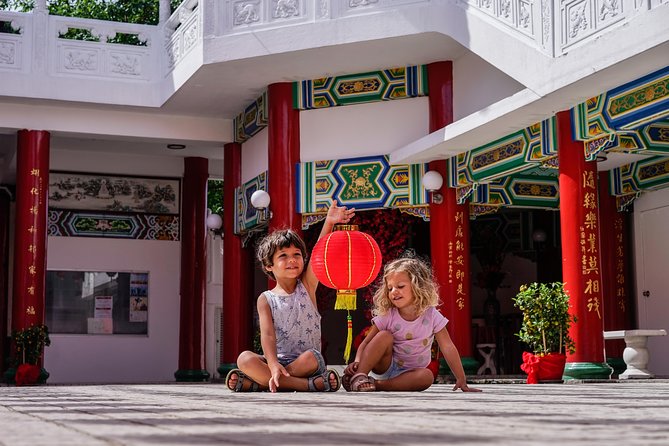
Next you’ll head to Thean Hou Temple, one of Kuala Lumpur’s most beautiful Chinese temples. Expect a landmark six-tiered temple structure, with the guide helping you interpret what you’re seeing. This part of the tour is shorter—around 30 minutes—so you’ll want to treat it like a concentrated walk-through rather than a long sit-and-stare.
Why this stop is worth your time: it shows a different style of devotion than you’ll experience at Batu Caves and Masjid Negara. Thean Hou Temple gives you a visible sense of Chinese religious culture and temple design—tiered forms, ceremonial space, and a place where people come for practice and atmosphere.
Also, this stop tends to be a strong “rest of the senses” break. After the famous cave setting, the temple’s layout and details can feel more intimate. If you like taking photos, it’s also a good moment to practice your timing: temples often have changing light depending on the time of day, so you’ll get better shots if you don’t wander in random directions. Ask your guide where the best angles are.
Masjid Negara and the garden setting that slows you down
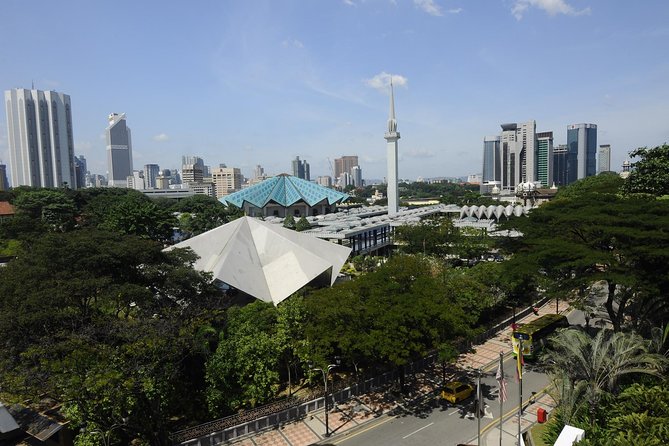
Masjid Negara (National Mosque) is one of Kuala Lumpur’s most visited religious sites. It has capacity for 15,000 people and sits among 13 acres of gardens. That garden piece matters: the mosque isn’t just a single building you rush through. The surroundings create a pause, a little breathing room between stops.
Your visit is short—about 30 minutes—so it’s not the kind of visit where you can read every detail or linger for hours. Instead, treat it like orientation. In that half hour, you’ll get the major visual cues and the general meaning behind the site, and you’ll finish with enough time left to explore the city neighborhood stops.
The Friday catch
There’s one big rule you should plan around: on Friday, tourists aren’t allowed to visit National Mosque. If your tour runs on a Friday, you won’t visit Masjid Negara. If you’re set on this particular stop, choose your day carefully. If you can’t, don’t panic—this is a private tour, so your guide can often keep the route feeling coherent even with that one substitution.
You can also read our reviews of more tours and experiences in Kuala Lumpur



Jalan Masjid India: street life around a mosque
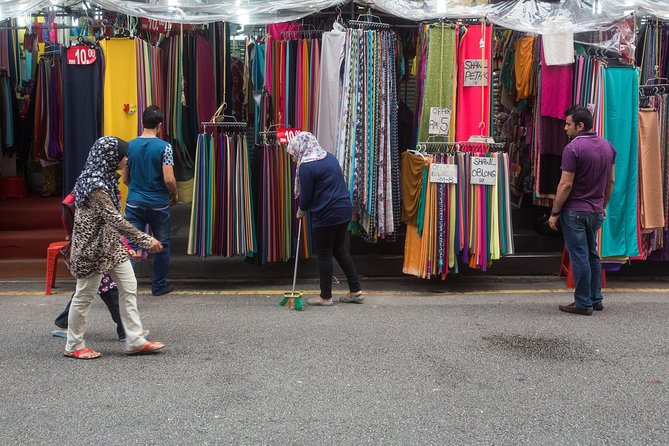
After Masjid Negara, you’ll head to Jalan Masjid India. This is a market area where you can stroll and feel more like you’re moving through local life than sightseeing from the sidewalk.
You’ll have about 20 minutes here, including time to look at street hawkers, small stalls, and local snacks and drinks. It’s not a “sit-down meal included” stop—food and beverages are not included in the tour—so think of this as a browse-and-snack window if you want it.
This is also where your guide can be useful in a quiet way. Even with only 20 minutes, they can point you toward what’s easy to try, what to skip, and how to order. If you have dietary needs, bring them up early so you’re not stuck making choices in a noisy line.
Chinatown: quick hits of food culture and street scenes
Chinatown comes next, with about 30 minutes on the ground. The tour time here is ideal for quick sampling and photos without needing a full food crawl.
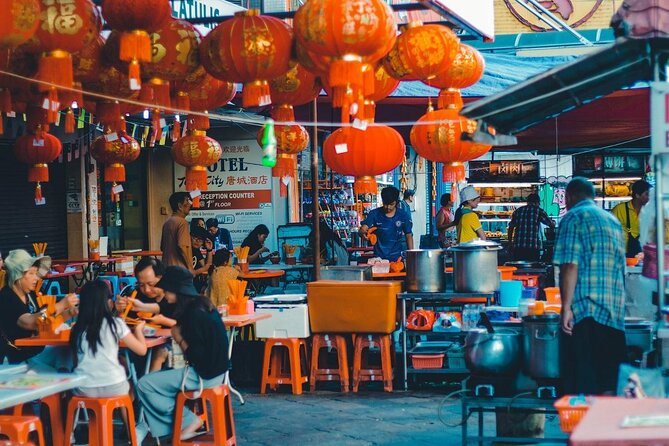
What you can expect to see and smell: dozens of restaurants and food stalls. The tour info highlights local favorites such as Hokkien mee, ikan bakar (barbecued fish), and Asam Laksa. You’ll also notice the general hum of a working neighborhood market—people eating, chatting, and shopping rather than just posing for pictures.
A practical way to enjoy this stop: don’t try to eat everything. Pick one item that looks like a local staple, try one drink or snack, then spend the rest of the time walking a little and looking for photo moments. With only 30 minutes, a too-long menu debate can steal your best street-scene time.
Also, if you’re traveling with limited time and you mainly want the cultural “layering” of KL, Chinatown is your payoff stop. It’s what the earlier religious sites help you understand. The city’s faiths aren’t separate islands—they connect to where people live and trade.
Little India (Brickfields): color, shops, and the pass-by effect
You’ll drive through Little India, specifically the Brickfields area, with about 30 minutes allocated. Since it’s a drive-through rather than a long walking tour, the value is in seeing the neighborhood vibe and getting a feel for the shopping and streetscape.
The info points to colorful streets, flavorful cuisine, and unique shops. And it fits the tour’s overall theme: this isn’t just a checklist of famous buildings. It’s a fast look at how communities express identity in everyday commercial life.
If you’re the kind of traveler who loves browsing markets, you might wish you had more time here. But in the context of a four-hour tour, the strategy makes sense: you get exposure to the neighborhood without letting it take over the schedule. If your main interest is shopping in Little India, you can ask your guide for a focused stop that matches your preferences—spending your time where you’ll actually buy something.
Price and what $30 really buys you
At $30 per person for an approximately 4-hour private tour, this is one of the better “value per hour” options in Kuala Lumpur—mainly because so much is included that typically costs extra on other tours.
Here’s what you’re getting for the price:
- Hotel pickup and drop-off in an air-conditioned vehicle
- An English-speaking driver/guide
- A private group experience
- Admission tickets free for the stops listed
- A route that strings together multiple major areas in one clean half-day plan
The only clear out-of-pocket items are food and beverages. That’s actually fair. With cultural tours, people often want control over what they eat and how they spend, especially if they have dietary needs. You’re not forced into a pre-set meal that might not fit your taste.
If you’re traveling solo or as a couple, private tours can get pricey fast in big cities. Here, the relatively low per-person cost is the main reason this one works well for short trips. If you only have a morning or an afternoon free, this plan gives you structure and context in the time you actually have.
How private guiding changes the experience (and what to ask)
Because the tour is private, the guide can do two things that group tours often can’t: keep the pacing personal and respond to your interests.
From recent feedback, communication and punctuality show up again and again. One review praised excellent WhatsApp communication and pick-up details, and another highlighted how the car was comfortable and nicely cool. Several people also mentioned being taken to good photo spots and having a guide who explained history and culture in a way that felt practical rather than robotic.
Names you might meet include Kumaran, Jay, Raj, Ram, and Kalai. Guides like Kesh and Yuvanesh were also praised for being flexible when conditions changed—like when Batu Caves was too crowded—by planning ahead and adjusting the route.
Here are smart questions to ask at the start (so your guide can tailor the time you have):
- Which stop is most time-sensitive today based on crowds?
- Where can I get the best photos in each place without slowing everyone down?
- If I only want one snack stop, which vendor or area is easiest for a quick buy?
- If Friday rules affect Masjid Negara, what’s the best alternative to keep the cultural story clear?
You’ll get more out of the tour when you steer it a little. That’s the real advantage of private guiding.
Morning vs afternoon, and how the schedule affects your comfort
You can choose between morning or afternoon tours. That choice matters because it changes your light for photos and how you handle the heat between stops.
Batu Caves and Thean Hou Temple involve walking around outdoor areas, so you’ll likely want to dress for sun and plan your breaks well. Masjid Negara’s garden setting can feel cooler and calmer, but you still move between sites fairly quickly.
If you’re the type who hates rushing, pick the time of day that matches your energy. If you’re more of an early riser, the morning tour often feels smoother. If mornings are stressful for you, the afternoon choice can still work well since the itinerary is short and structured.
And again, if you’re booking on a Friday, expect Masjid Negara not to be part of the plan. Use that info to align your expectations with the route you’ll actually take.
Who this tour is perfect for
This one fits best if you:
- Have only a half day in Kuala Lumpur and want major cultural sites without a long day
- Want a private guide who can answer questions and keep things moving
- Like a balance of religious sites plus real neighborhood streets
- Prefer short, included admission stops rather than paying entry fees later
It’s also good for first-time visitors who want “orientation” fast. You’ll leave with a clearer sense of how different communities show up in KL’s built environment and daily commerce.
Who might want a different plan
If you want long stays, museum-style time, or deep architectural study, the short visit lengths may feel limiting. This tour is designed to cover a lot in four hours, not to stay long at one place. If your top priority is sitting and learning quietly in one site, you may want a longer itinerary or a focused tour.
Also, if you’re especially set on Masjid Negara, remember the Friday rule.
Should you book this Private Half-Day Kuala Lumpur Culture And Communities Exploration Tour?
I think you should book it if you want an efficient, private way to connect Kuala Lumpur’s religious landmarks with the neighborhoods around them. For $30 per person, you get hotel transfers, an English-speaking guide, and free admission across multiple major sites, with enough street time in Chinatown and Jalan Masjid India to make the culture feel lived-in.
Book it with flexibility. If crowds affect Batu Caves on the day you go, your guide is set up to adjust. And if your date is a Friday, plan ahead for the Masjid Negara skip.
If you’re craving a fast, meaningful cultural route without a full-day grind, this half-day plan is a strong choice.
You Might Also Enjoy

More Private Tours in Kuala Lumpur
- Private Tour Kuala Lumpur with Petronas Twin Towers Observation Deck & Batu Cave
★ 5.0 · 1,029 reviews