REVIEW · KUALA LUMPUR
Private Half-Day Batu Caves and Cutural Tour in Kuala Lumpur
Book on Viator →Operated by Travelvago · Bookable on Viator
Three faiths in one route.
This private half-day loop connects the Batu Caves (Hindu shrines and statues), Thean Hou Temple (a six-tier Chinese pagoda), Chinatown (food streets), the National Mosque, and Central Market shopping—all wrapped into about 4 hours. I like that the tour is handled with real care from guides such as Ayyanar, Tina, and Kimber, who all come across as friendly and ready to adapt the day. The big idea here is a quick but meaningful look at how different communities shape Kuala Lumpur.
Two things I really like about this experience: first, the pacing. Stops are described as short, but the intent is not to rush you from place to place, and the guide can help you craft your own priorities—especially around Batu Caves. Second, the convenience is practical: hotel pickup and drop-off by air-conditioned vehicle, plus an English-speaking driver, means you’re not spending your time figuring out transit. It’s also private, so it’s just your group, with possible group discounts if you’re traveling with others.
One drawback to plan for: Batu Caves can mean a lot of walking and stairs, and the cave area can feel like a longer spell than the clock suggests. Also, on Fridays you won’t visit the National Mosque (tour notes that tourists are not allowed), so if that mosque is a must-do for you, it matters what day you book. And if you’re traveling solo, you may need to ask someone for help taking photos at key moments.
In This Review
- Key highlights at a glance
- A half-day plan that connects KL’s Hindu, Chinese, and Malay faiths
- Batu Caves: stairs, statues, and why the walk matters
- Little India Brickfields: quick color and a smooth transition
- Thean Hou Temple on Robson Heights: six tiers and big-city views
- Chinatown stop: where you can taste the city without a long detour
- National Mosque (Masjid Negara): gardens, capacity, and Friday limits
- Central Market Kuala Lumpur: souvenirs without extra planning
- Price and value: what $60 buys you in real life
- Timing tips for a half-day that can still feel like a lot
- Who this tour suits best (and who should choose something else)
- Should you book this Batu Caves and Temple Tour?
- FAQ
- How long is the Batu Caves and cultural tour?
- Does the tour include hotel pickup and drop-off?
- Is the tour private?
- What are the main stops on the itinerary?
- Are admission tickets included?
- Can I visit the National Mosque on Friday?
- What should women wear for temple visits?
Key highlights at a glance
- Batu Caves first, with time to take in the main caves and surrounding idols and statues
- Thean Hou Temple on Robson Heights, a six-tier Chinese temple with documented construction dates
- Chinatown food streets in a quick stop where you can spot local favorites
- National Mosque (Masjid Negara) in large gardens, but Friday access is restricted
- Central Market for handicrafts and souvenirs in one targeted shopping block
- Private format with an English-speaking driver and pickup/drop-off for comfort
A half-day plan that connects KL’s Hindu, Chinese, and Malay faiths
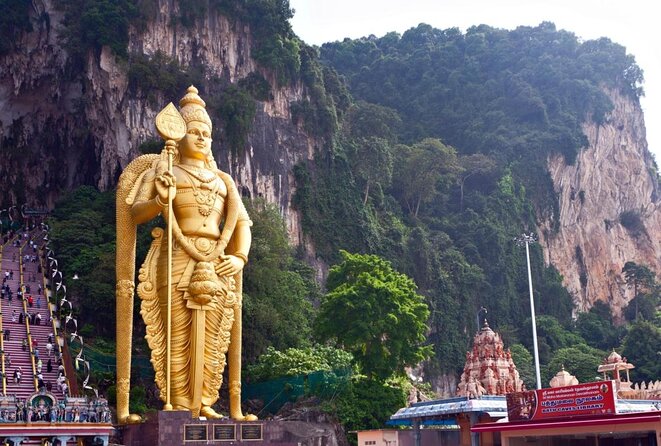
This tour is built like a cultural sampler, but with structure. You get Batu Caves, then you shift across to Chinese temple culture at Thean Hou, and then you move through neighborhoods where different communities shop and eat. After that, the National Mosque adds the Malay-Muslim story of Kuala Lumpur, followed by a simple souvenir stop at Central Market.
The value here is not just “seeing five places.” It’s that the stops are sequenced to make sense. Batu Caves is the high-energy opening act—stairs, limestone, and Hindu shrines. Thean Hou Temple is a change in texture and view. Chinatown and the market give you a place to slow down, browse, and understand what people actually do day-to-day: eat, chat, buy, and bargain.
Because the total time is about 4 hours and includes travel time, you should expect short visits at each stop. You’ll leave wanting more—especially at Batu Caves—but you’ll also leave with a clear map of how the city’s communities sit side by side.
You can also read our reviews of more private tours in Kuala Lumpur
- Private Tour Kuala Lumpur with Petronas Twin Towers Observation Deck & Batu Cave
★ 5.0 · 1,029 reviews

Batu Caves: stairs, statues, and why the walk matters
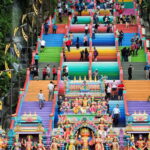
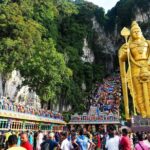
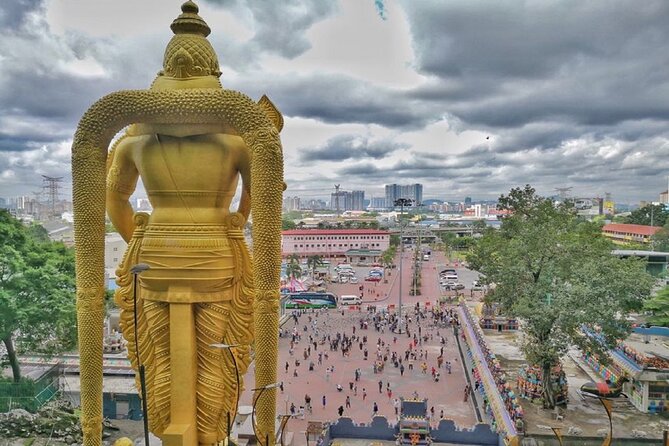
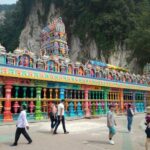
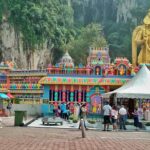
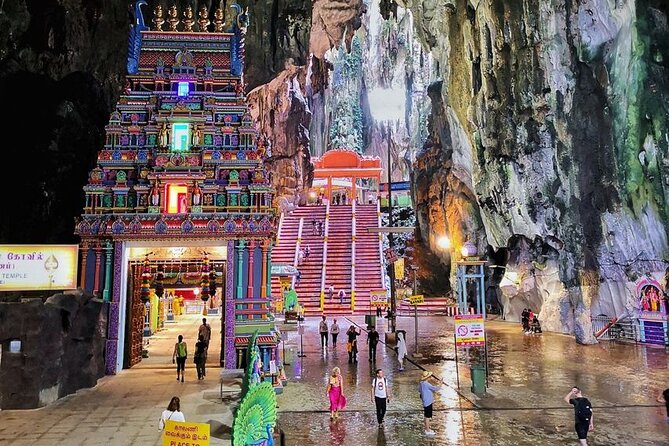
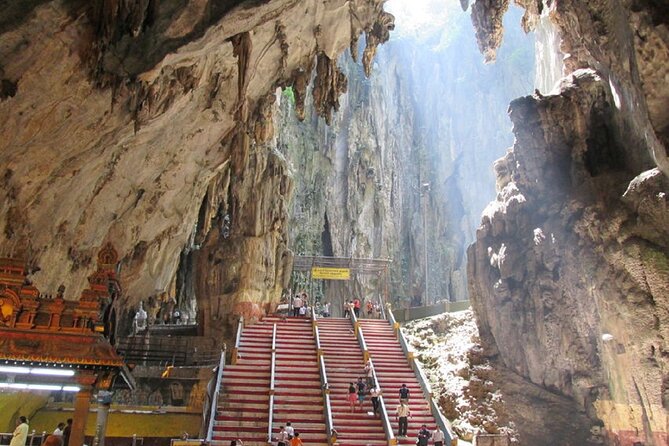
Batu Caves is one of Malaysia’s top attractions, and the tour starts there for a reason. The site is made of large natural limestone masses that house Hindu shrines with religious deities. Inside the main caves and around them, you’ll find idols and statues—set in a temple context that’s described as around 100 years old.
Here’s the practical part: the cave visit is where your energy goes first. Even if the time slot sounds reasonable, getting into the caves involves a lot of stairs. If you’re not used to steep climbs or you’re carrying a bag, plan smarter:
- Wear shoes you can trust on uneven stone.
- Consider bringing a small bottle of water, since food and drinks aren’t included on this tour.
- Start the day ready to move, not just to photograph.
One insight from guide-style feedback you might experience on the ground: the driver may not stay with you through every cave detail. So if you’re traveling solo, you might need to ask someone for help with photos at viewpoints. That’s not a problem—just a reality of how these sites work when you’re balancing a private schedule with large crowds.
The upside is that you get enough time to see why people make the climb. If you focus on the shrines and the main cave area rather than trying to “do everything,” you’ll feel satisfied instead of rushed.
Little India Brickfields: quick color and a smooth transition
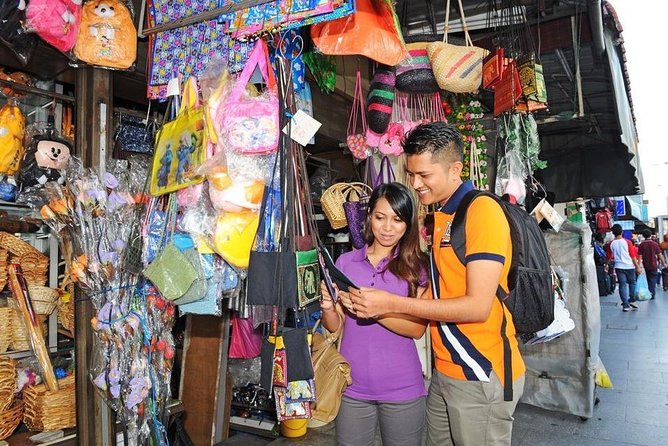
This tour doesn’t leave you stuck in one cultural zone. After the drive portion, there’s a stop tied to Brickfields’ Little India. It’s a shorter moment, around half an hour, but it helps you reset your eyes and your expectations.
You’re moving through neighborhoods with colorful streets and food energy, and it’s a nice bridge between the Hindu temple world of Batu Caves and the Chinese temple landmark of Thean Hou. Think of it as orientation time: you get a sense of the city’s mixed neighborhoods without losing too much time on the clock.
If you’re someone who likes to snack, this kind of stop can be useful. Just remember the tour doesn’t include food and beverages, so any eating here would be on you.
Thean Hou Temple on Robson Heights: six tiers and big-city views
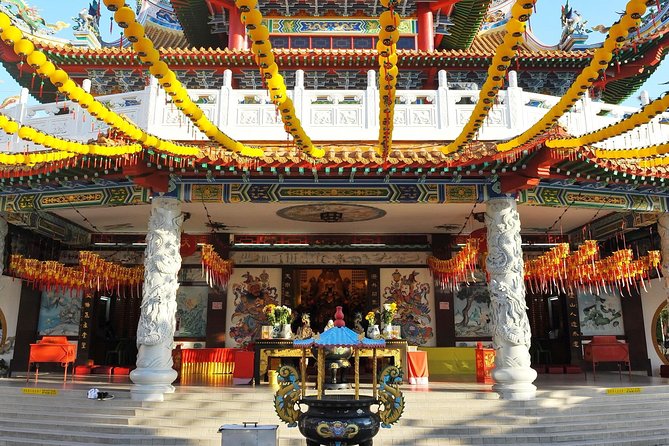
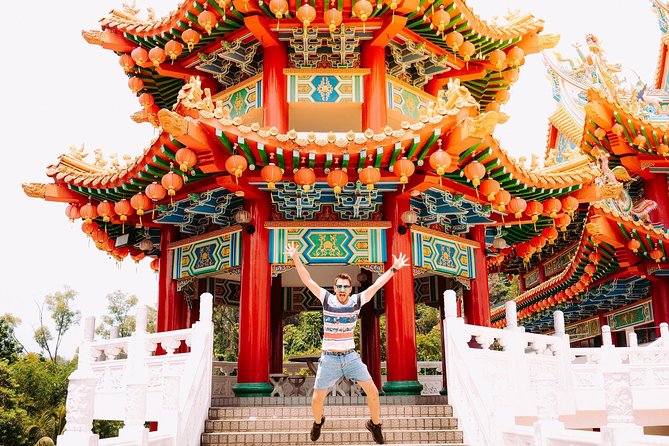
Next comes Thean Hou Temple, a standout landmark because it’s a six-tiered Chinese pagoda-style temple built atop Robson Heights. The temple is described as completed in 1987 and officially opened in 1989, which gives you a sense that this is not just an ancient site—it’s a modern spiritual landmark that still feels monumental.
This stop is about contrast. Batu Caves is natural rock and intense vertical movement. Thean Hou is temple architecture and wide views from a higher vantage point. Even if your time on-site is short, you’ll likely notice the difference immediately: the visual rhythm changes, and the crowds feel different, more like visitors taking photos and pausing rather than climbing.
What I like for practical travelers: the tour uses this stop as a calm gear shift before the more chaotic, food-driven streets of Chinatown. It’s the part of the day where you can slow down, take in the temple details, and catch a breath.
Chinatown stop: where you can taste the city without a long detour
After Thean Hou, you get a brief visit to Chinatown. This isn’t described as a deep food crawl; it’s more like a focused window into the area’s energy. The tour notes dozens of restaurants and food stalls tended by Chinese, Indian, Malay, and Bangladeshi traders.
That mix matters because Chinatown in Kuala Lumpur isn’t just “Chinese restaurants.” It’s a working neighborhood with everyday commerce, and the menu variety reflects that. The tour specifically points out local favorites such as Hokkien mee, ikan bakar (barbecued fish), and Asam Laksa.
Even with only about 30 minutes, you can do something useful here:
- Watch what’s popular and where lines form.
- If you buy something, keep it light so you don’t drag bags through more walking.
- Use the time to get oriented if you plan to come back later.
If you’re the type who likes one or two street snacks rather than a full meal, this Chinatown stop fits your style well.
You can also read our reviews of more tours and experiences in Kuala Lumpur


National Mosque (Masjid Negara): gardens, capacity, and Friday limits
The National Mosque, or Masjid Negara, is one of Malaysia’s best-known landmarks and the tour describes it as set in 13 acres of gardens, with capacity for 15,000 people. For many visitors, it’s one of the most visually impressive “big civic spaces” in Kuala Lumpur.
There’s also an important rule. The tour notes that on Fridays, tourists are not allowed to visit the National Mosque. That means if your itinerary is locked to a Friday, you should expect this stop to be skipped.
Plan your clothing based on the tour’s dress guidance, too. For ladies, shoulders must be covered and knees must be covered, using a long dress, skirt, or trousers. While the tour doesn’t mention dress rules for men, conservative coverage is usually a smart move at places of worship.
If you care about the mosque specifically, this is the one day-of-week detail that could change your satisfaction level the most. Choose your booking day with intent.
Central Market Kuala Lumpur: souvenirs without extra planning
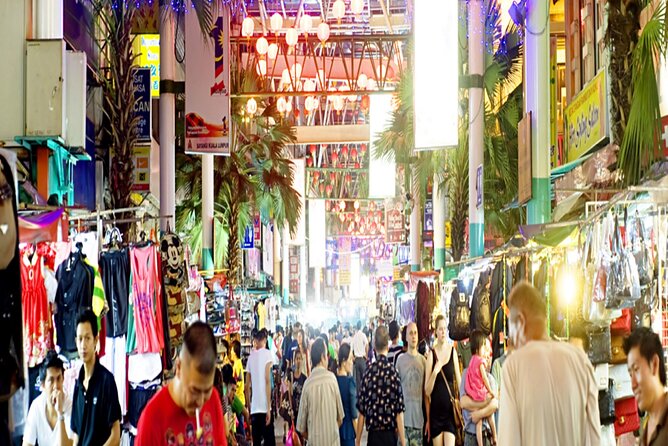
The final stop is Central Market Kuala Lumpur, described as a market you shouldn’t miss for handicrafts and souvenirs. This is the practical closer to a cultural route: after temple and neighborhood time, you can translate memories into gifts.
What you’ll appreciate here is focus. Instead of scattering souvenir stops across the city, the tour gives you one place designed for buying. You can pick up small items, textiles, and classic travel gifts without crisscrossing Kuala Lumpur.
If you like to bargain, markets are where that works best. If you don’t, you can still treat Central Market like a curated browsing stop—set a small budget and only buy what you’d actually use at home.
Because the tour doesn’t include food, this is also a good moment to grab a drink or snack on your own if you need energy for the rest of your day.
Price and value: what $60 buys you in real life
At $60 per person for a private half-day, the big value isn’t a discount miracle. It’s logistics done for you. Your cost covers:
- English-speaking driver
- Air-conditioned hotel pickup and drop-off
- All toll, tax, and service charges
- A private format for your group
For many people, the math comes out because you’re saving time and stress. Batu Caves and Masjid Negara are not next door to each other, and trying to string them together solo can turn into a half-day of transport headaches. Here, the route is already structured, and the vehicle handles the between-stop movement.
One more value point: this is a private tour, so the guide can adjust to what matters to you. In feedback, I’ve seen examples where guides like Kimber were accommodating and helped someone shape their own agenda. With Tina and Ayyanar, there’s also an emphasis on safety and going where you want, including shopping time.
If you want the comfort of pickup and a driver who can manage the route while you focus on seeing, this price feels more like paying for ease than paying for a “lecture.”
Timing tips for a half-day that can still feel like a lot
This tour is listed as about 4 hours total, and that includes travel time. That means your on-site moments are short. Don’t go in with the mindset of a full-day temple exploration.
Your most time-sensitive moment is Batu Caves. Between crowds, walking, and stairs, it can stretch your stamina more than you expect—especially if you’re stopping to photograph statues and shrines.
Here’s how I’d plan your day around that reality:
- Keep your mornings active. This tour starts with Batu Caves and ramps up quickly.
- Wear a light, breathable outfit you can adjust for temples.
- Bring a small bag with essentials only, so you’re not struggling with weight while climbing.
- If you’re traveling solo, plan to ask help for photos in the cave area rather than hoping every viewpoint lines up for a self-take.
Also, because food and beverages aren’t included, you’ll be happier if you treat meals as separate. Either eat before you start or plan a meal after the tour finishes.
Who this tour suits best (and who should choose something else)
This is a strong match if you:
- Want a structured taste of multiple cultures in one day
- Prefer private logistics with pickup and an English-speaking driver
- Care about seeing Batu Caves first, without having to coordinate transport
- Want one straightforward shopping stop at Central Market
It may be less ideal if you:
- Need lots of time for long temple visits and slow wandering at each site
- Have mobility limits that make stairs at Batu Caves hard
- Are traveling on a Friday and absolutely require Masjid Negara as part of your itinerary
If your travel style is “see key highlights, move efficiently, and enjoy the neighborhoods,” this fits well.
Should you book this Batu Caves and Temple Tour?
Book it if you want a clean, private route that connects Batu Caves, Thean Hou, Chinatown, the National Mosque (when available), and Central Market in one half-day plan. It’s good value for the logistics, and the guide support—whether it’s Kimber shaping an agenda or Ayyanar and Tina adding personal comfort—can make the day feel smoother.
Don’t book it (or at least rethink it) if Friday access to Masjid Negara would derail your plans, or if you know Batu Caves stairs are a deal-breaker for you. And if you’re expecting a leisurely, unhurried exploration at every stop, you might feel time pressure.
If you go in with realistic expectations—especially for Batu Caves climbing—you’ll likely come away with a memorable snapshot of Kuala Lumpur’s cultural mix.
FAQ
How long is the Batu Caves and cultural tour?
The tour is about 4 hours total, and that time includes transportation between stops.
Does the tour include hotel pickup and drop-off?
Yes. You get hotel pickup and drop-off by air-conditioned vehicle, with an English-speaking driver.
Is the tour private?
Yes. It’s a private tour/activity, so only your group participates.
What are the main stops on the itinerary?
The tour includes Batu Caves, Little India Brickfields, Thean Hou Temple, Chinatown, the National Mosque (Masjid Negara), and Central Market Kuala Lumpur.
Are admission tickets included?
The itinerary information lists admission ticket free for the stops shown in the schedule.
Can I visit the National Mosque on Friday?
No. The tour notes that on Friday, tourists are not allowed to visit the National Mosque, so the stop won’t be included on Friday tours.
What should women wear for temple visits?
Ladies must wear a long dress, skirt, or trousers covering the knees, and shoulders must be covered.
You Might Also Enjoy
More Private Tours in Kuala Lumpur
- Private Tour Kuala Lumpur with Petronas Twin Towers Observation Deck & Batu Cave
★ 5.0 · 1,029 reviews