REVIEW · KUALA LUMPUR
Batu Caves & Malaysian Handicraft Tour: Pewter & Batik Experience
Book on Viator →Operated by Asni Tours & Travel (M) Sdn Bhd · Bookable on Viator
Stairs, temples, and craft demos in one run. This Batu Caves day trip strings together Batu Caves with two hands-on style stops in a tight schedule, using an air-conditioned vehicle and (for many hotels) pickup too. I love that it’s built for first-timers who don’t want to mess with public transport.
My other favorite part is the small-group feel, capped at 15 travelers, plus the option for a private upgrade if you want more back-and-forth with your guide. One thing to keep in mind: the pewter and batik stops are closely tied to shopping, so budget some willpower (or spending) and don’t expect a purely sightseeing-only pace.
In This Review
- Key things to know before you go
- How the Batu Caves & Malaysian Handicraft Tour actually works in your day
- Price and logistics: what you’re really paying for
- Royal Selangor Visitor Centre: pewter factory energy and what to look for
- Jadi Batek Gallery: how batik printing is presented
- Batu Caves: the steps, the temples, and the real-life details that matter
- Shopping stops vs. cultural stops: how to keep control of your mood
- Guide and group size: what small-group actually changes
- Dress code and practical tips for Batu Caves (so you don’t get surprised)
- Who this tour is best for (and who should consider DIY)
- Should you book this Batu Caves & Handicraft Tour?
- FAQ
- Is hotel pickup included?
- How long is the tour?
- Is food included?
- Are admission tickets included?
- What’s the dress code?
- Does it run during Thaipusam?
Key things to know before you go

- 15-person max small group means less waiting around and more time to ask questions
- Royal Selangor Pewter is the big factory-style stop, with a museum/visitor setup and craft-making to watch
- Jadi Batek Gallery shows how batik is designed and printed, not just sold
- 272 steps to Batu Caves means you’ll earn the view, plus there are side-temples and monkeys
- Hotel pickup is included for locations within 5km of the city center
How the Batu Caves & Malaysian Handicraft Tour actually works in your day

This is a 3 hours 30 minutes circuit that’s meant to hit three very different experiences without turning your day into a transit marathon. You’ll start with craft and manufacturing context, then move into the spiritual and natural drama of Batu Caves.
For $29.16 per person, the value isn’t only the sites. It’s the logistics bundle: pickup (for many hotels), air-conditioned transport, and an English-speaking guide/driver handling the driving so you can focus on the places. The trade-off is that your route includes factory-style stops where purchases are part of the atmosphere.
If you’re tight on time in Kuala Lumpur, this kind of format helps you see the “headline” attraction first and still leave room to explore on your own afterward.
You can also read our reviews of more tours and experiences in Kuala Lumpur.



Price and logistics: what you’re really paying for
On paper, this is a low-cost tour. In real life, the price mostly buys you three things: transport, timing, and guided context. All three help at Batu Caves, because the steps, crowds, and heat can turn a simple visit into a stressful one if you’re doing it DIY.
Pickup is a key part of the value, but it depends on where you stay. Pickup is free within 5km of the city center, and there’s a USD 10 per person surcharge if you’re farther out, payable on the day of the activity. That detail matters if you’re staying in the outer neighborhoods.
Tickets are listed as free at the stops in the tour schedule. The tour duration is short enough that you’re not stuck all day, but long enough to get through all three stops without feeling rushed from one place to the next.
Royal Selangor Visitor Centre: pewter factory energy and what to look for

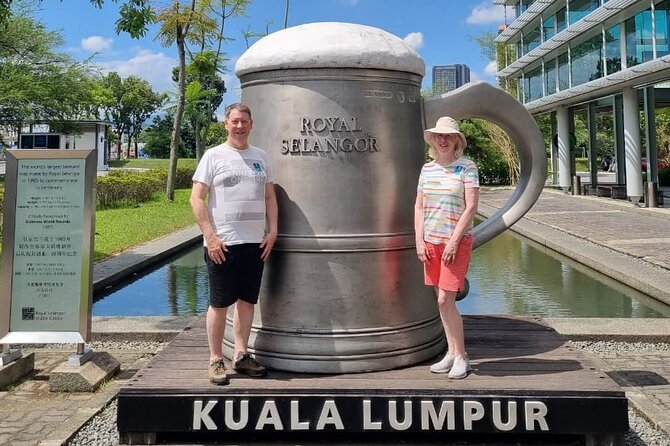
Your first stop is the Royal Selangor Visitor Centre. It’s described as being along Ambassador Row and tied to the large, modern pewter factory. The main draw here is seeing pewter production in a setting that feels more like a working factory plus museum than a random gift shop.
What I like about this stop is the way it sets a “craft + materials” mood before Batu Caves. Pewter is heavy, shiny, and very hands-on in a way that makes the process feel real. You’ll be able to watch how items are made, and the visitor setup is designed so you can connect the artwork you see in the shop to the labor behind it.
A practical note: this stop can trigger the shopping impulse because the showroom is full of finished items. Some people find it a gentle, informative experience. Others say it can feel like a sales stop. If you’re not planning to buy, go in with a simple goal: watch the process, enjoy the displays, and treat the store like a museum gift shop, not a must-purchase.
Jadi Batek Gallery: how batik printing is presented
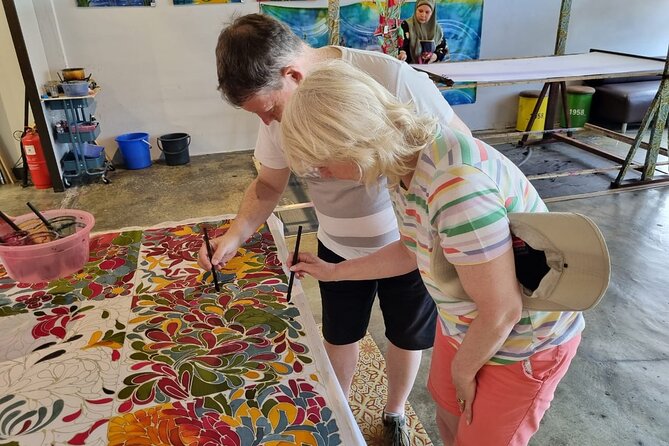
Next is a stop at Jadi Batek Gallery, a batik factory/gallery where you can see how batik is designed and printed. The tour is positioned as showing the method, not only selling textiles.
If you’ve only seen batik as finished clothing, this is the point where your brain switches from product to technique. Batik is made through a process that affects color placement and pattern. Even if the demo is brief, the format helps you understand why the patterns look the way they do and why pieces can vary.
This stop also tends to be tied to product sales, because batik items are the obvious takeaway. A couple of reviews mention a soft-sell approach rather than hard pressure, which is what you want if you’re trying to keep your wallet closed.
My tip: if you do buy something, check what you’re getting right away. Look for details in the pattern and the feel of the fabric before you leave the site.
Batu Caves: the steps, the temples, and the real-life details that matter
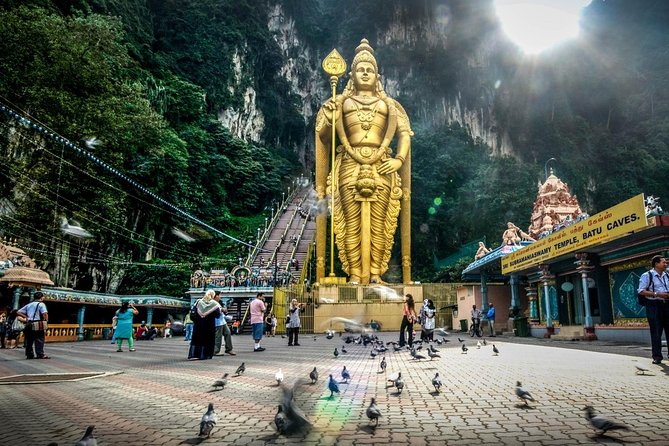
Batu Caves is the star. The limestone hills include three caverns and several smaller caves, and it’s the shrine of Lord Murugah. Then there are the 272 steps, which are the kind you respect even if you’re a confident walker.
Here’s what you should expect in a straightforward way:
- The entrance area is active with worshippers and incense. Many visitors are barefoot, and you’ll see people arriving for religious ceremonies.
- As you climb, you’ll run into monkeys. They’re part of the entertainment, but also a reminder not to act like wildlife is a petting zoo.
- At the top, you’ll find the cave temple areas, plus side temples that require more walking and more steps.
One of the best practical decisions is timing. Several reviews point out that going in the morning helps with shade and comfort. If you have any flexibility, try to arrive earlier in the day so you get a calmer climb and a slightly cooler experience.
Crowds are real at Batu Caves, especially during holidays. One review specifically flags holiday crowds and rain as factors that can change the feel of the visit. If rain is in the forecast, wear grippy shoes and be ready for the stairs to feel more slippery and slower.
- Private Tour Kuala Lumpur with Petronas Twin Towers Observation Deck & Batu Cave
★ 5.0 · 1,029 reviews






Shopping stops vs. cultural stops: how to keep control of your mood
Pewter and batik are cultural handicrafts, but they’re also marketplaces. That’s not inherently bad. It just means the tour can feel more like a “see-craft-and-shop” rhythm than a pure museum tour.
The best version of this tour feels balanced:
- You watch the maker side of pewter and batik.
- You learn enough to appreciate what you’re seeing.
- The store time exists, but it doesn’t take over your whole day.
The weaker version is when you feel like the route is built around buying rather than understanding. A few reviews mention that it can feel like the driver focuses on where to shop, or that there’s a pushy vibe at certain stops.
So I’d give you a simple strategy:
- Decide before you start if you want to buy anything. One small item is easier than trying to shop with indecision.
- If a stop feels too sales-heavy, ask for a quick circuit. You can do product shopping later in your own time.
- If you’re not sure about fitting in with the sales atmosphere, go for the demo parts first, then step into the shop only if something truly grabs you.
Guide and group size: what small-group actually changes
With a max of 15 people, you avoid a common big-tour problem: everyone trying to hear the guide over everyone else. In a good small group, you get help that feels personal—directions, pacing, and quick explanations when something matters.
Reviews also give names of guides who were praised for being friendly and informative, including Aris, Matha, Fauzi, Indra, and Rayhan Raj Naidu. If your guide is one of the strong communicators from those mentions, you’ll likely get more context during the ride and better guidance at Batu Caves.
You should also know that not every guide experience lands the same way. A few reviews criticize drivers who seemed less responsive to requests, or who didn’t adjust the schedule when rain and crowds were an issue. That’s the risk of any group tour that follows a set order, especially when the most popular attraction can’t control weather.
If Batu Caves weather matters to you, ask up front if there’s flexibility in timing once you’re near the caves. Even small changes—like visiting Batu Caves earlier—can make the experience feel dramatically easier.
Dress code and practical tips for Batu Caves (so you don’t get surprised)
The dress code is smart casual. For Batu Caves specifically, one important cultural detail shows up in reviews: women are advised to cover below the knees. If you don’t have the right coverage, you might be asked to buy a cloth to use as a skirt (noted at 15 ringgits in one review).
Also plan for the climb:
- Wear comfortable shoes with grip for stairs.
- Bring water. You won’t be eating on this tour, since food and drinks are not included.
- Keep valuables secure. Monkeys are cute from a distance, and they’re not shy about checking for snacks or shiny objects.
If you’re taking photos, treat it like a “respect the moment” situation. You’ll be among worshippers, so keep your timing gentle and avoid blocking people during ceremonies.
Who this tour is best for (and who should consider DIY)
This fits best if you:
- Want the Batu Caves headline without figuring out transit
- Prefer a guided day that’s short and structured
- Like craft demonstrations and material culture as part of your sightseeing
- Are visiting Kuala Lumpur for the first time and want your bearings fast
You might consider DIY if you:
- Hate shopping stops and want purely scenic time at Batu Caves
- Want full control over order and pacing, especially with rain/crowd changes
- Want a longer Batu Caves exploration than a fixed 1-hour stop allows
Even if you choose DIY, it’s worth copying the smart parts of this tour’s approach: go early, wear proper coverage, and plan for the steps.
Should you book this Batu Caves & Handicraft Tour?
I’d book it if your goal is to see Batu Caves plus two craft stops in one clean afternoon, with transport and guidance handled for you. The small-group size and the included pickup for many areas make it feel like a practical shortcut to a great day.
I’d think twice if you know you dislike shopping-style stops. The pewter and batik factory visits are part cultural education, part storefront. You’ll have a better day if you go with a clear mindset: watch first, decide on purchases later.
If you’re coming from farther than 5km out, do the math on the USD 10 per person pickup surcharge so the value matches your expectations. For most city-center stays, the price-to-effort ratio is the main reason this tour works.
FAQ
Is hotel pickup included?
Hotel pickup and drop-off are included for free pickup within 5km of the city center. There is an additional USD 10 per person surcharge if your pickup is outside that 5km radius, payable on the day of your activity.
How long is the tour?
The tour runs about 3 hours 30 minutes.
Is food included?
No. Food and drinks are not included.
Are admission tickets included?
Admission tickets are listed as free for all three stops in the tour schedule (Royal Selangor Visitor Centre, Jadi Batek Gallery, and Batu Caves).
What’s the dress code?
Smart casual is recommended. For Batu Caves, it’s also wise to dress with coverage in mind, especially below the knees for women, since you may be asked to use a cloth if you’re not appropriately covered.
Does it run during Thaipusam?
No. The tour is closed for 3 days on Thaipusam Festive (the day before, during, and the day after).