REVIEW · BATU CAVES
From Kuala Lumpur: Batu Caves Cultural Temple Tour
Book on GetYourGuide →Operated by Travelvago · Bookable on GetYourGuide
Four hours, three faiths, and street-food stops. This is one tight circuit that gets you from the big Hindu landmark at Batu Caves (272 steps) to Malaysia’s landmark mosque, with a driver-guide who ties it all together as you pass neighborhoods like Brickfields and Little India.
Two things I like a lot: the Thean Hou Temple pagoda stop on Robson Heights, and the chance to wander Chinatown with actual snack-and-souvenir energy instead of just snapping photos.
The main drawback is also obvious: it’s not wheelchair-friendly, and you’ll work your legs on the stairs at Batu Caves. Also, the National Mosque of Malaysia is closed on Friday, so check your day.
In This Review
- Key highlights you’ll feel fast
- Batu Caves: the 272 steps and why early timing matters
- Cathedral Cave: more than a view, it’s the shrine experience
- Passing Brickfields and Little India: quick context before the temples
- Thean Hou Temple on Robson Heights: why the pagoda stop feels special
- Chinatown food stalls and souvenir bargaining: how to make it worth your 30 minutes
- National Mosque of Malaysia (Masjid Negara): gardens, design, and the Friday reality
- Central Market add-on shopping: a good final wander before you head back
- Price and value: why $34 for 4 hours can make sense
- Comfort, timing, and the real-life pace
- Dress code: don’t get caught at the mosque
- Communication: how you’ll meet up and stay on track
- Should you book this Batu Caves and temples circuit?
- FAQ
- What is the duration of the tour?
- What time do you depart from Kuala Lumpur (or Petaling Jaya)?
- How much does it cost?
- What’s included in the tour price?
- Are food and drinks included?
- Is the National Mosque open every day?
- What should I wear?
- Is the tour wheelchair accessible?
Key highlights you’ll feel fast
- 272 steps at Batu Caves with a real temple complex at the top (and Cathedral Cave nearby)
- Thean Hou Temple: a 6-tier pagoda completed in 1987 and opened in 1989
- Chinatown food-stall time across several communities: Chinese, Indian, Malay, and Bangladeshi traders
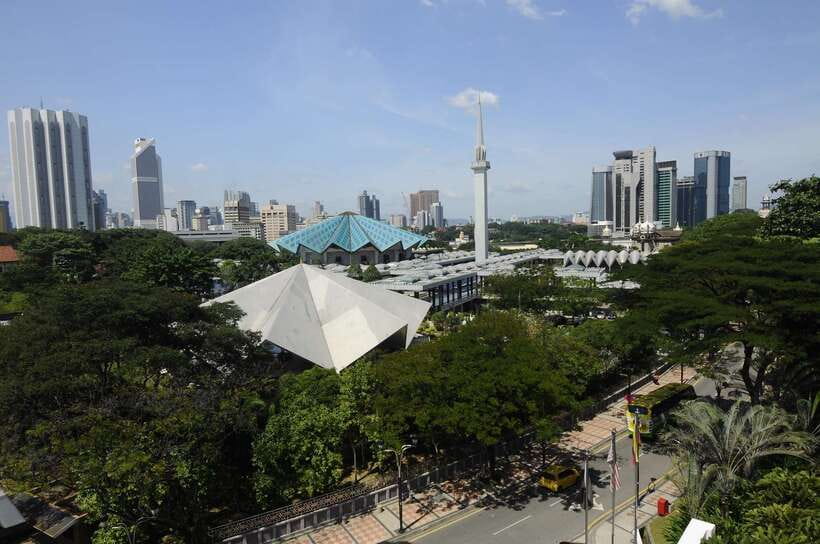
- National Mosque (Masjid Negara) set in 13 acres of gardens with bold, late-1950s design ideas
- Hotel pickup and drop-off in Kuala Lumpur or Petaling Jaya, using an air-conditioned vehicle
- English communication via WhatsApp so you can confirm meeting points quickly
Batu Caves: the 272 steps and why early timing matters
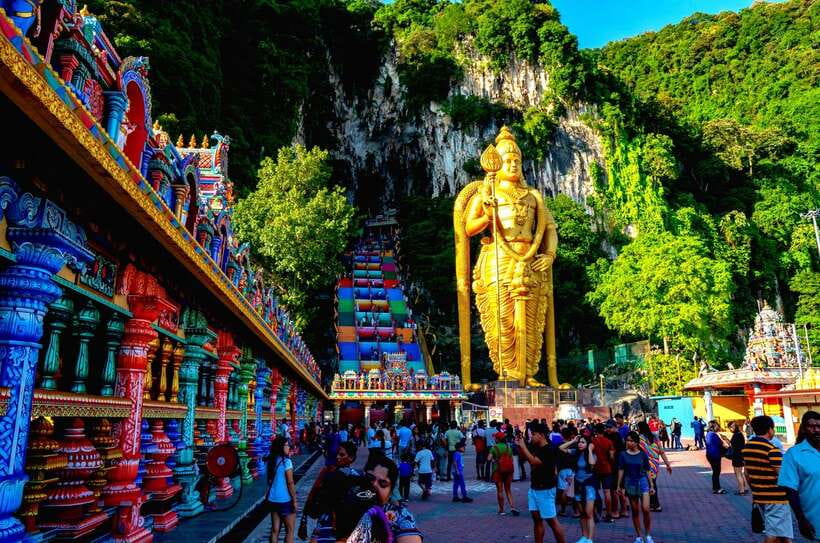
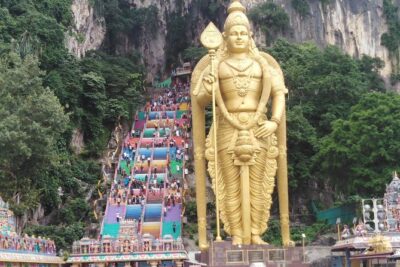
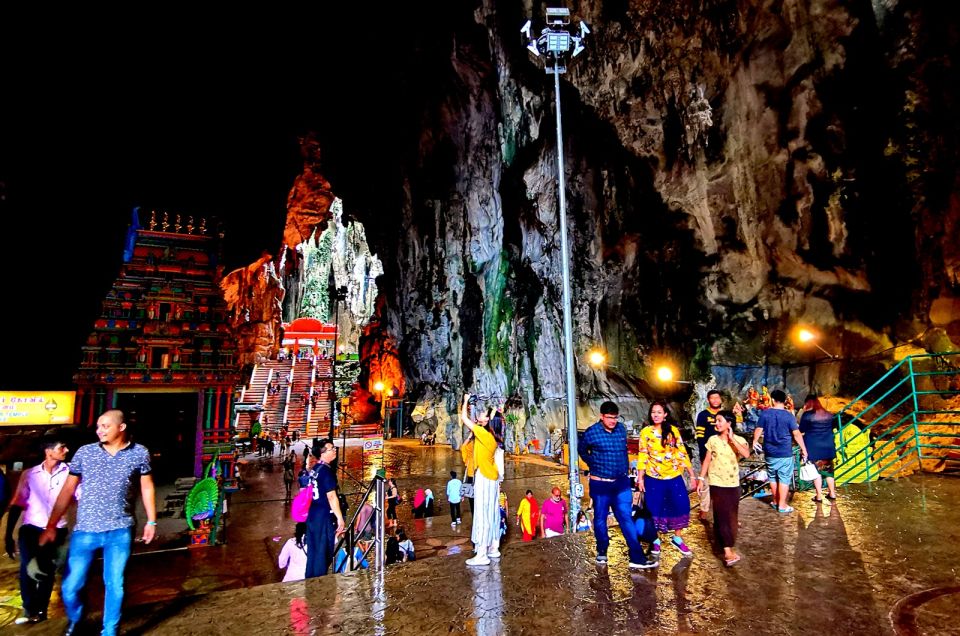
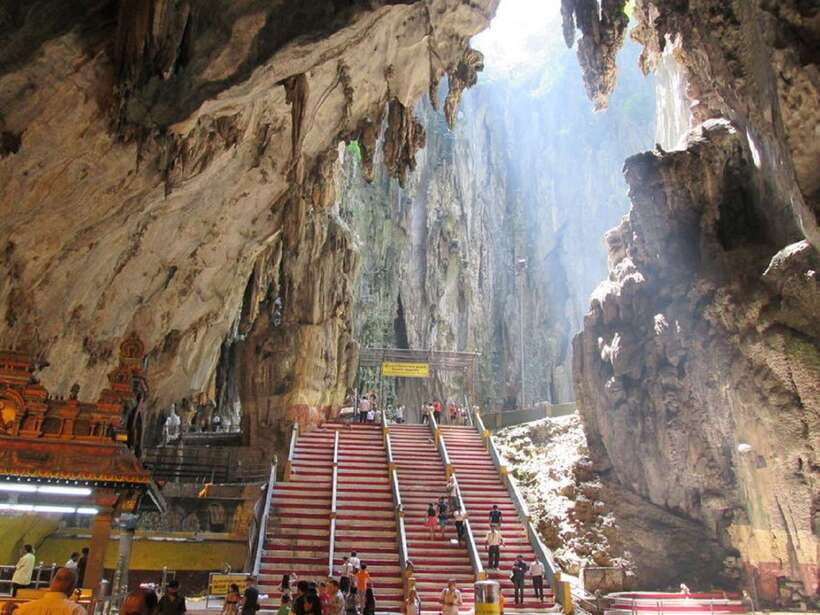
Batu Caves is the kind of place that looks good in any weather, but your experience depends on timing. You’ll head there from Kuala Lumpur (or Petaling Jaya) and then climb the full 272 steps up to the golden statue of Lord Murugan.
If you go on the 09:00 departure, you’ll often catch the climb when it’s cooler and the light is gentler. One practical tip: wear comfortable sneakers and don’t treat it like a casual stroll. You’ll be walking in heat at a steady angle, and the stairs aren’t hard because they’re long—they’re hard because you’re working against the sun and humidity.
You can also read our reviews of more tours and experiences in Batu Caves.
Cathedral Cave: more than a view, it’s the shrine experience
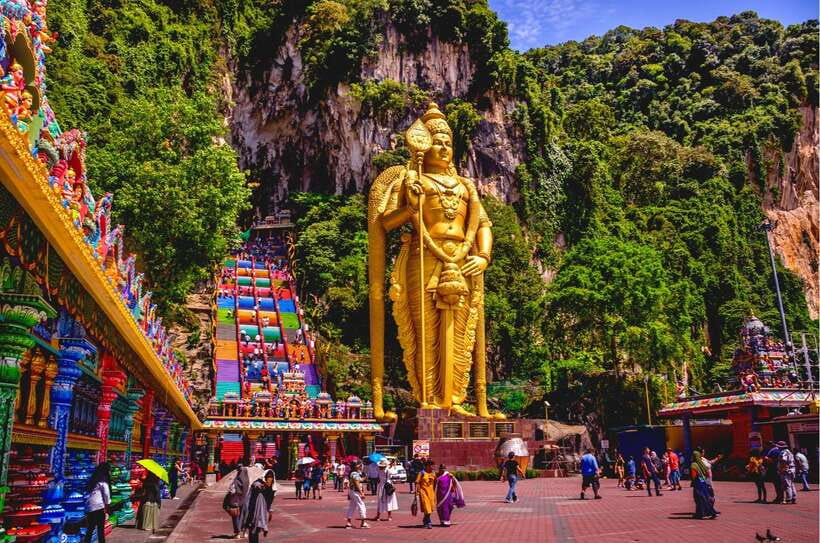
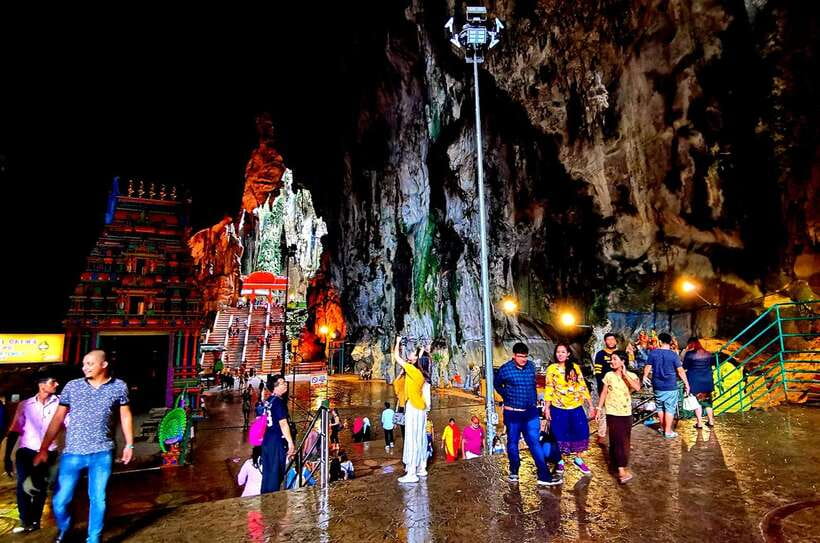
Once you’re up top, don’t rush past the caves. The tour also includes Cathedral Cave, described as the largest cave in the Batu Caves complex, with a deeper look at the background of this Hindu shrine. This is where the site feels less like a climb-and-leave photo stop and more like a place with meaning and ongoing religious activity.
What I appreciate about this structure is that it prevents a common KL mistake: people think Batu Caves is only the steps and the statue. With the extra time inside the cave space, you get a better sense of why the complex draws people back year after year.
Passing Brickfields and Little India: quick context before the temples
Between Kuala Lumpur and Batu Caves, you’ll drive through neighborhoods that explain a lot about the city’s mix. You’ll pass Brickfields and Little India, known for colorful streets and distinct local shops.
You only get short looks here, so use it for orientation. If you see something you want later—an area vibe, a shop style, a temple look—you’ll know where to aim when you go exploring on your own after the tour.
Thean Hou Temple on Robson Heights: why the pagoda stop feels special
Then comes a total mood shift: Thean Hou Temple, a 6-tiered pagoda temple perched on Robson Heights. It was completed in 1987 and officially opened in 1989, and it was built by the Hainanese community of Kuala Lumpur. It’s dedicated to Tian Hou, the Heavenly Mother.
This stop is valuable because it’s not a famous landmark you’ve only seen on postcards. You get time to look closely at the structure and feel the difference between a cave complex and an elevated pagoda setting. The architecture also gives you that satisfying KL contrast: urban drive, then sudden calm at a temple viewpoint.
The time at the temple is shorter than Batu Caves, so focus on the details you can actually enjoy in a limited window—lines, tiers, and the way the grounds and approach are arranged for visitors.
Chinatown food stalls and souvenir bargaining: how to make it worth your 30 minutes
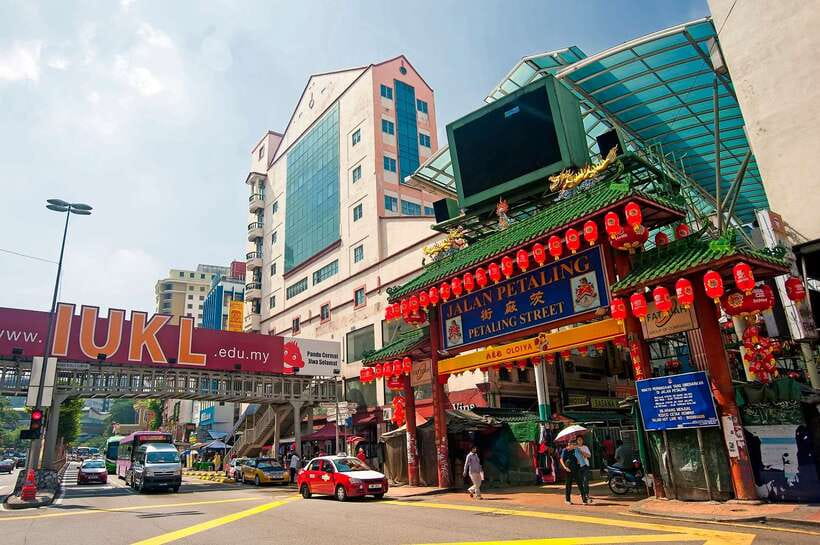
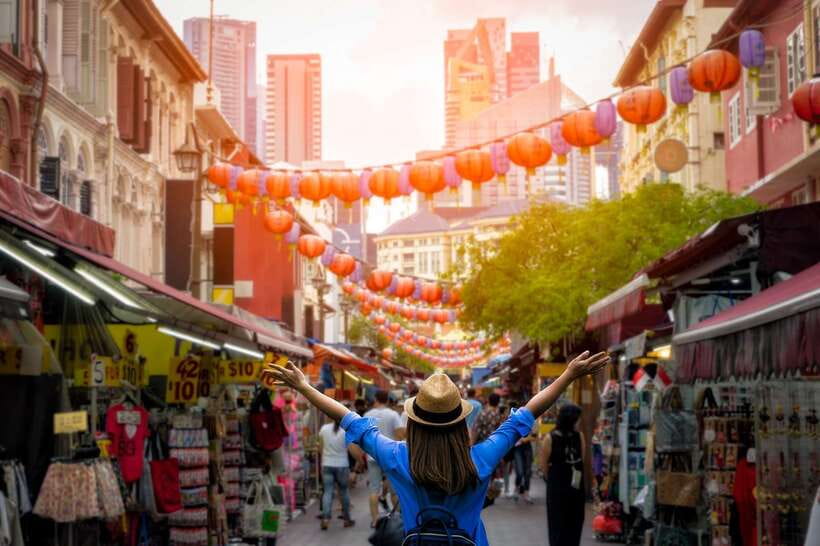
Next up is Chinatown, where the tour includes time to browse restaurants and food stalls tended by Chinese, Indian, Malay, and Bangladeshi traders. This is the kind of stop where you decide your own pace fast, because the best experiences here are the small ones: a noodle portion, a grilled bite, a soupy comfort dish.
The tour info specifically points to local favorites such as curry noodles, Hokkien mee, ikan bakar (barbecued fish), and asam laksa (sour fish and tamarind soup). You’ll also want to budget for snacks because food and drinks aren’t included in the tour price.
On the shopping side, this is where bargaining can feel normal rather than awkward. If you’ve never bartered before, keep it simple: look first, ask a price, then make a counter offer. With only a half hour, you won’t have time to comparison-shop like you would at a mall, so choose one or two souvenir items and commit.
National Mosque of Malaysia (Masjid Negara): gardens, design, and the Friday reality
Masjid Negara is a serious stop. The National Mosque of Malaysia sits on 13 acres of gardens, so even when you’re visiting as part of a fast circuit, it doesn’t feel crowded in the way some major sights do.
What’s especially interesting is the architecture story: it was designed in the late 1950s as a symbol of the aspirations of the newly independent nation. That context matters. You’re not just looking at a mosque; you’re looking at a statement made in building form.
Practical detail you’ll want to respect: the mosque is closed on Friday. If you’re aiming for a Friday visit, you’ll need to pick a different departure day or accept that your mosque stop may not happen.
Central Market add-on shopping: a good final wander before you head back

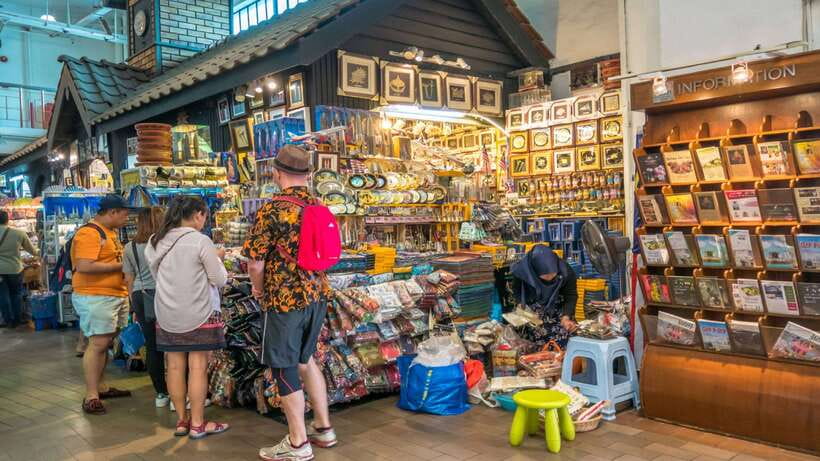
After Chinatown, the tour includes a stop at Central Market, Kuala Lumpur for shopping and sightseeing. This is a helpful ending because it’s easier to shop at a market when you’re still in sightseeing mode. You’re not rushing toward another long walk or climb; you’re winding down with more craft and souvenir options.
If you’re the type who likes to bring home one useful local item—something you’ll actually use—this is a good place to look for gifts that aren’t just keychains and magnets.
Price and value: why $34 for 4 hours can make sense
At $34 per person for a 4-hour private-group style tour, the value comes from what’s included rather than from what’s technically seen. You get hotel pick-up and drop-off, an air-conditioned vehicle for the driving time between neighborhoods, and an English-speaking driver-guide.
That matters in Kuala Lumpur because the distances between Batu Caves, temple areas, Chinatown, and Masjid Negara can add up. Having transport sorted for you turns the trip into a straight plan instead of a logistics puzzle.
One thing to remember: food and drinks aren’t included. If you plan to eat at Chinatown, treat that as a separate budget line. Also, if you’re thinking of Port Klang Cruise Terminal or airport pickup, there are added charges, so stick to Kuala Lumpur/Petaling Jaya when possible.
Comfort, timing, and the real-life pace
This is a short tour, so the pace is focused. You’ll spend about an hour at Batu Caves, then shorter windows at the other stops (including 30 minutes for Thean Hou Temple and around 30 minutes for Chinatown and Central Market, plus about 30 minutes for the National Mosque).
I like this pacing for first-timers because it gives you a lot of variety without turning the day into a tiring marathon. But if you prefer slow sightseeing, you’ll want to use the time at each site wisely.
A couple of small-but-real comfort notes from guide styles you may encounter: many people praise drivers who arrive on time with a clean car and keep the trip relaxed. One review even noted water being provided during the ride, which is a nice touch when you’re walking in the heat.
Dress code: don’t get caught at the mosque
For temple and mosque visits, the tour guidance is clear about clothing:
- Ladies should wear long dresses or pants with shoulders covered
- Men can wear a simple tee and knee-length shorts or pants
- Sneakers are recommended, especially for climbing the 272 steps
If you show up with bare shoulders or very short clothing, you may have trouble getting in smoothly. Bring a light layer if you’re unsure, and treat it as a quick win.
Communication: how you’ll meet up and stay on track
This tour uses WhatsApp for communication, with the driver-guide sharing updates and meeting coordination. The practical advice here is easy: make sure your WhatsApp number is updated so you can respond quickly if timing shifts.
It’s a small detail, but it reduces stress, especially when you’re picked up from a hotel lobby and you’re figuring out which car is yours.
Should you book this Batu Caves and temples circuit?
Book it if you want a fast, high-impact KL orientation: Batu Caves, Thean Hou Temple, Chinatown, and Masjid Negara all in one shot with hotel pickup and a car that handles the in-between time.
Skip it (or reconsider) if you know the Batu Caves climb is a deal-breaker for your body, because the tour isn’t wheelchair accessible and the stairs are part of the main experience. Also skip the “Friday plan” unless you’re okay with the mosque stop being closed.
If you’re traveling with limited time and you want a day that feels grounded in how Malaysia’s different communities show up in religious and street life, this is a smart way to spend a half-day.
FAQ
What is the duration of the tour?
The tour lasts about 4 hours.
What time do you depart from Kuala Lumpur (or Petaling Jaya)?
You can choose a start time at either 09:00 or 14:00.
How much does it cost?
The price is $34 per person.
What’s included in the tour price?
Hotel pick-up and drop-off, transportation by air-conditioned vehicle for the 4-hour tour, and an English-speaking driver/guide are included.
Are food and drinks included?
No. Food and drinks aren’t included, so you’ll want to budget for snacks at Chinatown.
Is the National Mosque open every day?
No. The National Mosque of Malaysia is closed on Friday.
What should I wear?
Ladies need long dresses or pants with shoulders covered. Men can wear a simple tee and knee-length shorts or pants. Comfortable sneakers are advised for the stairs.
Is the tour wheelchair accessible?
No. The tour is not wheelchair accessible.